
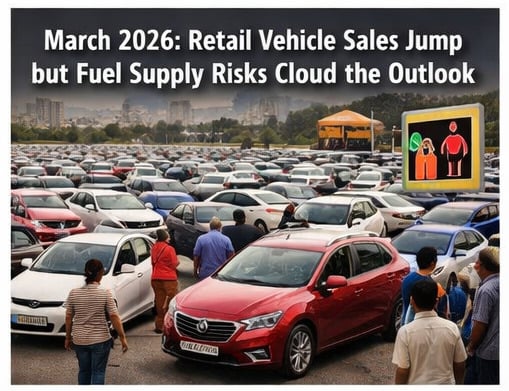
March 2026 Retail Vehicle Sales Jump, but Fuel and Supply Risks Cloud the Auto Outlook
India’s auto-retail market delivered an impressive March finish, with strong year-on-year growth across passenger vehicles, two-wheelers and commercial vehicles. On the surface, the story is simple: demand held up, inventory improved and the sector ended the financial year with better momentum. But beneath that positive headline, dealers are sounding a more cautious note about what comes next.
The reason is fuel and supply-chain risk. A survey cited by dealers shows that the West Asia conflict is already affecting dispatch timelines and influencing customer decision-making through rising fuel prices. So while March numbers look strong in the rear-view mirror, the windshield view is more complicated.
Sponsored
Key points
- Total retail vehicle sales rose strongly in March 2026.
- Passenger vehicles, two-wheelers and commercial vehicles all posted healthy growth.
- More than half of surveyed dealers reported some supply or dispatch disruption.
- Rising fuel prices are already affecting buying decisions for over one-third of dealers surveyed.
What made March strong
Several supports came together in March. Tax cuts had improved affordability, inventory days had fallen and the market entered the month with better retail conditions than a year earlier. These factors helped both showroom conversions and dealer confidence. Lower inventory days were especially important because they indicated cleaner stock movement and healthier supply-demand balance.
This matters because the auto market does not only run on fresh demand. It also runs on inventory discipline. When dealers are overloaded with vehicles, the retail market looks weaker than dispatch data suggests. A reduction in inventory days therefore improves the quality of the sales recovery.
Where the caution comes from
The concern is not that demand suddenly vanished. The concern is that the conditions supporting demand may become less favourable very quickly if fuel and supply risks deepen. More than half of dealers in the survey reported some kind of supply or dispatch disruption linked to the conflict. A significant minority reported severe delays stretching to three weeks or more.
At the same time, more than a third of dealers said rising fuel prices were already affecting customer purchase decisions. That is a critical signal. It means the shock is not just showing up in warehouses and logistics; it is already beginning to show up in buyer psychology.
Why fuel changes purchase behaviour
Fuel prices do more than raise running costs. They change the way buyers think about vehicle affordability, usage and timing. When petrol or diesel rises, buyers ask different questions: Will monthly ownership costs rise too much? Should I delay the purchase? Should I downgrade? Should I switch segment? That is why fuel inflation can soften showroom confidence even before sticker prices change.
Commercial vehicles tend to feel this pressure first because their economics are directly tied to utilisation and fuel outgo. But passenger vehicles and two-wheelers are not immune, especially at the lower end of the market where monthly budgets are tighter.
Implications for April and the next quarter
If the external environment remains unstable, April may not replicate March’s smooth momentum. The key risk is not necessarily a collapse in demand, but a slowdown in conversions, model availability and dealer confidence. If supply becomes uneven and fuel stays elevated, the market may shift from a clean growth story to a selective and more segmented one.
This kind of environment often benefits brands with better localisation, better stock planning and products that are either fuel-efficient or less price-sensitive. It also tends to reward companies that can manage dealer networks more tightly rather than flooding the channel with inventory.
What to watch next
The next set of signals to track are dealer inventory, retail-to-wholesale balance, city-level waiting periods, and the pace at which automakers announce fresh price hikes. Fuel prices, freight stability and shipping-route conditions will remain crucial. If those stabilise, March’s momentum could still continue. If not, the industry may enter a more defensive phase.
FuelPrice view: March 2026 was a strong month, but the auto market is no longer moving in a normal demand cycle. Fuel and supply stress are starting to shape retail behavior again, and that makes the outlook more fragile than the headline numbers suggest.


