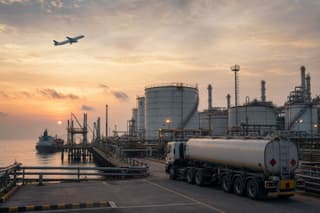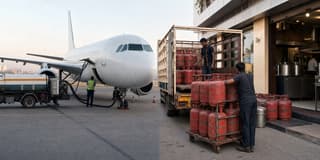

The Asian Development Bank has warned that Asia is now facing its worst-case scenario under the global energy crisis, according to a Financial Times report published on June 12, 2026. The report said 15 Asian and Pacific countries have sought emergency support from the lender as oil, gas, shipping and input costs rise sharply. India is one of them, with FT reporting that the government has requested $1.5 billion to build and accelerate resilience against the economic fallout.
For FuelPrice readers, this is a high-impact fuel story even if it begins in multilateral finance. India is one of the world's largest oil and gas consumers and, as the FT report noted, imports about 90 percent of its supply. When import prices, shipping costs and currency pressure move together, the effect can reach diesel users, transporters, industries, power backup operators, airlines, farmers, retailers and ordinary consumers through fuel cost and inflation.
Sponsored
What ADB has warned
FT quoted ADB president Masato Kanda as saying the worst scenario has materialised for Asia-Pacific, with energy-price, shipping-price and input-price shocks now visible. The same report said the ADB has received formal requests for $4 billion from 15 countries, including India, the Philippines, Bangladesh, Sri Lanka and Fiji. ADB also reportedly downgraded its 2026 Asia-Pacific growth forecast to 4.7 percent from 5.1 percent, while raising its inflation projection to 5.2 percent from 3 percent.
The warning matters because Asia is deeply dependent on imported energy and shipping lanes. A fuel shock does not stop at crude oil. It can raise freight rates, petrochemical costs, fertiliser costs, airline fuel bills, manufacturing input prices and food inflation. That is why a development-bank funding request becomes relevant to road users: the pressure begins in the import system but eventually travels through fuel stations, wholesale supply contracts and transport invoices.
Why India is exposed
India's exposure is structural. The country has large refining capacity and a broad retail fuel network, but it still depends heavily on imported crude and gas. If crude supply becomes expensive, shipping routes are disrupted, insurance costs rise, or the rupee weakens, the landed cost of energy increases even before domestic taxes, margins and distribution costs are considered.
FT reported that India has taken measures to protect the rupee from the rising import bill and that foreign exchange reserves have fallen by $40 billion since the start of the crisis. Separately, Times of India, citing RBI data, reported that India's forex reserves slipped by $711 million to $681.610 billion in the week ended June 5, 2026. That weekly change does not by itself prove a fuel crisis, but it shows why policymakers watch external buffers closely when energy import costs are under stress.
| Pressure point | Why it matters | Who should watch it |
|---|---|---|
| Crude and gas import cost | Higher landed cost can pressure pump prices, subsidies, margins or government balances. | Fuel users, OMCs, policymakers and inflation watchers. |
| Shipping and insurance | Longer or riskier routes can raise freight cost for oil, gas, chemicals and goods. | Logistics firms, importers, exporters and fleet operators. |
| Rupee pressure | A weaker currency makes dollar-priced energy imports costlier in rupee terms. | Transporters, airlines, manufacturers and consumers. |
| Bulk fuel rules | Restrictions can change how industries, fleets and large users source diesel and petrol. | Industrial units, contractors, farms, mines and commercial fleets. |
The immediate India signal: bulk fuel restrictions
The clearest domestic sign of stress is not a headline pump-price hike. It is supply discipline. Economic Times reported that the government has barred bulk consumers from purchasing petrol or diesel from retail fuel stations and has capped daily diesel sales at 200 litres per vehicle or customer under the Essential Commodities Act. Earlier reporting said industrial, commercial and institutional consumers must use bulk procurement channels instead of shifting to retail pumps.
This matters because bulk diesel can cost more than retail fuel, and large users often shift procurement behaviour when the price gap widens. If factories, contractors, bus fleets, mines, telecom tower operators or large diesel-generator users buy from retail pumps, local pump availability can tighten for ordinary vehicle users. By pushing bulk buyers back to wholesale channels, the government is trying to protect retail supply and reduce distortion. The trade-off is higher procurement cost and more planning pressure for large users.
Impact on transport and logistics
Diesel is the backbone of Indian road freight. If bulk procurement becomes stricter and fuel cost uncertainty rises, transporters may need to revise route budgets, fuel advances, credit terms and surcharge clauses. Smaller operators that depend on pump purchases will need clarity on daily caps, documentation and whether exceptions apply for long-haul operations.
Industries that run diesel equipment face a different problem. They may not be able to treat fuel as an easily available spot purchase. They may need supply contracts, storage checks, cash-flow buffers and stronger consumption tracking. That is particularly important for construction, agriculture pumps, backup power, mining, cold chains and high-frequency fleet operations.
What ordinary fuel users should take away
Retail vehicle users should not assume every international energy shock will immediately become a pump-price change. India has policy buffers, tax tools, oil-marketing companies, strategic stocks and diversified sourcing. But users should understand the warning signs: bulk-sales restrictions, diesel caps, sharper freight surcharges, airline fuel pressure, rupee weakness and repeated official statements about supply discipline.
For car and two-wheeler owners, the practical response is simple. Avoid panic buying, keep normal refuelling discipline, compare running costs more carefully and watch whether delivery charges, food costs or commute expenses move because of logistics pressure. For fleet users, the response should be more formal: track fuel consumption daily, confirm procurement route compliance, review surcharge clauses and avoid depending on last-minute retail pump purchases.
What to watch next
The next important signals are crude prices, shipping insurance rates, rupee movement, RBI reserve data, OMC procurement guidance, government notifications on bulk fuel, and whether India's reported ADB request moves into formal financing. Watch also for any changes in diesel availability for commercial users and whether bulk-price gaps widen further.
The reader takeaway is clear: the ADB warning turns the fuel discussion from a daily pump-price question into a resilience question. India's reported $1.5 billion support request, the retail diesel cap and the bulk-buyer restrictions all point to a policy priority: protect supply for ordinary users while managing a costlier and more uncertain import environment. Fuel users should watch availability, compliance and logistics cost as closely as headline petrol and diesel prices.
Sources: Financial Times ADB energy-crisis report, Financial Times ADB emergency support background, Economic Times bulk-fuel restrictions report, Times of India forex-reserves report.