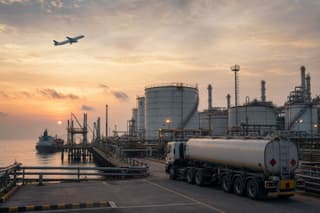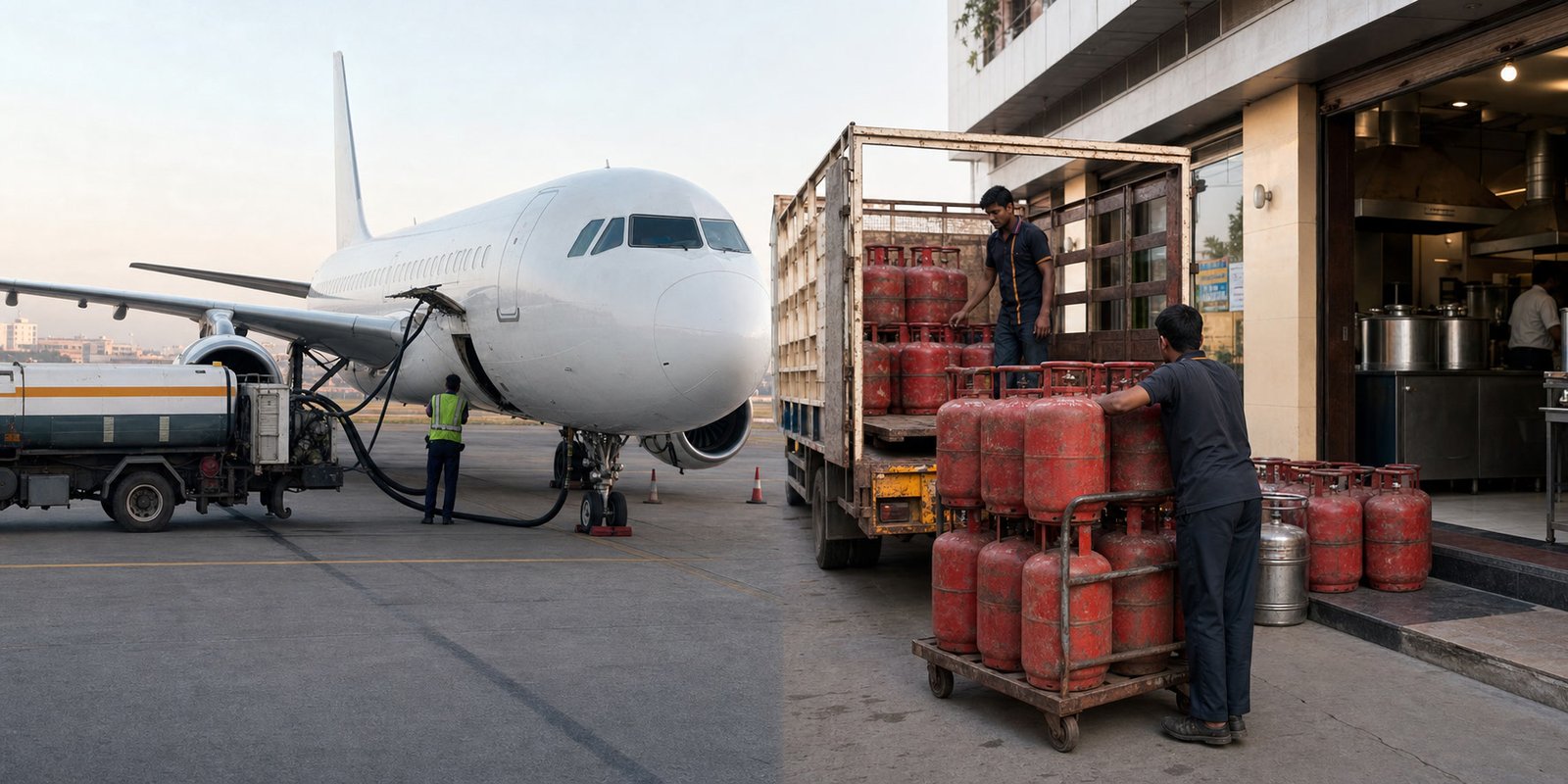
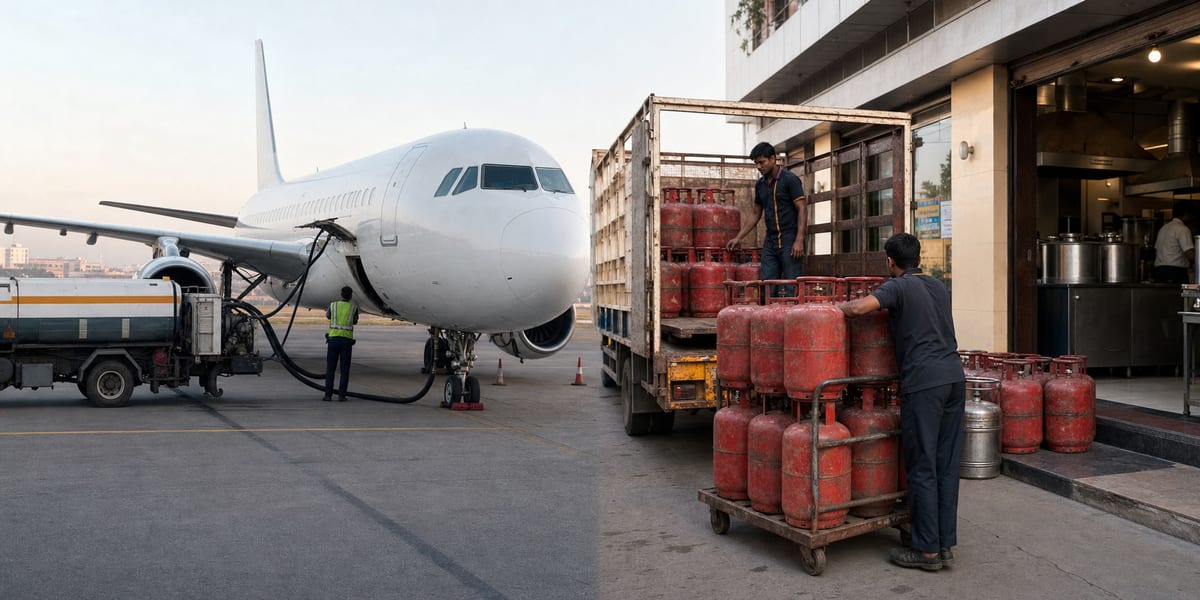
India's latest fuel-price move is meaningful precisely because it is selective. On Wednesday, July 1, 2026, state-run oil marketing companies cut the price of a 19-kg commercial LPG cylinder by Rs 183.50 and reduced aviation turbine fuel (ATF) by Rs 5 per litre. For FuelPrice readers, this is not just a monthly rate-card update. It directly affects restaurants, caterers, hotels, airport operations and airline fuel bills at a time when businesses have been dealing with high energy costs after the West Asia supply shock.
The relief, however, is uneven. Commercial users benefit immediately, but household LPG buyers do not get a cut in the 14.2-kg cylinder price, and there is still no fresh nationwide reduction in petrol or diesel from state-run retailers. That difference matters because it tells readers where the government and oil companies are allowing lower crude costs to pass through first: business-use gas and jet fuel, not broad retail household or road-fuel consumption.
Sponsored
What changed on July 1
According to Times of India and Indian Oil's official price page, the Delhi price of a 19-kg commercial LPG cylinder fell to Rs 2,930 from the much higher June level. Indian Oil's July 1 price table also shows Mumbai at Rs 2,885.50, Kolkata at Rs 3,081.50 and Chennai at Rs 3,106. TOI reported that the reduction follows easing international crude prices after supply fears linked to West Asia cooled.
The airline side of the story is similarly important. TOI's July 1 ATF report said jet fuel for domestic airlines was cut by Rs 5 per litre, bringing the Delhi level to around Rs 110 per litre. That is the first reduction after the Middle East conflict had pushed aviation fuel to record highs. Airlines will notice this more quickly than passengers, because ATF is one of the largest pieces of their cost structure.
| Fuel/product | What changed | Current reference level | Who feels it first |
|---|---|---|---|
| 19-kg commercial LPG cylinder | Down Rs 183.50 from July 1 | Delhi Rs 2,930; Mumbai Rs 2,885.50; Kolkata Rs 3,081.50; Chennai Rs 3,106 | Restaurants, hotels, caterers, tea stalls, food vendors and commercial kitchens |
| ATF for domestic airlines | Down Rs 5 per litre | About Rs 110 per litre in Delhi | Airlines first, then route economics and possibly airfare pressure |
| 14.2-kg domestic LPG cylinder | No cut in this revision | Delhi Rs 942 on Indian Oil's official page | Households do not get immediate relief |
Why commercial LPG matters beyond restaurants
Commercial LPG is not a niche product used by a handful of large hotels. It is a daily operating input for small eateries, cloud kitchens, caterers, dhabas, tea shops, bakery operators and institutional kitchens. When the 19-kg cylinder price spikes, the cost pressure is often passed through quietly in the form of slightly higher meal prices, weaker margins or reduced portion economics for smaller businesses. So a Rs 183.50 cut is not trivial. It gives immediate working-capital relief to operators who refill frequently and cannot hedge energy costs.
The timing matters too. TOI's city-wise LPG report noted that Indian Oil had raised commercial LPG prices in June amid supply constraints tied to the Middle East crisis. That means the July cut is not simply a random monthly change. It is a partial rollback after geopolitical stress eased. For small businesses, that can slow the pressure to raise menu prices again. For large chains, it can improve store-level margins. For food-delivery ecosystems and event caterers, it supports cost control in a period when labour, rent and transport are already expensive.
Why the ATF cut helps airlines more than passengers, at least for now
Jet fuel is one of the biggest variable costs for airlines, so any ATF reduction matters. But consumers should not assume that a Rs 5 per litre cut automatically means cheaper tickets the next morning. Airline pricing depends on demand, route competition, seat occupancy, airport charges, currency movement and how much recent fuel inflation carriers are still absorbing. The immediate gain is operational breathing room for airlines, not guaranteed airfare cuts.
That said, the ATF reduction is still important for mobility. If fuel pressure eases, airlines have a better chance of protecting marginal routes, reducing the need for steep fare surcharges and planning capacity with more confidence. The benefit is especially relevant for sectors where airlines had been hit by elevated fuel costs only weeks earlier. In that sense, the July 1 cut is less about a dramatic airfare drop and more about preventing the next round of pricing stress.
Who benefits now, and who is still left out
- Commercial kitchens and food businesses: they get direct, immediate relief from the lower 19-kg cylinder rate.
- Hotels, caterers and institutional kitchens: frequent LPG users should see the cut feed into operating costs quickly.
- Airlines: they gain first from cheaper ATF because the saving hits fuel procurement before it reaches passengers.
- Passengers: they may benefit only indirectly if airlines reduce fare pressure or protect more routes.
- Households: there is no comparable July 1 cut in the domestic 14.2-kg LPG cylinder price.
- Petrol and diesel users: road-fuel consumers still do not have broad relief from state-run pump prices in this move.
This split is the most important reader takeaway. The current revision is aimed at business-use fuels and commercial operating costs. It is not yet a broad consumer fuel reset.
What did not change, and why that matters
Indian Oil's official price page still shows the Delhi domestic 14.2-kg LPG cylinder at Rs 942, with no July 1 reduction on that page. That means households are still outside this relief cycle. The same practical caution applies to petrol and diesel. Even though crude prices have cooled, the state-run retail pump story has not moved in the same way as commercial LPG and ATF.
For inflation watchers, that is significant. Commercial LPG can influence food-service pricing and ATF can shape airline cost pressure, but the largest mass-market sensitivity still sits with household LPG, petrol and diesel. Until those categories move, headline relief for ordinary families remains limited.
What to watch next
The next phase depends on whether lower crude prices hold. If West Asia shipping stays stable and crude remains softer, businesses could keep this benefit and may even hope for further normalization in commercial fuel costs. If geopolitics turns again, the July relief could prove temporary. Readers should also watch whether airlines translate some of the ATF easing into less aggressive fare increases and whether any future revision finally includes household LPG or broader pump-fuel relief.
FuelPrice takeaway: July 1's fuel revision is important because it targets two operational pain points in the economy: commercial kitchens and airline fuel bills. The cut is large enough to matter for restaurants and meaningful enough to improve airline cost pressure, but it is not a universal consumer win. Households and road-fuel users are still waiting. So the real story is not that all fuel is getting cheaper. It is that selective relief has started to appear where business-use energy costs had become hardest to absorb.
Sources: Times of India July 2, 2026 report on commercial LPG and ATF cuts, Times of India July 1, 2026 city-wise commercial LPG update, Times of India July 1, 2026 ATF price report, Indian Oil official commercial and domestic LPG price page.