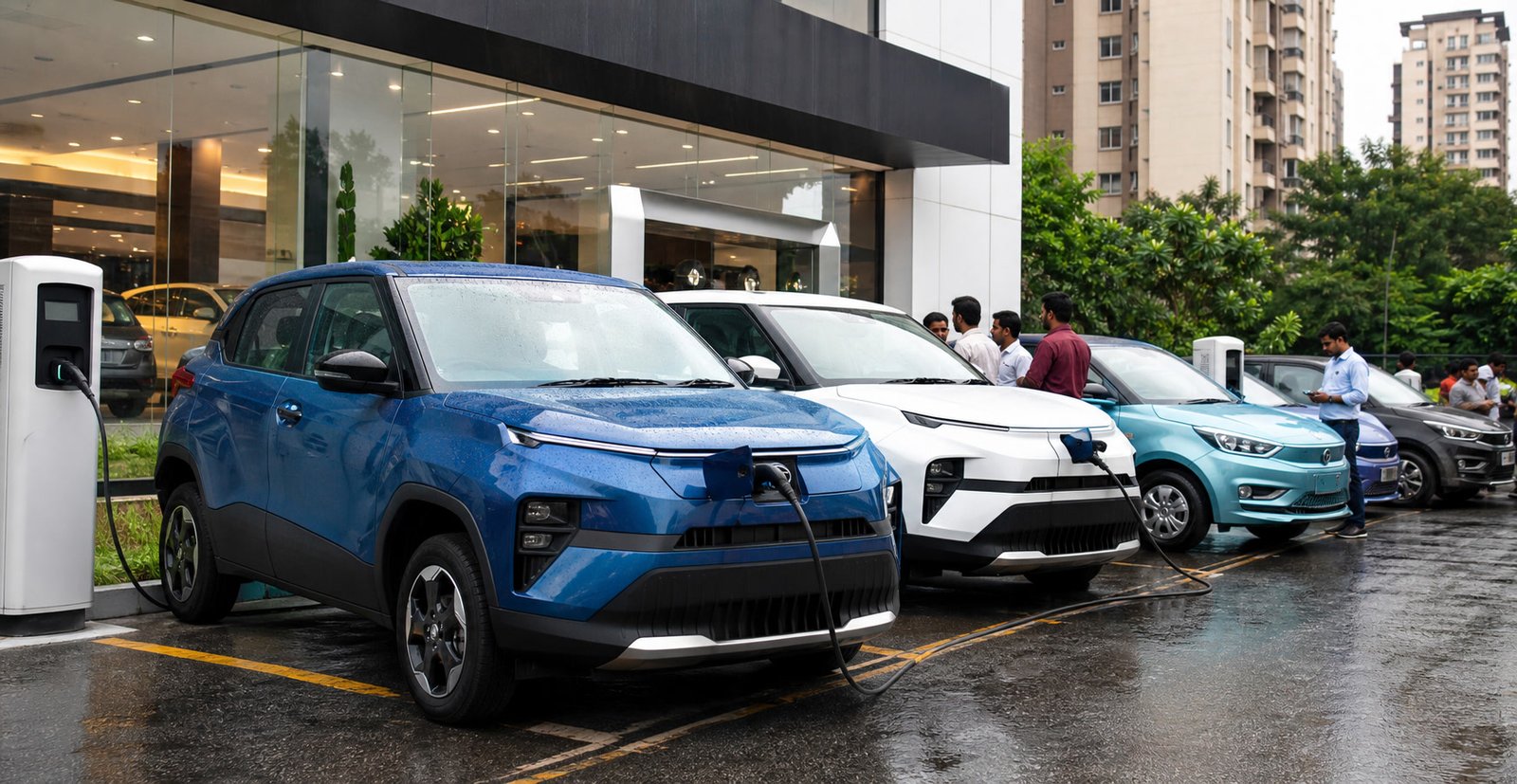
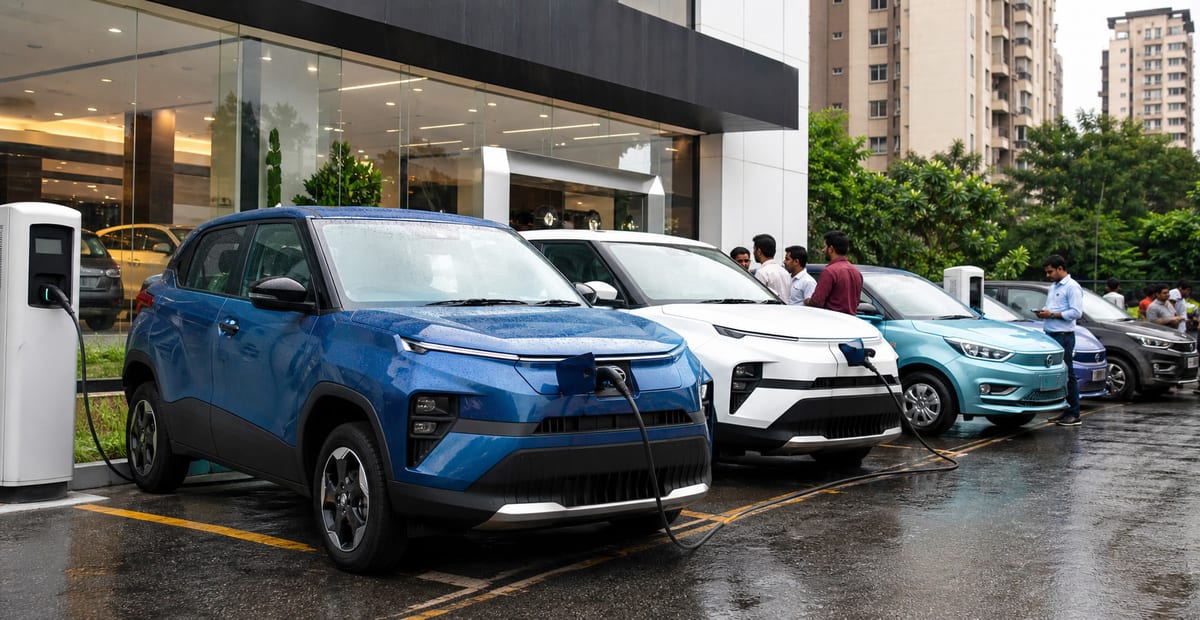
India's electric passenger-vehicle market has crossed an important psychological and commercial line. In June 2026, retail sales of electric passenger vehicles rose to 31,253 units, the first time the segment has moved beyond the 30,000 mark in a single month. For FuelPrice readers, this is not simply an industry bragging point. It is one of the clearest signs yet that EV adoption in India is becoming a practical mobility and fuel-cost story rather than a niche technology story.
The number matters because it arrives alongside a wider shift in the economics of car ownership. Higher petrol and diesel costs, a bigger range of electric models, stronger warranty coverage and improving charging confidence are all making EVs easier to justify for more buyers. Economic Times reported on June 29, 2026 that India\'s electric passenger-vehicle market is now expected to cross 3 lakh annual sales for the first time this year, with registrations already nearing 1.5 lakh units in the first half. June\'s record retail performance gives that projection more weight.
Sponsored
It also tells us the market is no longer being carried by just one carmaker or one city-type buyer. Tata Motors remains the leader, but Mahindra, JSW MG Motor, Maruti Suzuki, Vinfast and BYD all show that demand is broadening. That is what turns a one-month record into a structural signal.
What happened in June 2026
Autocar India\'s June 1, 2026 retail analysis, based on Vahan registration trends, said June sales rose to 31,253 units, up 106 percent year on year from 15,203 units in June 2025 and up 12 percent month on month from the previous best of 27,977 units in May 2026. That means June did not just edge past an old record. It broke through it by a meaningful margin.
Tata Motors held the number one spot with 12,023 units, while Mahindra posted 7,645 units and JSW MG Motor delivered 5,785 units. Maruti Suzuki reached a new high of 1,896 e-Vitara deliveries, Vinfast registered 1,394 units, and BYD also touched a new monthly best at 860 units. The top order stayed broadly intact, but the key takeaway is that several manufacturers hit new highs in the same month.
| Carmaker | June 2026 retail sales | Why it matters |
|---|---|---|
| Tata Motors | 12,023 | Still the market leader and above 10,000 units for a second straight month. |
| Mahindra | 7,645 | First time above 7,000 units, showing the market is not a one-brand story. |
| JSW MG Motor | 5,785 | Keeps MG firmly in the top three as EV demand spreads across price bands. |
| Maruti Suzuki | 1,896 | India\'s largest PV brand is beginning to build EV scale with the e-Vitara. |
| Vinfast and BYD | 1,394 and 860 | Suggests more imported and premium-adjacent EV options are finding buyers too. |
Why this matters for fuel users, not just automakers
The strongest FuelPrice angle is simple: every serious EV sale is a vote on running cost. Buyers are not only choosing screens, gadgets or green branding. They are comparing what it costs to move around every day. Economic Times, citing Crisil, said internal-combustion running costs rose by about 7-8 percent in May because of fuel-price pressure linked to West Asia tensions. When petrol and diesel become more volatile, the total cost-of-ownership case for EVs improves automatically.
That shift matters most for urban households with predictable daily driving, fleet users, ride-hailing operators and people comparing a mid-size EV with a petrol or diesel SUV whose fuel bill remains exposed to every crude swing. The point is not that every buyer will switch immediately. The point is that the cost conversation has changed. Earlier, the EV debate in India was mostly about range anxiety and charging fear. Now it is increasingly about whether an EV can save enough over time to justify the upfront premium.
June\'s record suggests more buyers are deciding that the answer is yes, at least in the passenger-car space. That does not eliminate the usual concerns around charging access, resale value or apartment-charging constraints. But it does show those concerns are losing some of their power as outright market blockers.
What is driving the jump now
The market is being helped by four overlapping forces. First, there are simply more vehicles to choose from. Economic Times said the number of electric passenger-vehicle models in India has doubled to around 20 over the past two fiscal years and could exceed 35 by the next fiscal year. A broader product range matters because Indian buyers do not move as a block. They need choices by price, body style, family size and driving pattern.
Second, battery credibility is improving. ET reported that premium EVs now offer 500-700 km claimed range, while mid-range models are offering roughly 300-450 km. Even if real-world results vary, those numbers make EVs easier to imagine beyond short commutes. Third, battery warranties and Battery-as-a-Service models are helping reduce anxiety around long-term ownership cost. Fourth, the charging narrative is improving just enough to support demand, even if infrastructure is still uneven across cities and highways.
This is why June is important. The record is not being built on one subsidy announcement or one discount cycle. It is being built on a market that is gradually becoming easier to trust.
What to watch next
The next test is whether June was a one-month high or the start of a new normal above 30,000 units. The festive season should provide a clearer answer. ET reported that the second half of 2026 could see faster momentum as more launches arrive and seasonal buying strengthens. Watch for three signals in particular: whether mass-market EV launches expand below the Rs 15 lakh band, whether charging additions keep pace with buyer growth, and whether fuel-price volatility remains high enough to keep the EV running-cost advantage in focus.
There is also a competitive angle. Tata still leads, but Mahindra is scaling fast, MG remains strong, Maruti is entering the fight more credibly, and new entrants are not staying invisible. If this continues, EV growth will no longer depend on a single flagship product cycle. That would make the segment much harder to dismiss as a temporary urban trend.
The reader takeaway is clear. June 2026\'s 31,253-unit milestone matters because it shows electric passenger vehicles are becoming part of mainstream buyer calculation in India. The trigger is not ideology alone. It is a combination of fuel-cost pressure, wider choice, better battery confidence and a stronger belief that EV ownership is now manageable. If those conditions hold, the 30,000 line may end up looking less like a peak and more like the point where India\'s passenger EV market stopped being experimental.
Sources: Autocar India June 1, 2026 retail sales analysis, Economic Times June 29, 2026 market outlook, VAHAN dashboard, Ministry of Road Transport and Highways.