Blue Energy Motors has crossed 100 million cumulative green kilometres with its fleet of electric and LNG heavy-duty trucks in India, turning a clean-freight claim into a sizeable operating milestone. The figure covers more than 1,400 EV and LNG trucks running across key freight corridors, with the company estimating that the fleet has reduced more than 30,000 tonnes of carbon emissions.
For ordinary fuel users, this may sound like a commercial-vehicle industry update. For logistics buyers, transporters and companies that move goods every day, it is more important than that. India's freight system is still heavily exposed to diesel prices, highway downtime, route reliability and fuel availability. A fleet crossing 100 million kilometres on LNG and electric platforms suggests that alternative-fuel trucking is no longer limited to a few demonstration vehicles parked at launch events. It is beginning to operate at route level, where fuel cost, uptime and driver scheduling decide whether a technology survives.
Sponsored
What happened
Blue Energy Motors, a manufacturer focused on LNG and electric heavy-duty trucks, reported that its deployed fleet has now travelled 100 million cumulative kilometres across India. Autocar Professional, CMV360 and TrucksDekho all reported the same core milestone: more than 1,400 EV and LNG trucks, over 30,000 tonnes of estimated CO2 reduction, LNG variants with up to 2,400 km claimed range on a single fill, and battery swapping designed to cut electric-truck downtime to less than five minutes.
The milestone follows a rapid scale-up phase. In September 2025, Business Standard reported that Blue Energy Motors had raised fresh funding that took its total capital raised to USD 50 million, including USD 30 million from Nikhil Kamath and Omnitex Industries. That update also placed the company's manufacturing capacity at 10,000 trucks per year and said its earlier fleet had crossed more than 60 million kilometres. The latest 100 million km figure therefore signals both higher deployment and heavier use of vehicles already in service.
Why this matters for fuel and freight users
Diesel remains the default fuel for medium and heavy commercial vehicles because it combines energy density, refuelling speed, range and a deep service network. Replacing diesel in long-haul freight is harder than electrifying scooters, city buses or short urban deliveries. A heavy truck cannot spend long periods waiting at a charger if its route economics depend on high utilisation, predictable arrival windows and steady driver hours.
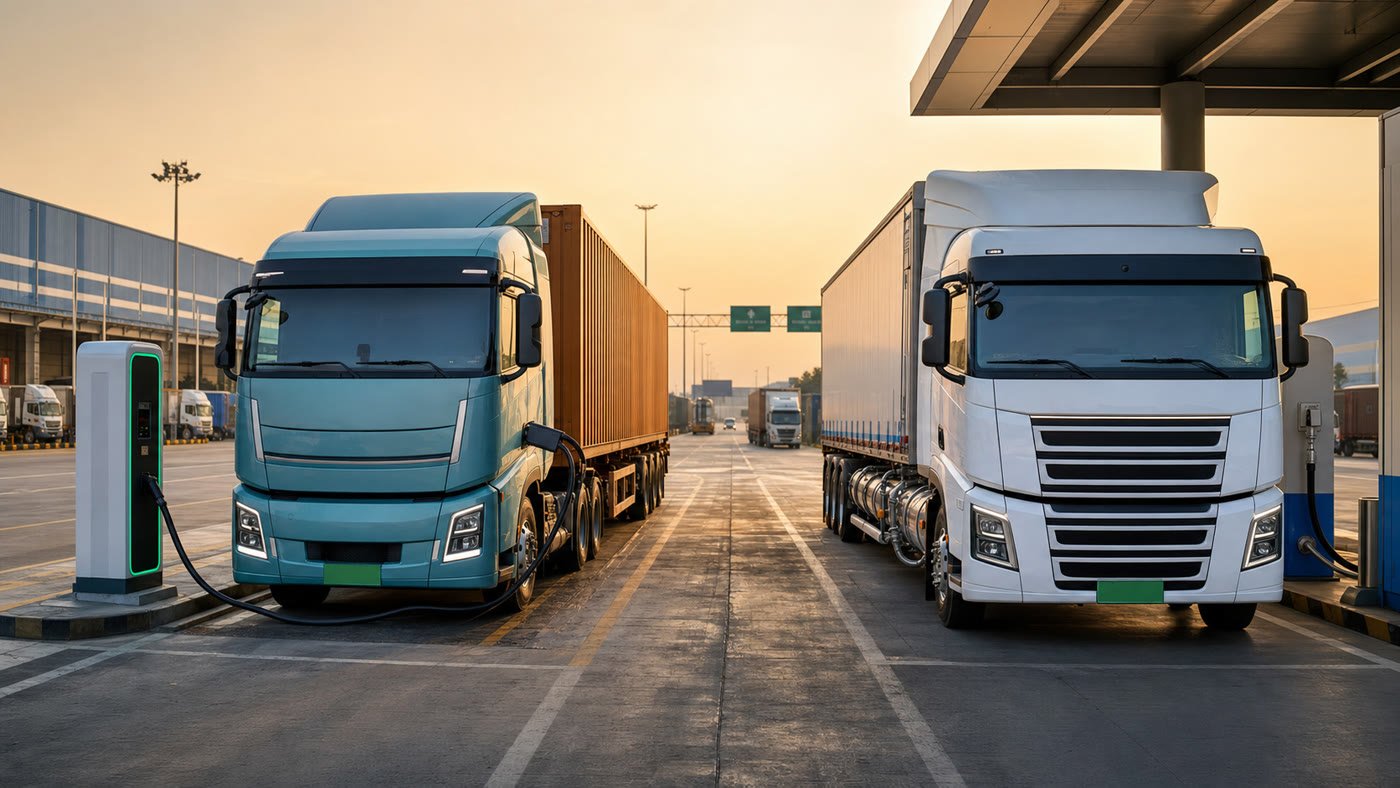
This is where Blue Energy's dual approach matters. LNG is not a zero-emission fuel, but it can reduce certain emissions and provide long driving range for line-haul operations where battery-electric trucks still face infrastructure and payload constraints. Electric trucks, meanwhile, can work well where corridors have charging or swapping support and where fleet operators can plan operations around energy depots. The combination gives transporters more than one pathway away from diesel dependence instead of forcing every freight route into the same technology box.
| Milestone detail | Why it matters |
|---|---|
| 100 million cumulative green kilometres | Shows alternative-fuel trucks are being used in real freight operations, not only pilot trials. |
| More than 1,400 EV and LNG trucks | Indicates fleet-level adoption across routes, customers and duty cycles. |
| Over 30,000 tonnes estimated CO2 reduction | Gives shippers and fleet owners a measurable sustainability metric for freight contracts. |
| Up to 2,400 km claimed LNG range | Addresses a key long-haul concern: whether trucks can cover trunk routes without frequent fuel stops. |
| Battery swapping under five minutes | Targets electric-truck downtime, which is one of the biggest barriers for high-mileage commercial use. |
Who is affected
The first affected group is fleet operators. Their business is built around total cost per kilometre, vehicle uptime, maintenance predictability and fuel-risk management. When diesel prices rise or supply-chain disruptions push fuel costs higher, transport margins can shrink quickly, especially on contracted freight lanes where rates do not reset every day. LNG and EV trucks can help operators diversify energy use, but only if infrastructure, service support and financing work at scale.
The second group is large shippers. FMCG companies, e-commerce players, cement makers, steel producers, auto manufacturers and large retailers increasingly have to report emissions from logistics. If alternative-fuel trucks become available on more corridors, shippers get a practical way to reduce freight emissions without redesigning their supply chains from scratch.
The third group is the wider fuel and mobility ecosystem. A larger LNG and EV truck fleet changes demand patterns around depots, charging sites, swapping stations, LNG fuel lanes, maintenance workshops and route planning software. Diesel will remain central to Indian freight for a long period, but every serious alternative-fuel corridor creates pressure on conventional fuel-only logistics models.
The practical challenge: infrastructure decides adoption
The milestone is important, but it does not mean the diesel truck market changes overnight. Heavy trucks need reliable fueling or charging points, trained service teams, spare parts, route planning, driver training and financing structures that work for fleet owners. A transporter will not buy a cleaner truck simply because it is cleaner. The vehicle must carry the required payload, finish the route on schedule, avoid unplanned downtime and deliver a cost case over its working life.
That is why the corridor model is central. LNG trucks need access to reliable refuelling lanes on trunk routes. Electric trucks need either high-power charging or battery swapping that fits the daily dispatch cycle. Blue Energy's Energy-as-a-Service approach is aimed at reducing upfront capital pressure, but the model will be judged by uptime, route coverage and how quickly customers can scale from a handful of trucks to meaningful fleet share.
What changes now
The 100 million km mark gives the clean-trucking market a stronger proof point. It gives logistics buyers a data-backed reason to ask for EV or LNG options on suitable routes. It gives fleet operators a reason to compare diesel-only risk with diversified energy use. It also gives infrastructure providers a clearer signal that heavy-duty alternative-fuel trucking has demand beyond city delivery and bus operations.
For vehicle buyers, the message is not that every truck should immediately become electric or LNG-powered. The message is that route-specific fuel planning is becoming more important. Long-haul, fixed-corridor and hub-to-hub operations may be early candidates for LNG and battery-swapping models. Shorter high-frequency freight lanes with predictable return-to-base operations may suit electric trucks. Mixed fleets could become the practical bridge while infrastructure catches up.
What to watch next
The next test will be whether this deployment can expand without losing reliability. Watch for more LNG refuelling points on freight corridors, more swapping or charging locations for electric heavy trucks, fleet orders from large logistics companies, and public data on operating cost per kilometre. Also watch diesel price volatility, because every spike in fuel cost makes transporters recheck alternatives more seriously.
The clear takeaway is that India's freight transition is becoming operational, not just aspirational. Blue Energy Motors crossing 100 million green kilometres does not end diesel's dominance, but it shows that EV and LNG heavy trucks are earning real kilometres on Indian routes. For transporters, shippers and fuel users, that is the part that matters.