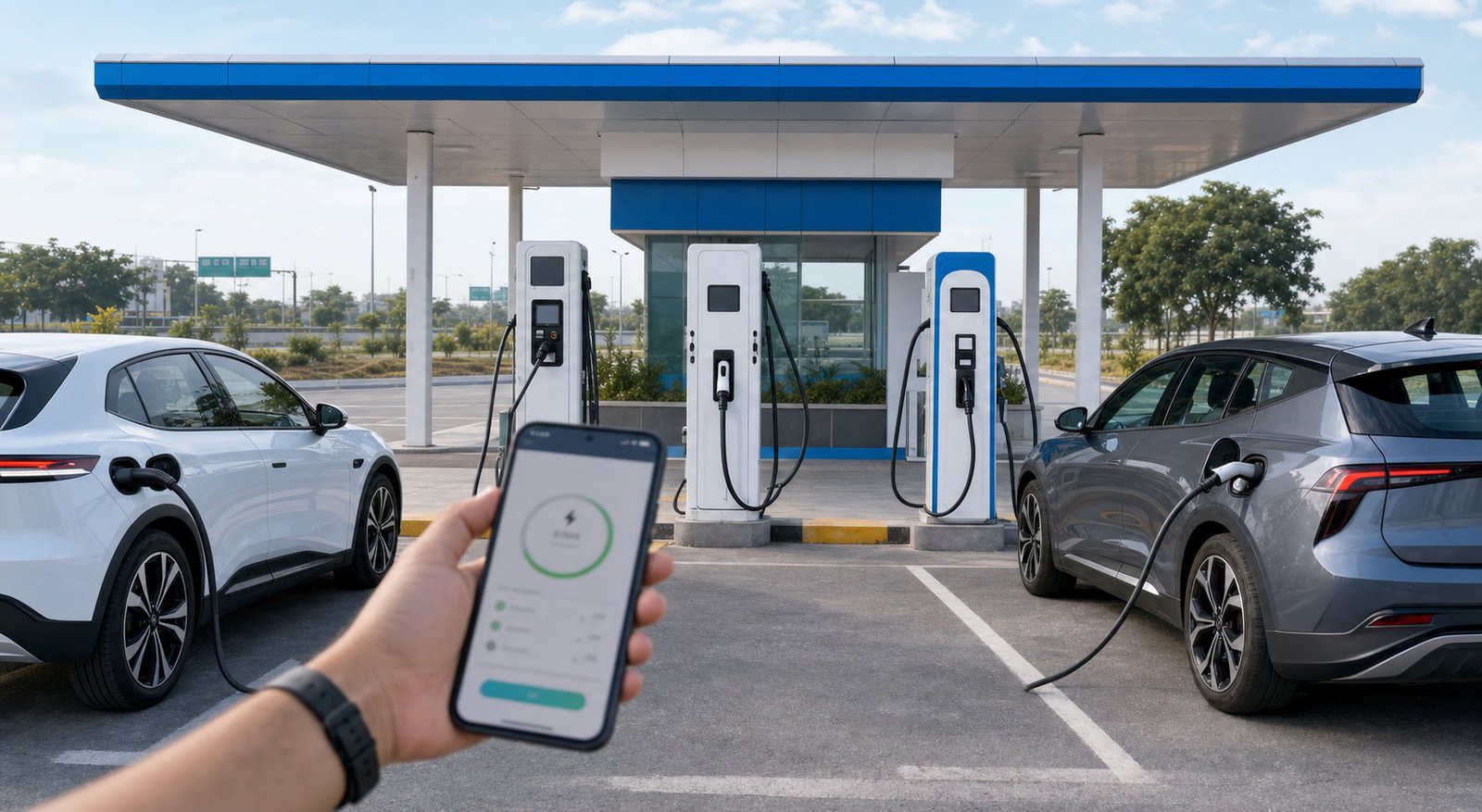
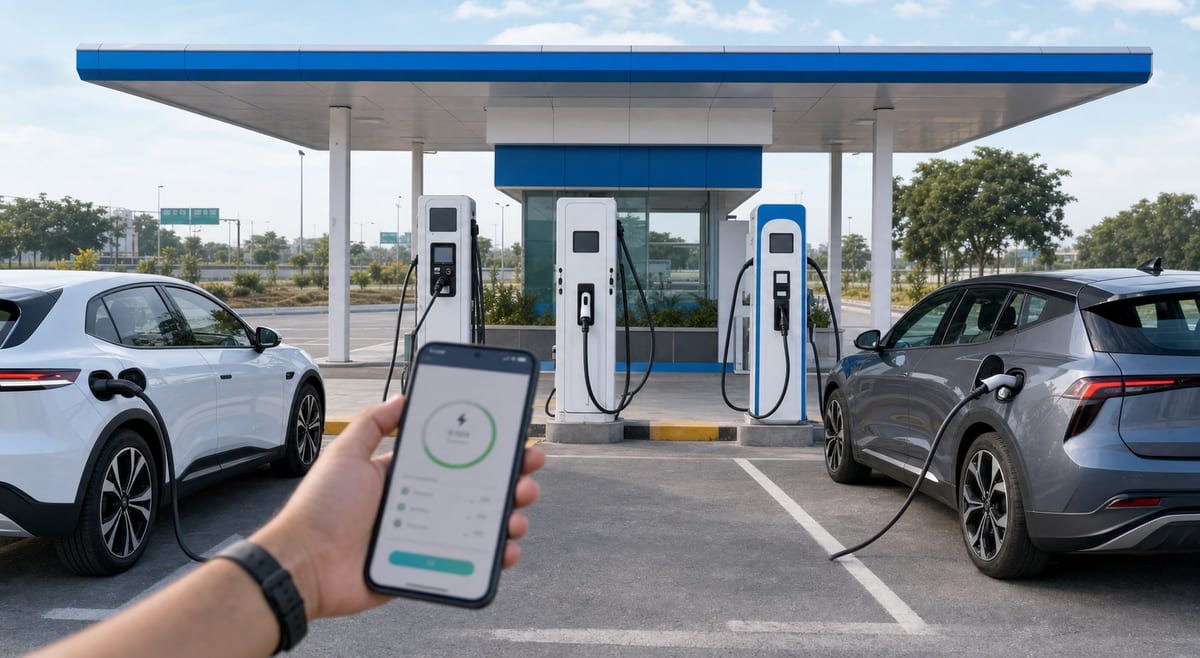
Bolt.Earth and ChargeZone have moved India’s EV charging conversation from how many chargers exist to how easily drivers can actually use them. Their new interoperability partnership links the two networks through a single app and real-time access layer, giving EV owners one place to find, start and pay for charging across more than 1,500 fast-charging locations.
That may sound like a software update, but for EV users it solves a very real problem. India’s charging ecosystem has grown quickly, yet many drivers still face a fragmented experience: multiple apps, different logins, different payment methods and uneven visibility on charger availability. The result is unnecessary friction, especially for highway travel and for owners who are still learning where and how to charge outside their home network.
Sponsored
This story matters because EV adoption in India is no longer only about whether the car or scooter is good enough. It is increasingly about whether the ecosystem feels easy enough. Interoperability does not add new battery chemistry or bigger range numbers. Instead, it tackles range anxiety from the other side: by making chargers simpler to discover and easier to use.
What Bolt.Earth and ChargeZone are changing
According to The Economic Times, the two charging networks have integrated their systems so that users can access chargers from both operators through a single app. That means the driver should be able to locate an available charger, begin a session and complete payment without switching platforms. The companies say the combined network spans highways, intercity corridors and urban mobility hubs, which is exactly where EV drivers need reliability the most.
Bolt.Earth says its network now spans more than 2,000 cities and includes a mix of standard and fast chargers, while the company also claims a nationwide footprint of more than 100,000 chargers across different charging formats. ChargeZone, meanwhile, has built a public fast-charging backbone serving personal, commercial and fleet users across key routes. The partnership is about putting those assets into a shared, more usable layer.
For the average EV buyer, that means the question is shifting from “Which network do I subscribe to?” to “Which charger is nearby and available?” That is a much healthier market dynamic.
Why interoperability is important now
India’s EV market is at a stage where infrastructure is expanding, but the user experience still decides whether adoption feels mature or messy. A charging station that exists on a map is not enough if the driver cannot easily access it. Interoperability reduces that friction by turning separate networks into something closer to a roaming ecosystem.
That matters most on long-distance trips. Highway EV travel fails when drivers worry about whether a charger is operational, whether the right app is installed, or whether payment will work smoothly at the point of use. One common platform can reduce those pain points, which in turn supports more intercity EV travel and more confidence among new buyers.
The timing also fits a broader national push. States are still building out charging ecosystems and policy support, and recent coverage has shown how EV infrastructure remains a priority from Tamil Nadu to Uttar Pradesh. A shared charging layer makes those investments more useful because it helps separate physical deployment from platform fragmentation.
Who benefits first
The biggest immediate winners are likely to be four-wheeler owners who already use public fast chargers on a regular basis, especially in cities and on long routes. But the longer-term benefits spread further:
| Stakeholder | What changes | Why it matters |
|---|---|---|
| EV owners | One app to find, start and pay for charging across two networks. | Less friction and fewer app-switching headaches. |
| Highway travellers | Better visibility on nearby fast chargers. | Reduces range anxiety on intercity trips. |
| Charging operators | Higher utility from existing chargers through roaming access. | Improves charger utilization and user reach. |
| Fleet and commercial users | A broader and more practical charging map. | Supports predictable route planning and uptime. |
What this does not change
It is important not to oversell the announcement. Interoperability does not instantly make EV charging cheap, and it does not remove the need for more chargers in more places. It also does not solve every compatibility issue across every vehicle and connector standard. What it does is remove one of the biggest software barriers: network isolation.
That distinction matters for readers tracking EV adoption. The market has often focused on range, battery size and vehicle price. Yet the day-to-day ownership experience depends just as much on charging access, payment convenience and network reliability. If a user can charge easily through one platform, the EV feels more like a normal vehicle and less like a special-case tech product.
For charging operators, interoperability can also improve economics. A charger that is visible to more users has a better chance of being used more often, and higher utilization is crucial for return on capital. The stronger the utilization, the easier it becomes to justify expansion into highways, city clusters and fleet corridors.
What to watch next
The key question now is whether more networks follow the same model. India’s EV growth will accelerate faster if roaming partnerships become normal instead of exceptional. Watch for three things: whether the single-app experience is rolled out smoothly, whether roaming coverage expands beyond the initial 1,500-plus fast-charging points, and whether other charger operators join similar interoperability agreements.
If that happens, the EV charging landscape could shift from a patchwork of private islands to something closer to a national utility layer. That would be a bigger deal than it sounds, because mobility adoption often follows convenience more than ideology. People buy what feels easy to live with.
The bottom line: Bolt.Earth and ChargeZone are not just adding another charging partnership. They are trying to make India’s EV infrastructure feel more connected, more usable and less frustrating. For a market that still worries about range and access, that is a meaningful step forward.
Sources: Economic Times: Bolt.Earth-ChargeZone interoperability, Times of India: broader EV ecosystem context.