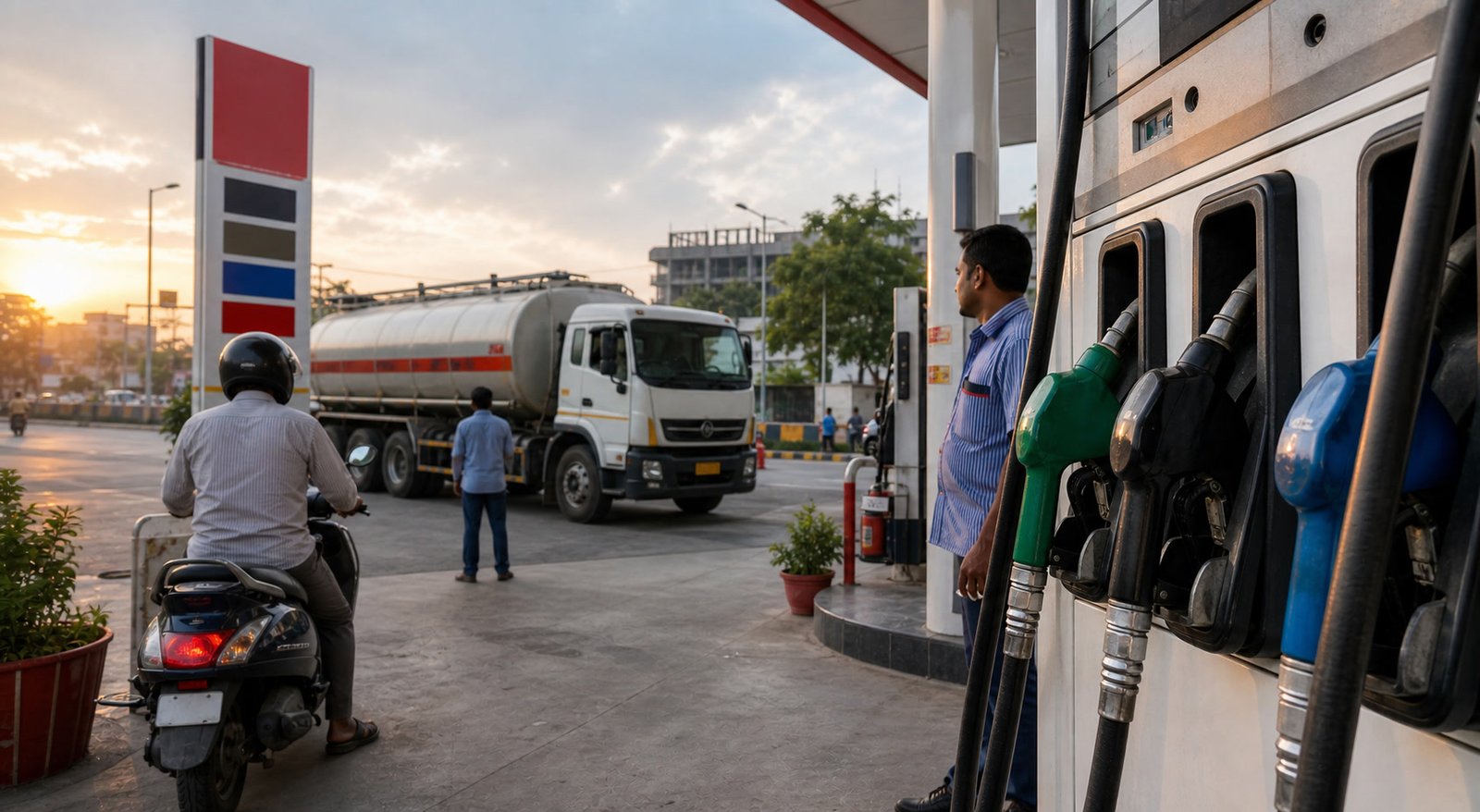
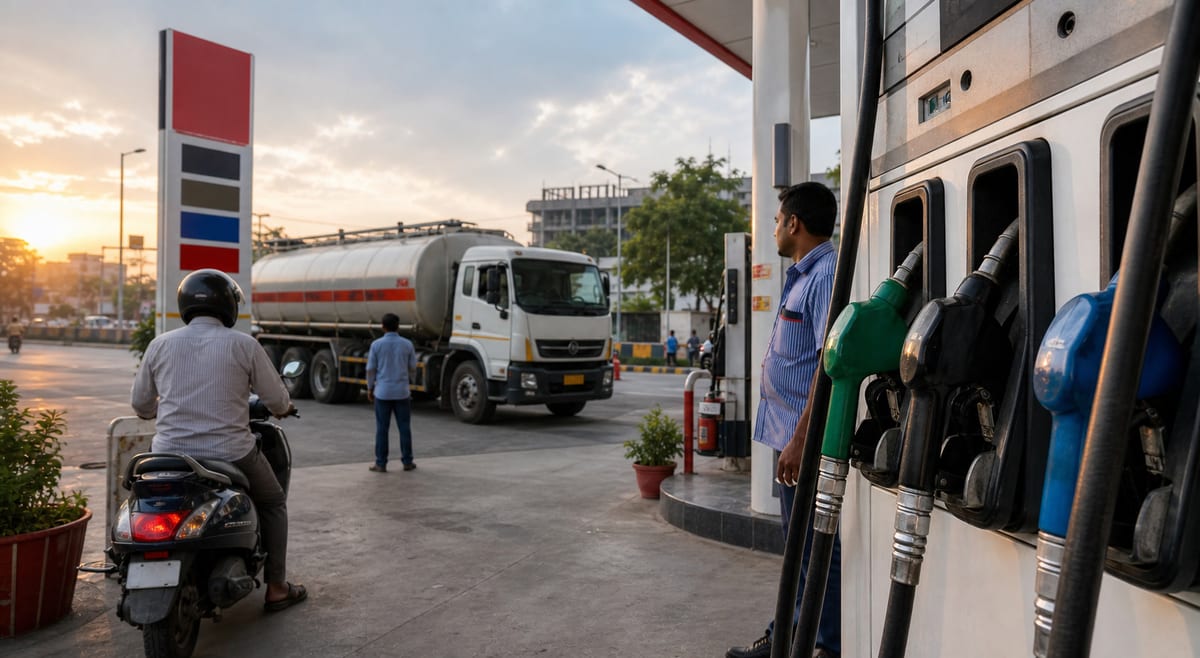
India’s fuel-price debate has turned slightly more hopeful. Union Petroleum Minister Hardeep Singh Puri has signalled that petrol and diesel rates may ease once cheaper crude oil purchases already made by Indian refiners start landing in the supply chain. That sounds simple, but for motorists and transport operators it could be the first meaningful hint in weeks that retail fuel prices may finally get some breathing room.
The timing matters. Global oil prices have cooled, with Brent crude slipping below the $80 a barrel mark at one point after easing geopolitical tension in the Middle East. For a country like India, which imports most of its crude, lower global oil prices do not just affect refinery economics. They influence everything from petrol pump pricing to trucking costs, inflation trends and the government’s fiscal comfort.
Sponsored
But the key phrase in the minister’s message is “cheaper crude arrives”. That means the benefit is not instant. Oil companies buy crude in cargoes and refinery batches, so there is a lag between a global price fall and any possible change at the pump. That inventory lag is exactly why consumers may hear the promise of relief before they actually see it.
Why this is more than a headline about oil prices
Fuel prices are one of the most important macro signals in India. A small change in diesel can ripple through freight bills, bus fares, farm logistics, manufacturing costs and consumer prices. Petrol matters too, but diesel is the bigger economic lever because it powers much of India’s road transport and a significant share of commercial movement.
When global oil prices rise sharply, India usually feels the squeeze in one of three ways: retail fuel prices rise, oil marketing companies absorb the shock and lose margins, or the government steps in with taxes or policy adjustments. When crude softens, the opposite can happen, but only if the system decides to pass on the savings. That is why Puri’s comments matter. They are a signal that the government sees a window for relief rather than another round of cost pressure.
TOI’s report says the minister argued that domestic fuel prices have not moved wildly despite big swings in global oil markets, especially during Middle East tensions. The broader message is that India has tried to prevent a full pass-through of recent volatility. If cheaper crude now arrives in the country, there is at least a policy opening for some correction in retail prices or at minimum a pause in further increases.
What motorists and freight users should watch
For motorists, the obvious question is whether a lower Brent price will finally show up at the petrol station. The realistic answer is: maybe, but not immediately and not automatically. Retail prices depend on crude costs, refining margins, freight, dealer commissions and taxes. If one of those inputs improves, the pump price can become more stable. If the improvement is strong and sustained, some relief becomes possible.
For truckers, fleet owners and logistics companies, even a pause in fuel inflation can be meaningful. Diesel is one of the largest variable expenses in goods movement. If input costs stabilise, route planning gets easier and freight quotes become less volatile. That can also help industries that depend on road transport to move goods quickly, especially in a period when margin pressure remains a concern.
For households, the benefit may not be visible as a large drop in day-to-day spending. Instead, it can show up indirectly if inflation cools and food, transport and consumer-goods costs stop rising as quickly. That is why crude prices matter even to consumers who do not track oil markets. Fuel prices sit beneath the broader cost of living.
| Who feels it first | Possible effect | Why it matters |
|---|---|---|
| Motorists | Chance of steadier or slightly lower petrol and diesel prices. | Direct relief at the pump is the most visible outcome. |
| Truckers and fleets | Lower fuel-cost stress if cheaper crude is passed through. | Diesel stability helps freight pricing and route planning. |
| Inflation watchers | Potential support for softer inflation prints. | Fuel is embedded in transport and consumer prices. |
| Government finances | Less pressure if oil costs stay lower for longer. | Cheaper crude can help keep fiscal stress in check. |
Why the relief may still be delayed
The public often assumes fuel prices move the moment Brent falls. In reality, India’s fuel market works with a delay. Refiners and oil marketing companies buy crude, process it, move it through pipelines and tankers, and only then sell products into the retail network. If prices rise or fall in the meantime, part of that change is buffered by old inventory and existing contracts.
That is why the minister’s message should be read as a directional signal rather than a promise of an immediate price cut. The real test is whether cheaper crude continues to arrive and whether the lower cost survives the journey from global market to Indian pump. If it does, retail pricing policy could soften; if not, the relief may remain theoretical.
There is also a broader political economy angle. Fuel prices are always watched closely because they affect the mood of households, transport unions, small businesses and state finances. Even modest relief can improve sentiment, while a fresh round of increases can trigger a much bigger reaction than the size of the hike itself would suggest. In that sense, Puri’s comments are important not only for what they say about oil but also for how they shape expectations.
What to watch next
The next few weeks will show whether this is just a verbal signal or the start of a real retail reset. Watch three things: whether Brent remains below the key level that made the latest relief possible, whether oil companies pass through cheaper crude in retail pricing, and whether the government uses the lower oil window to hold inflation in check rather than to build fiscal buffers.
For FuelPrice readers, the takeaway is practical. Cheaper crude is good news, but only if it survives the time lag between a global oil move and your next visit to the petrol pump. The current signal says relief may be on the way. The market will decide whether that signal becomes a number on the board.
Sources: Times of India: petrol, diesel rates may ease as cheaper crude arrives, Economic Times: oil below $80 may cap fuel-price hikes, Financial Times: oil sinks below $80 as traders bet on Hormuz flows returning.