Delhi’s electric-mobility push has reached a familiar Indian policy crossroads: the rules are moving faster than the infrastructure. The capital wants more e-autos on the road, fewer CNG three-wheelers over time and a cleaner public-transport mix. But drivers say the city is still asking them to electrify before the basics are fully in place.
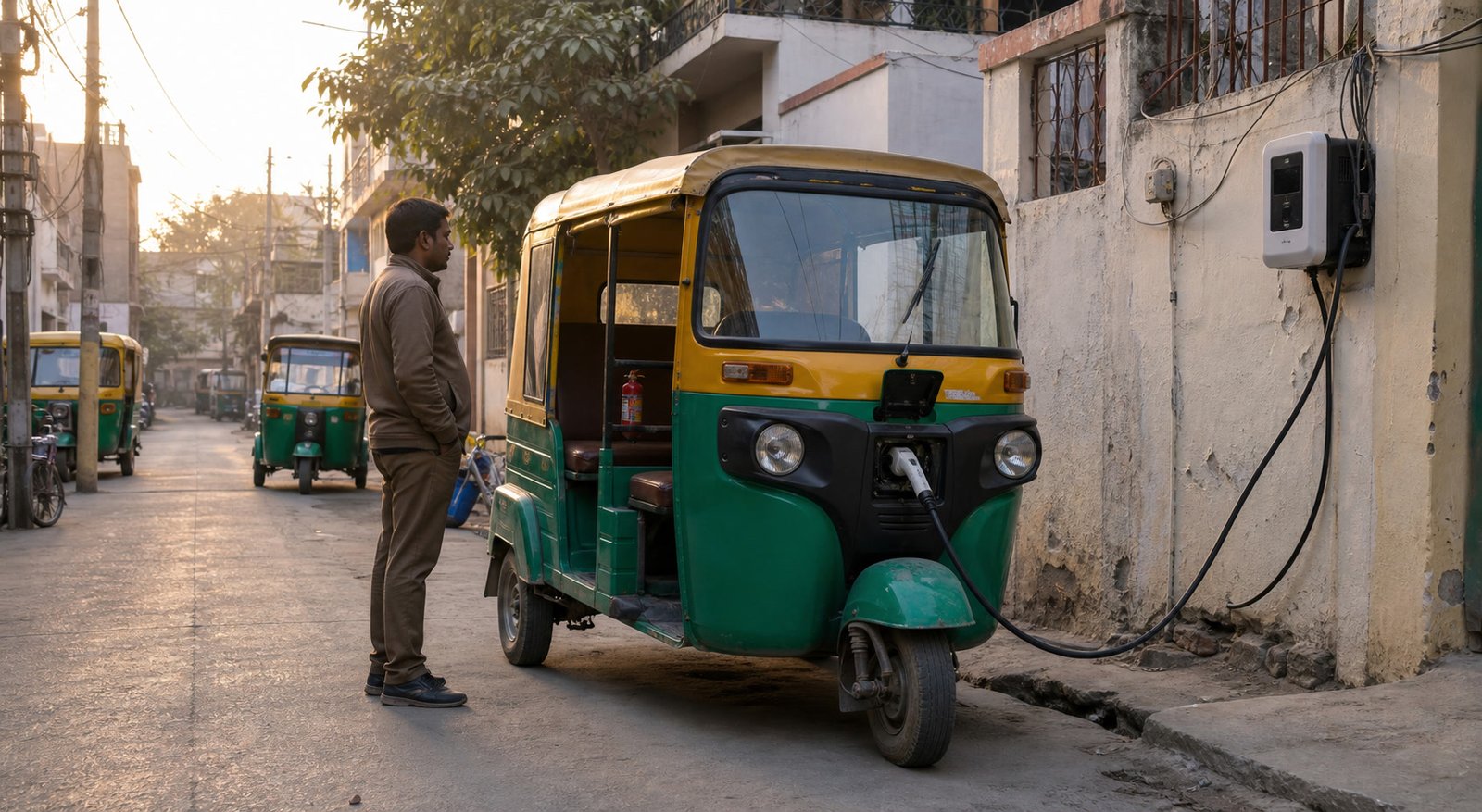
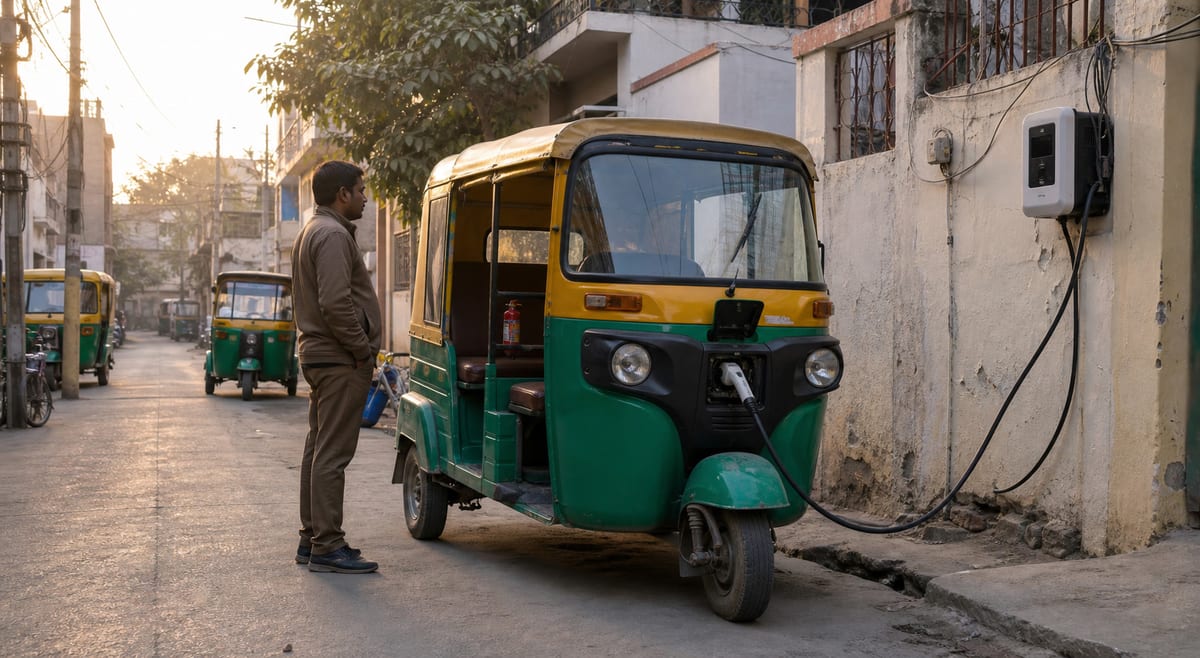
The most striking part of the story is not the policy document. It is the daily routine of drivers such as Mamta in Burari, who reportedly waits around three-and-a-half hours every morning while her electric auto-rickshaw charges before she can start earning. That is not a small inconvenience. For a driver who works on tight margins, every hour spent waiting is an hour not spent carrying passengers or delivering parcels.
Sponsored
Delhi’s draft EV Policy 2.0 makes the direction of travel clear. According to the report, the city plans to prohibit registration of new internal-combustion three-wheelers, including CNG autos, from January 1, 2027. Existing vehicles can continue to run under permit conditions, but future growth in the segment is expected to be electric. The policy also proposes incentives for e-autos and scrappage support for older vehicles.
That ambition is understandable. Delhi is still dealing with pollution, fuel-cost pressure and the long-term need to cut dependence on fossil-fuel mobility. E-autos are an important part of that transition because they serve the city’s most visible last-mile market. They also offer lower day-to-day running costs than CNG in many cases. The problem is that the economics only work if the vehicle can stay on the road long enough to earn.
What the drivers are saying
Drivers say the promise of lower operating costs is real, but the current ecosystem is too thin to support a big scale-up. In Burari, a home charging point may get the vehicle ready for work, but the wait time and dependence on a residential electricity connection create a bottleneck from the start of the day. One driver in the report also said the household connection had to be upgraded from 2 kW to 4 kW just to support charging.
The practical issue gets worse when drivers cannot charge at home. A cargo three-wheeler operator quoted in the report said a slow charger can take up to four hours, while a fast charger still needs roughly 90 minutes. For passenger autos and cargo vehicles, those numbers translate into lost trips, slower route planning and more uncertainty about where to work.
That matters because Delhi’s three-wheeler market is not a hobbyist segment. It is a livelihood segment. Drivers need predictable charging, nearby repair options and permit clarity. Without those, a policy that looks clean on paper can become difficult to live with on the street.
The bigger policy contradiction
The contradiction in Delhi’s approach is hard to ignore. The government wants to expand electric autos, but fresh registrations have reportedly been frozen for more than a year because of the permit cap. The report says Delhi’s auto permits are capped at about one lakh, a limit that has become a bottleneck even as the city talks about replacing ageing autos with e-autos over time.
That means the transition is being shaped by two separate constraints at once: the physical constraint of charging access and the regulatory constraint of permits. If either one remains tight, adoption will slow. If both remain tight, drivers may keep waiting on the sidelines even when policy support exists.
Delhi transport officials, according to the report, are examining legal options to increase the overall permit cap, while the government is also considering replacing roughly 40,000 to 50,000 ageing autos with electric vehicles over time. The long-term logic is straightforward: cleaner autos, lower emissions and a more modern last-mile fleet. But the transition will only be durable if the business model is viable for drivers.
| Policy piece | What it means | Why drivers care |
|---|---|---|
| Ban on new ICE three-wheelers from 2027 | New CNG and other combustion three-wheelers would stop getting registered. | It pushes the market toward e-autos. |
| E-auto purchase incentives | Draft incentives of Rs 50,000, Rs 40,000 and Rs 30,000 in years one, two and three. | Lower upfront pain, at least on paper. |
| Charging infrastructure gap | Drivers still wait hours and often lack reliable nearby chargers. | Lost income and route restrictions. |
| Permit cap problem | Fresh registrations have reportedly stalled for over a year. | Even willing buyers may not be able to enter the market. |
Why this matters for commuters and the auto industry
For commuters, the transition could eventually mean quieter, cleaner and more predictable last-mile travel. For the auto industry, it signals a bigger market for electric three-wheelers, charging hardware, batteries, service networks and financing products. For transport planners, it is a test of whether a city can switch an entire category of mobility without breaking the livelihoods built around it.
Delhi already has the outline of the answer in a February report on its EV Policy 2.0. That earlier coverage said the capital had about 8,998 EV charging points against a requirement of 36,177, with a target of 16,070 by year-end. Those numbers are helpful because they show the scale of the gap. If charging points are not plentiful enough for the city’s wider EV ambitions, e-auto drivers will feel the shortage first and the hardest.
The same February coverage also noted plans for fast-charging stations every 5 km along the 47-km Outer Ring Road and incentives under PM E-Drive that support both charging infrastructure and vehicle purchase. So the policy direction is not absent. The issue is execution speed. An EV market can survive a higher sticker price if it saves time. It cannot survive a higher downtime burden for very long.
The real takeaway
The real question in Delhi is not whether the city wants e-autos. It clearly does. The question is whether the city can build the rest of the ecosystem fast enough: chargers, home-electrical upgrades, technicians, spare parts, permit reform and financing that keeps monthly repayments manageable for drivers with thin margins.
That is why this story is bigger than one Burari driver or one charging point. It is about whether India’s clean-mobility shift can be made practical, not just mandatory. If Delhi can solve that, it will not just replace CNG autos with e-autos. It will give other cities a roadmap for what an actual transition looks like when the infrastructure is finally ready.
Sources: Times of India: Delhi wants e-autos, drivers want charging first, Times of India: Delhi EV Policy 2.0 and charging infrastructure.