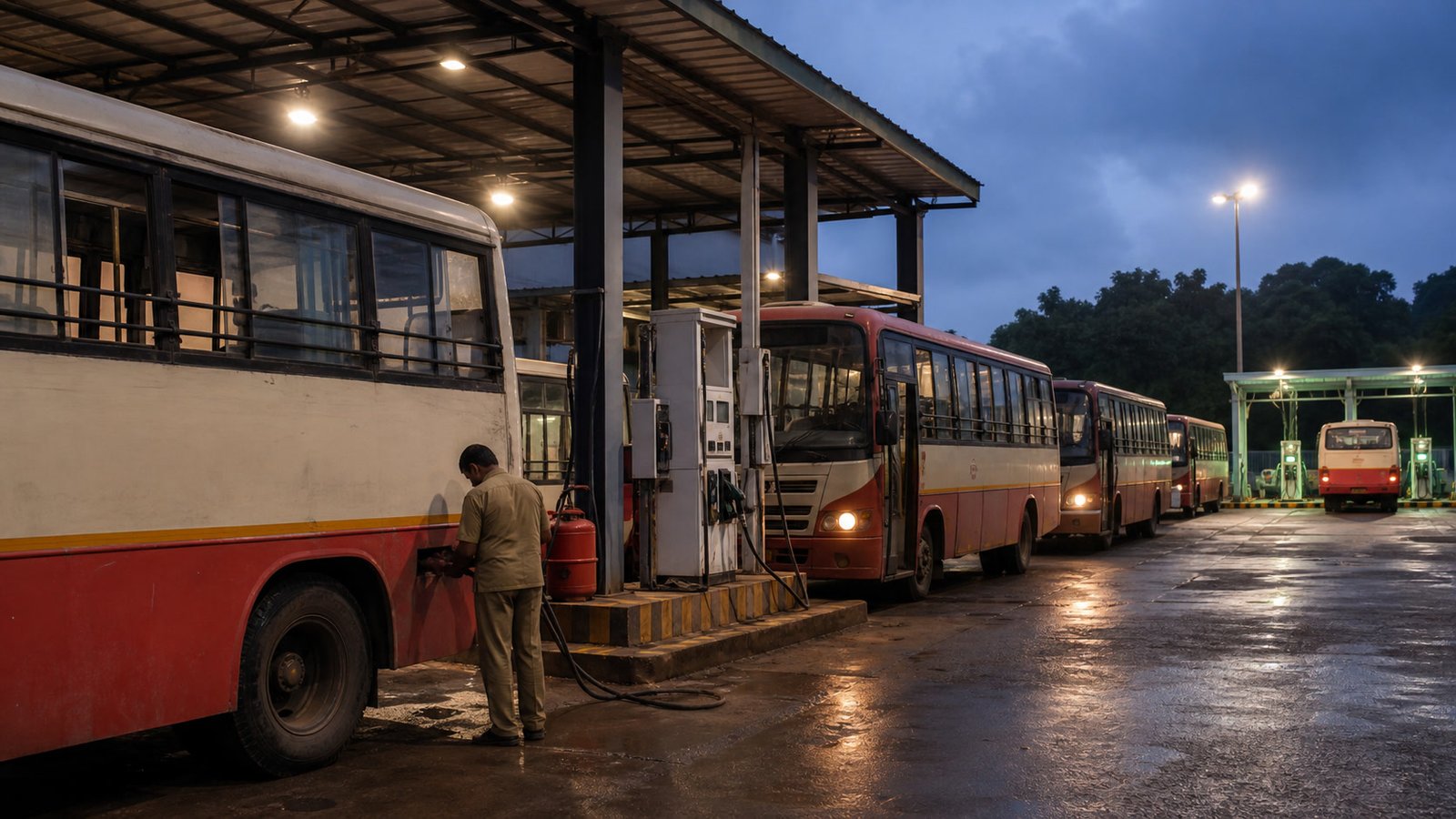
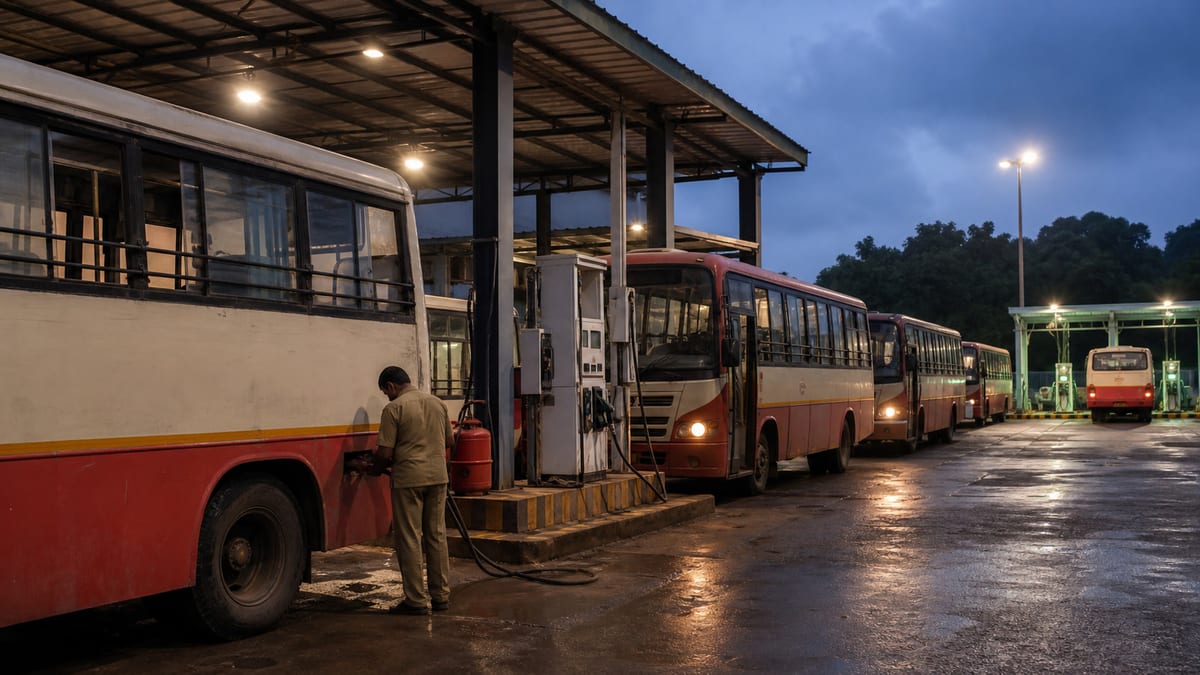
Goa has produced one of the clearest fuel-cost stories in India this week. On June 15, 2026, Times of India reported that the Kadamba Transport Corporation, the state-run bus operator better known as KTC, is facing an extra monthly fuel burden of around Rs 60 lakh after the recent diesel-price surge. That may sound like an accounting problem inside a transport corporation. It is not. For FuelPrice readers, it is a direct public-mobility story because diesel-cost pressure in a state bus fleet can eventually influence fares, service quality, route planning, maintenance timing and how much subsidy the government has to keep absorbing.
The reason this matters is simple. Public transport users rarely buy diesel themselves, but they still pay for diesel movements through the system. When fuel becomes materially more expensive for a large bus fleet, the pressure does not disappear. It usually shifts into one or more places: higher fares, delayed fleet replacement, thinner schedules, more dependence on state support, or slower expansion of services into low-demand areas. In Goa, KTC says it is not cutting services or raising fares immediately. That is useful for commuters in the short term. But the fuel math now running underneath the system is hard enough that passengers, taxpayers and policymakers all need to pay attention.
Sponsored
What happened now
According to the June 15 TOI report, KTC consumes roughly 15,000 litres of diesel every day, which works out to about 4.5 lakh litres a month. Management told the paper that every Re 1 rise in diesel adds around Rs 4.5 lakh to the corporation's monthly fuel bill. Last year, diesel for the corporation was in the Rs 82 to Rs 84 per litre range. It is now around Rs 95 per litre. That is an increase of about Rs 13 per litre, which is why KTC puts the extra monthly burden at roughly Rs 60 lakh.
The fleet mix explains why diesel still dominates KTC's operating economics. The same report says the corporation has about 630 buses, of which 460 are diesel and 173 are electric. That means Goa has made some visible progress on electrification, but diesel remains the backbone of the network. In other words, KTC is not yet in a position where EV adoption can neutralise a sudden diesel cost jump across the whole fleet.
| KTC diesel-cost marker | Current figure | Why it matters |
|---|---|---|
| Daily diesel consumption | About 15,000 litres | Shows how quickly even a small per-litre increase becomes a meaningful operating shock |
| Monthly diesel consumption | About 4.5 lakh litres | This is the base on which the fuel-price increase multiplies |
| Impact of every Re 1 rise | Around Rs 4.5 lakh extra per month | Makes the pass-through from daily price movements easy to understand |
| Change in diesel price | Roughly Rs 82-84 last year to around Rs 95 now | This is the direct reason KTC estimates an extra monthly burden of about Rs 60 lakh |
| Fleet composition | About 460 diesel buses and 173 electric buses | Shows why diesel remains central to service continuity even as EV adoption grows |
Why bus users should care even if fares do not change today
KTC has said it is not increasing fares immediately and is not curtailing services because it has government support and its own fuel stations. That provides short-term protection for daily passengers. But that protection is not free. If the operator keeps absorbing higher diesel costs without fare revision, the burden moves elsewhere: to the state budget, to deferred maintenance, to slower fleet upgrades, or to reduced flexibility in starting new routes.
This is why public-transport fuel stories deserve closer attention than they usually get. A private car owner sees a fuel-price increase at the pump on the same day. A bus user often experiences it later and indirectly, through the financial condition of the operator. When an extra Rs 60 lakh a month opens up in a state transport corporation's cost structure, the impact can surface over time in multiple layers rather than as one visible fare-board change.
The risk is especially important for socially necessary routes. State-run bus operators are often expected to run services that private operators may avoid because the economics are weak: rural routes, low-load timings, student-heavy connections, and intra-state links with more social value than commercial value. That means fuel inflation in a state-run fleet can end up testing not just fare policy, but the government's willingness to keep mobility accessible where market economics alone would not.
Goa is already showing how diesel pressure spreads through transport
This is not the first warning sign from Goa's bus ecosystem. On May 22, 2026, TOI reported that private bus operators in the state were cutting trips because diesel prices had risen sharply and fare revisions had not kept pace. That story matters because it shows how fuel volatility starts affecting service frequency before it necessarily reaches formal fare policy. Private operators typically have less fiscal cushioning than a state corporation, so they react faster through route cuts or trip rationalisation.
There is also a wider Indian pattern here. In Kolkata, TOI reported on May 16 that bus and auto operators demanded fare hikes after diesel crossed the Rs 95 mark. The point is not that Goa and Kolkata are identical markets. They are not. The relevant signal is that once diesel rises beyond a certain threshold, public-transport operators across cities begin asking the same question: how long can current fares or service levels hold?
National fuel pricing pressure is part of the backdrop. TOI reported on June 9 that the government had spent about Rs 1.23 lakh crore to keep petrol and diesel prices unchanged for 78 days earlier in the cycle and that state-run oil companies had been carrying heavy under-recoveries before retail hikes resumed. The same report said petrol and diesel prices were raised by Rs 7.5 per litre in four stages since May 25. For a large fleet operator such as KTC, those retail moves quickly become balance-sheet stress.
What changes now
Right now, the immediate change is one of financial stress, not yet one of passenger-facing policy. KTC says services are continuing, and the corporation has not announced an instant fare hike in response to the latest diesel shock. That is an important distinction. Passengers do not need to assume that a ticket revision is automatic in the next few days.
But a no-fare-hike position today does not remove the underlying pressure. If diesel stays elevated for longer, KTC and the Goa government may have to revisit one or more of the following: fare revision, state compensation, route economics, the pace of diesel-to-electric fleet transition, or the capital available for maintenance and replacement. Fuel-cost pressure that is manageable for a few weeks can become structurally difficult if it lasts across quarters.
There is also a policy credibility issue. If state-run operators keep absorbing high diesel bills while private operators cut trips, governments eventually have to decide whether public transport should be protected mainly through subsidies, mainly through fare revisions, or through a faster switch to lower-running-cost technology. Goa's numbers bring that trade-off into plain view.
What to watch next
The first indicator is obvious: whether diesel prices soften, stabilise or rise further. Since KTC says every Re 1 adds roughly Rs 4.5 lakh a month, even small market moves matter. The second is whether Goa maintains the no-service-cut, no-immediate-fare-hike approach if the current price band holds through the monsoon and into the tourist season. The third is fleet mix. If the state can increase the electric-bus share faster, it can gradually reduce exposure to diesel shocks. But until EVs materially displace the 460 diesel buses still doing the heavy lifting, fuel volatility will continue to define the operating equation.
Passengers should also watch for quieter signals: less slack in schedules, slower route additions, maintenance constraints, or a more explicit subsidy conversation from the state. In transport finance, those are often the early signs that a fuel-cost problem is no longer temporary.
The reader takeaway is straightforward. Goa's KTC story is not just about one corporation paying more for diesel. It is about how fuel volatility works its way through public transport. When a state-run fleet sees its monthly diesel burden jump by about Rs 60 lakh, the effect can eventually touch fares, route quality, taxpayer support and the speed of electrification. That is why diesel-price shocks matter even to commuters who never stop at a fuel station themselves.
Sources: Times of India June 15 KTC report, Times of India May 22 Goa private-bus report, Times of India June 9 fuel-price context report, Times of India May 16 Kolkata fare-pressure report.