Haryana EV Rule Puts Cab and Delivery Fleets on Cleaner-Fuel Path: Cost Impact Explained
Haryana's clean-mobility rule has moved from policy language to a practical fleet-cost issue for commuters, delivery users and platform operators in the NCR. The state has cleared aggregator licence rules that stop cab aggregators, delivery service providers and e-commerce companies from adding fresh petrol or diesel vehicles to their fleets in Haryana's NCR districts from January 1, 2026.
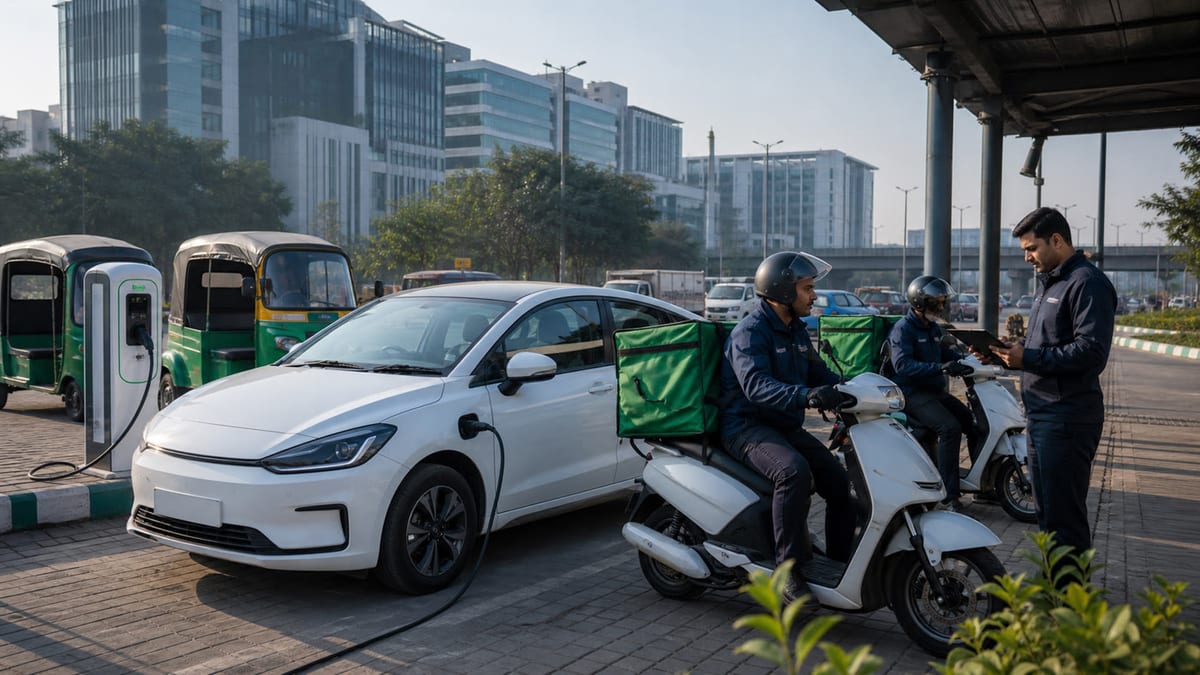
The rule matters because these are not occasional-use vehicles. App cabs, last-mile delivery scooters, three-wheelers and e-commerce logistics vehicles typically run far more kilometres per day than private cars. A change in their fuel type can alter operating cost, air-quality impact, charging demand, CNG demand and vehicle purchase planning across Gurugram, Faridabad and other Haryana NCR markets.
Sponsored
What has changed
Under the approved framework, new vehicles inducted into covered fleets in Haryana's NCR areas from January 1, 2026 must be CNG, electric vehicles, battery-operated vehicles or vehicles running on another cleaner fuel. The rule covers aggregators, delivery service providers and e-commerce entities. Reports also say only CNG or electric three-wheeler auto-rickshaws will be allowed as additional inductions into existing fleets in the NCR.
This does not mean every petrol or diesel cab disappears overnight. The immediate change is about new fleet additions after the deadline. Existing fleet transition, replacement cycles, licensing compliance and vehicle availability will decide how quickly the visible mix changes on roads. For consumers, the first impact may appear through ride availability, waiting time, delivery capacity or fare adjustments rather than through a sudden disappearance of current vehicles.
Why commuters and delivery users should care
The short-term concern is cost pressure. Electric vehicles and CNG vehicles can reduce running cost compared with petrol and diesel, especially for high-mileage fleets, but the acquisition and transition cost is not zero. Operators may need to finance new vehicles, plan charging access, train drivers, redesign shifts, install depot chargers or tie up with charging networks. Smaller fleet owners and driver-partners may feel this pressure more sharply than large platforms that already have fleet data, procurement scale and capital access.
That is why the story is more nuanced than a simple ban headline. If operators face higher upfront costs and slow charging access, some of that pressure can move into fares, delivery fees or platform incentives. If charging and CNG availability scale well, the lower operating cost of cleaner vehicles can improve fleet economics over time. The transition phase is the difficult part: the policy goal is lower emissions, but the practical test is whether drivers and operators can shift without losing earnings or availability.
| Affected group | What changes | FuelPrice relevance |
|---|---|---|
| Cab aggregators and fleet partners | New NCR fleet additions must move away from petrol and diesel. | High-km urban cabs can shift fuel demand from petrol/diesel to electricity and CNG. |
| Delivery and e-commerce operators | Two-wheeler, three-wheeler and last-mile fleet planning must align with cleaner-fuel rules. | Last-mile logistics may see lower energy cost later, but vehicle finance and uptime matter now. |
| Drivers and small fleet owners | Vehicle replacement choices become more compliance-linked. | Upfront cost, charging downtime and daily earnings become key transition risks. |
The policy background
The Haryana rules follow the direction set for Delhi-NCR clean mobility. The Commission for Air Quality Management had directed that no new petrol or diesel-powered vehicles be added to fleets of cab aggregators, delivery companies and e-commerce firms operating in Delhi-NCR from January 1, 2026. Haryana's cabinet approval gives that direction a state-level licensing and enforcement framework for operators working in its NCR districts.
The rule is also part of a broader regulatory structure, not only a fuel-type requirement. Reports point to mandatory licensing for aggregators and delivery service providers, onboarding norms for drivers and vehicles, safety measures, grievance redressal, training, insurance coverage, cybersecurity compliance and fare regulation. Vehicle and driver details are expected to be authenticated digitally through VAHAN and SARATHI, which makes compliance more traceable than a paper-based declaration.
Why this is a fuel and logistics story
For FuelPrice readers, the most important point is that fleet policy can move fuel demand faster than private-car policy. A private car may cover 10-30 km on a normal day. A cab or delivery vehicle can cover many multiples of that. Replacing one high-utilisation petrol or diesel fleet vehicle with an EV or CNG vehicle can therefore have a larger day-to-day effect on fuel consumption, emissions and operating cost than replacing a low-use private vehicle.
Delivery fleets are already more prepared than many passenger segments because two-wheeler and three-wheeler EV adoption has grown in last-mile logistics. However, readiness is not uniform. A large platform can negotiate bulk procurement, battery service, depot charging and route planning. A smaller operator may depend on public charging, local finance and driver availability. That difference will decide whether the rule feels like a manageable transition or a cost shock.
What to watch next
The next six months are critical. Watch for state notifications, licence application timelines, enforcement clarifications, charging-station additions around fleet hubs, CNG access in dense operating zones, platform fare changes and financing products for driver-partners. If cleaner vehicles become easier to finance and charge, the rule can reduce fuel exposure for operators. If infrastructure lags, ride-hailing and delivery networks may face temporary cost and availability pressure.
The reader takeaway is clear: Haryana's EV rule is not just an environmental headline. It is a direct operating-cost rule for high-mileage mobility businesses. The policy pushes cab and delivery fleets away from petrol and diesel additions, but its success will depend on whether charging, CNG supply, vehicle finance and platform economics move quickly enough before the January 1, 2026 deadline.
Sources
- NDTV Business, 4 June 2026: consumer and cost impact explainer
- The Economic Times/PTI, 18 May 2026: Haryana cabinet approval and rule details
- The Indian Express, 18 May 2026: NCR districts, green vehicle mandate and CAQM background
- NDTV Auto, 19 May 2026: regulatory framework, licensing and digital record context