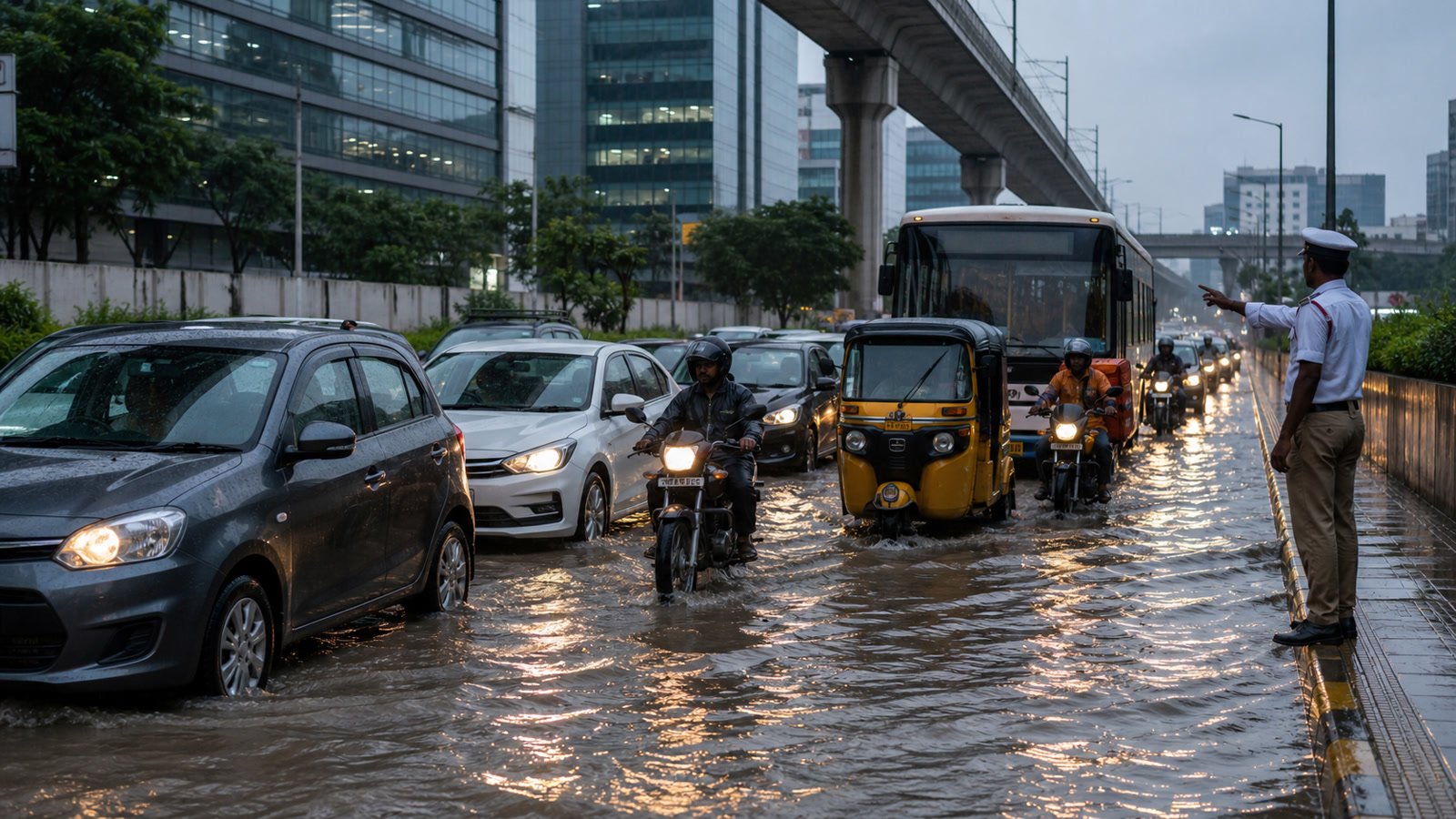
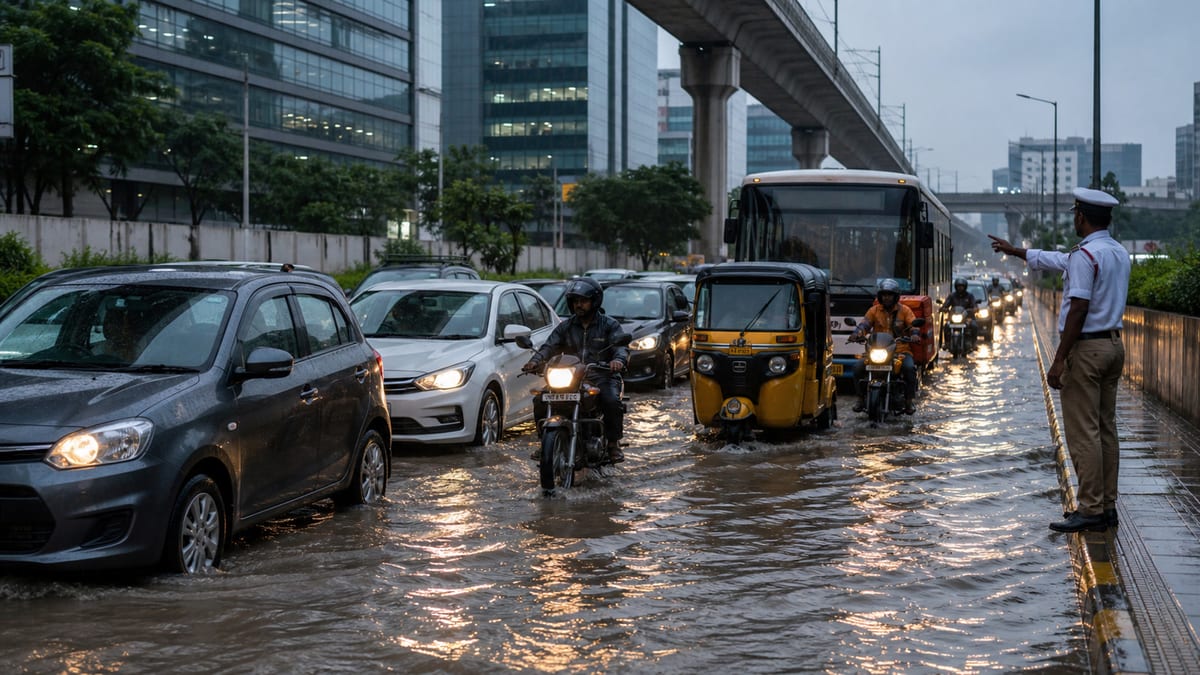
Hyderabad's latest spell of intense rain has turned a familiar monsoon problem into a practical fuel and mobility cost issue. Times of India reported at 00:28 IST on June 13, 2026 that heavy showers left several roads waterlogged, slowed traffic during peak movement, and forced traffic police, HYDRAA officials and Disaster Response Force teams to manage affected stretches. For FuelPrice readers, the key point is simple: pump prices did not need to change for the cost of travel to rise. When vehicles crawl through flooded roads, take detours, idle at chokepoints or wait for a safe opening, every trip consumes more time, more fuel and more patience.
The reported rain was not a vague citywide drizzle. TOI cited Telangana Development Planning Society data showing several pockets receiving more than 40 mm within a few hours. Mailardevpally in Rajendranagar recorded 45.3 mm, followed by Golkonda at 44.8 mm, Shastripuram near Ekta Colony at 42.5 mm, Rajendranagar ARS at 42.3 mm and Kishanbagh Government High School at 40.5 mm. Waterlogging was reported around the SR Nagar-Balkampet Road Underbridge, near Mehdipatnam Function Hall, on the NFCL to Panjagutta Flyover stretch, opposite Praja Bhavan, and near Masab Tank. These are not isolated inconvenience points; they sit inside everyday commute, office, cab, bus and delivery routes.
Sponsored
Why a rain jam becomes a fuel-cost story
A city traffic jam during rain works differently from a normal slowdown. Drivers keep engines running because the queue moves in short bursts. Two-wheelers avoid deeper patches, cars change lanes slowly, buses need more clearance, and autos or delivery riders search for passable gaps. Every stop-start movement burns fuel without covering meaningful distance. For petrol users, the hit appears as lower mileage after one bad commute. For diesel cabs, buses and delivery fleets, the same problem becomes lost utilisation, delayed trips and tighter daily earnings.
That is why this Hyderabad disruption matters beyond one evening. The cost is spread across people who may never appear in a rain damage estimate: office commuters who spend an extra hour in traffic, cab drivers who complete fewer trips, bike-taxi riders who avoid unsafe stretches, delivery partners who miss promised slots, bus passengers who lose connections, and small businesses waiting for goods to arrive. The visible water is only one part of the problem. The invisible part is wasted fuel, schedule failure and uncertainty.
The pattern is becoming clearer
The June 13 report followed another difficult rain episode earlier in the week. Economic Times reported on June 10 that about 4 cm of rain in many Hyderabad areas, with some localities receiving close to 10 cm, brought the city's IT corridor to a crawl. The report said roads turned into bottlenecks, several stretches flooded, trees were uprooted and many commuters were stranded for hours. It also highlighted the west-side office belt, including Madhapur, Hitec City, Gachibowli, Kondapur and Raidurg, as a major pain point during the evening rush.
For a fuel and mobility publication, that pattern is the story. Hyderabad's office districts generate high-volume peak travel. When rain coincides with office exit hours, the impact is multiplied: private cars, company shuttles, ride-hailing vehicles, buses, autos, food delivery riders, courier bikes and service vans are all competing for usable road space. A short but intense spell can therefore behave like a citywide operating shock.
| Who is affected | Immediate problem | FuelPrice impact |
|---|---|---|
| Daily car users | Idling, detours and stop-start movement through waterlogged stretches. | Lower real-world mileage and higher per-trip fuel cost even when pump prices are unchanged. |
| Two-wheeler riders | Unsafe water patches, poor visibility and route uncertainty. | Extra distance, higher wear risk and more cautious low-speed riding. |
| Cab, auto and delivery drivers | Fewer completed trips and more waiting time. | Earnings pressure because fuel and time are consumed before revenue is earned. |
| Urban logistics operators | Missed delivery windows and unpredictable route planning. | Higher buffer costs, possible customer-service penalties and rescheduling expense. |
What changed for commuters and fleets
For individual commuters, the decision tree changes quickly during heavy rain. The shortest road may not be the cheapest if it is waterlogged. A flyover approach may look clear but lock vehicles into a slow queue. An underbridge can become a risk point. A route that is normal at 5 pm can become unusable by 6 pm. Fuel planning also becomes more important because sitting in a queue with low fuel during rain is not only inconvenient; it can trap a vehicle at precisely the moment exits are limited.
For fleets, the problem is more measurable. Delivery teams need dynamic route buffers, cab operators need better driver guidance, office shuttle managers need departure staggering, and logistics dispatchers need to watch rain alerts before loading tight schedules. A diesel van or petrol two-wheeler that spends an extra hour in rain traffic has lost productive capacity. If this repeats across dozens of vehicles, the daily fuel bill and service reliability both suffer.
What drivers should do now
The practical response is not to panic, but to treat rain as a route-cost event. Before starting, check official weather warnings, live traffic updates and local advisories. Avoid known underbridges and low-lying stretches during intense rain unless authorities confirm movement is safe. Keep enough fuel or charge for a longer detour than usual. Two-wheeler riders should avoid entering water where depth is uncertain, because engine stalling and repair risk can cost far more than a delayed trip. Cab and delivery drivers should factor in the possibility that a short booking may take much longer than the map estimate.
Employers and large campuses have a role too. The ET report on the IT corridor shows why concentrated departure times can worsen rain traffic. Staggered exits, temporary work-from-home flexibility during warnings, and shuttle rerouting can reduce pressure on the same chokepoints. These measures may sound small, but they directly reduce idling, fuel waste and emergency congestion.
What to watch next
The India Meteorological Department's district warning page lists alerts by date and district, while TOI reported that IMD expected thunderstorms with lightning at isolated places over several Telangana districts for the next three days. Hyderabad's immediate watch points are the next evening peak, repeat waterlogging at known chokepoints, tree-fall clearance, traffic police diversions, and whether civic teams can clear drains before the next intense spell. The most important signal for fuel users is not only rainfall volume, but timing: moderate rain at the wrong office-exit hour can cost more fuel than heavier rain at a low-traffic time.
The reader takeaway is clear. Hyderabad's flooded roads are a mobility-cost warning. Rain does not raise petrol or diesel prices directly, but it can raise the real cost of each kilometre by slowing traffic, increasing idling, forcing detours and delaying deliveries. Until drainage, traffic management and peak-hour planning improve, commuters and fleets should treat heavy rain alerts as fuel-budget alerts too.
Sources: Times of India Hyderabad rain report, Economic Times Hyderabad IT corridor rain context, India Meteorological Department district warnings.