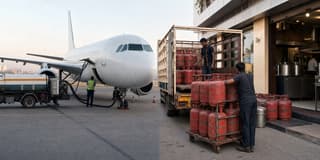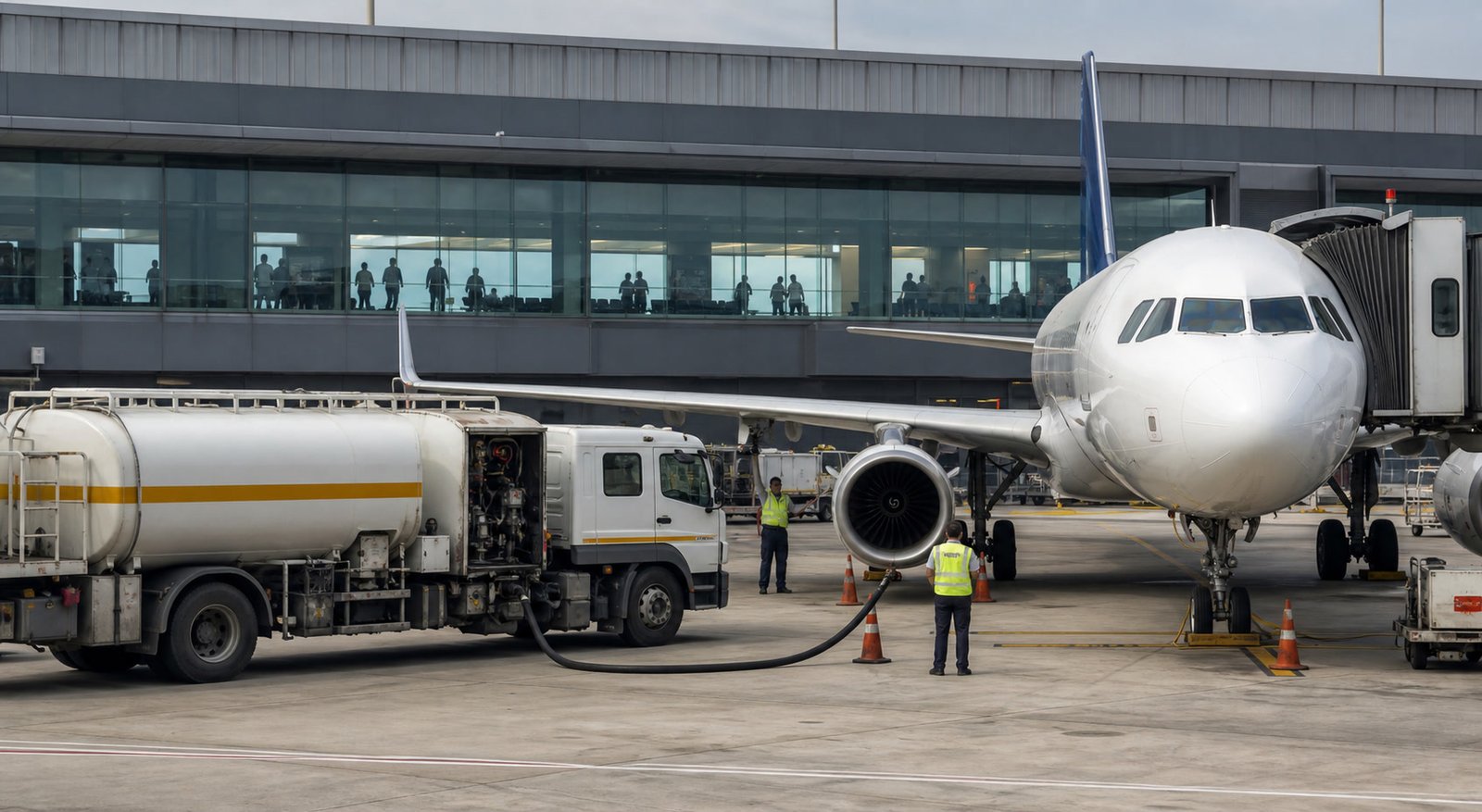
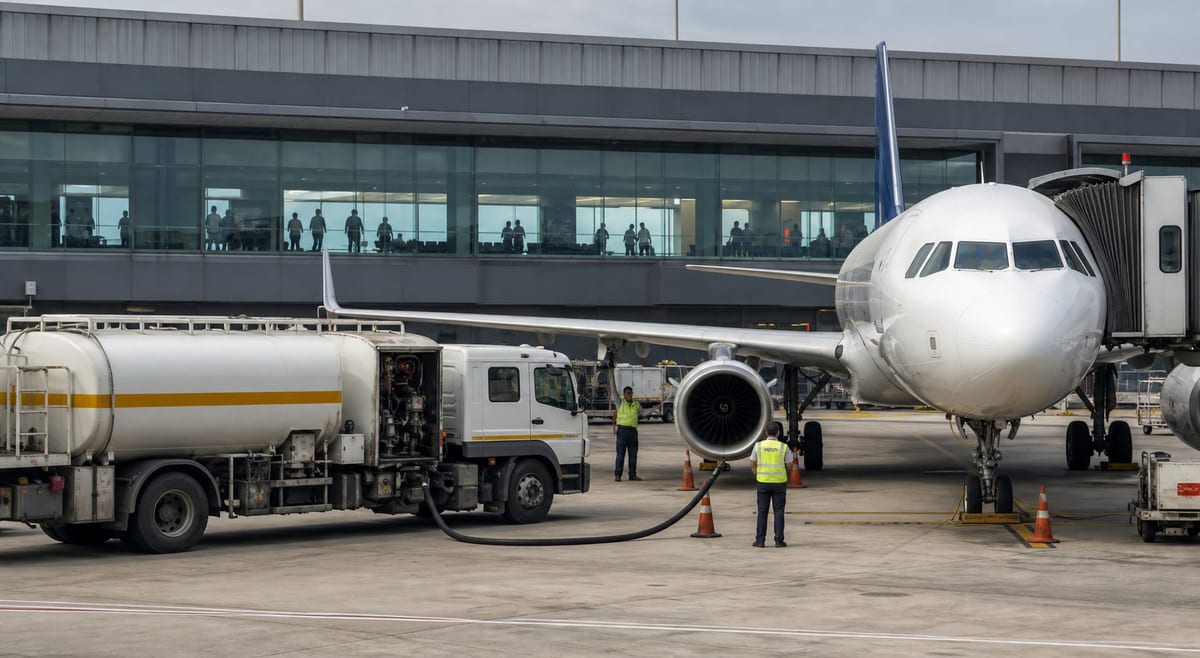
Indian air travellers are looking at a complicated fuel story this June. On one side, the government has approved a Rs 10,000 crore Aviation Turbine Fuel Price Stabilisation Fund to cushion airlines and passengers from extreme fuel volatility. On the other, oil marketing companies have already raised domestic aviation turbine fuel prices by 10% under a new regime that fixes the rate for three years. That means the policy is not an instant cheap-ticket announcement. It is a stability measure arriving at the same time as a higher fuel-cost base.
For FuelPrice readers, that distinction matters. If you only read the Cabinet approval, the move sounds like relief. If you only read the ATF hike, it sounds like fresh fare pressure. The real picture sits in between: India is trying to trade some immediate pain for greater predictability in a sector where fuel can make or break route economics, airline cash flow and ultimately passenger fares.
Sponsored
What exactly has happened
According to Economic Times, the Union Cabinet on June 3 approved a one-time budgetary support of up to Rs 10,000 crore for oil marketing companies to provide ATF price stabilisation for scheduled Indian airlines. The support is structured as interest-free advances routed through the Ministry of Petroleum and Natural Gas. ET reported that all willing scheduled Indian carriers, for both domestic and international operations, can access the mechanism.
A week later, Times of India reported that oil marketing companies raised aviation turbine fuel prices by 10% under the new price-stabilisation regime. Domestic jet fuel moved to Rs 115 per litre from Rs 105 per litre, and the report said the new level would remain frozen for three years under the regime. In other words, the stabilisation policy has not prevented a hike. It has reset the base and then promised price predictability around that base.
That is why the story is important for passengers, investors and the wider mobility market. A higher but predictable fuel cost affects airline planning very differently from a lower but wildly volatile one. Airlines can budget around predictability. They struggle more when fuel prices swing sharply and repeatedly.
Why ATF matters so much
ET reported that aviation turbine fuel now accounts for nearly 40% of airline operating costs and can climb to around 60% during periods of extreme volatility. That makes ATF one of the most decisive variables in aviation economics. If fuel jumps sharply, airlines face a narrow set of choices: absorb the hit, raise fares, trim frequency, reduce promotional pricing, delay route expansion or rework fleet deployment.
The problem became acute because of geopolitics and operational disruptions. ET said international ATF prices had surged nearly 2.5 times from about Rs 60.5 per litre in March 2026 to roughly Rs 142 per litre in May 2026 because of the West Asia crisis. The government also cited the closure of Pakistani airspace as a reason the pressure has become more serious, since Indian carriers have been forced onto longer flight paths to Europe, North America and Central Asia, raising fuel burn further.
For passengers, that combination matters more than the per-litre number alone. Higher ATF does not just affect the airline's fuel invoice. It influences network decisions, on-time resilience, profitability on thinner routes, and whether discounted fares remain available on competitive corridors.
| Current ATF signal | What it means | Who feels it |
|---|---|---|
| Rs 10,000 crore ATF Price Stabilisation Fund | Interest-free support to OMCs so airlines can buy ATF at more stable pre-agreed rates | Airlines, passengers, OMCs and airport-linked businesses |
| Domestic ATF raised 10% to Rs 115/litre from Rs 105/litre | Higher immediate cost base for domestic operations | Passengers through fare pressure, airlines through margins |
| Price fixed for 3 years under the new regime | Lower day-to-day volatility, better planning visibility | Airlines, route planners, investors and airport operators |
| ATF near 40% of airline costs, up to 60% in stress periods | Fuel remains the dominant operating risk in volatile periods | Entire aviation value chain |
Why passengers should not expect instant fare relief
The easiest mistake is to assume that a price-stabilisation fund automatically means lower ticket prices. That is not what the current facts support. The domestic ATF price has already been reset upward to Rs 115 per litre. TOI was explicit that fares may go up because of the 10% hike. The stabilisation mechanism is designed to stop sharper future shocks and give airlines visibility, not to erase the current increase.
That means air travellers should think in two layers. In the short term, the higher domestic ATF level can still translate into fare firmness, fewer discount windows and possible pressure on routes where competition is weak or load factors are uncertain. In the medium term, the fund may help keep fare spikes from becoming even worse if international fuel prices stay volatile.
Put differently, the policy is more about avoiding chaos than guaranteeing cheap tickets. Predictability is valuable, but predictability at a higher level is still a cost burden for travellers.
Who benefits most from the fund
Airlines benefit first because stable fuel procurement makes it easier to plan schedules, allocate aircraft and protect working capital. ET reported that the arrangement is self-sustaining: when international ATF prices moderate, the differential is to be recovered from oil marketing companies and returned to the Consolidated Fund of India. Participating airlines are expected to procure ATF exclusively from OMCs for up to three years, with annual review or until the advance is fully recovered.
Passengers benefit more indirectly. The best-case outcome is not immediate cheaper fares; it is fewer sudden fare spikes, fewer route suspensions and stronger continuity on marginal domestic and international sectors. That is especially important for Tier-II and Tier-III air links. ET said the government sees the fund as critical for protecting the roughly 77 lakh jobs linked to the aviation ecosystem and for sustaining access to smaller cities served under the UDAN framework.
Regional airports and city economies may also benefit. A June 5 TOI report from Nagpur said business and aviation stakeholders there believe the fund could help revive cancelled or suspended flights. The same report cited industry estimates that fuel constitutes nearly 40% of airline expenses and said stabilisation could improve route viability even if immediate fare cuts do not follow.
Why this is a mobility story, not just an airline story
FuelPrice readers may not track airline fuel every day, but ATF matters because aviation is part of the broader mobility and economic system. When airlines face sudden fuel shocks, business travel, tourism flows, cargo movement, airport-city economies and even investor sentiment can be affected. ET reported that IndiGo parent InterGlobe Aviation rose after the Cabinet decision, which shows how closely the market watches fuel-risk management in this sector.
There is also a logistics layer. Even if the current mechanism is focused on scheduled airlines, stable ATF pricing helps protect network continuity. That matters for time-sensitive cargo, regional connectivity and economic activity linked to airports. In that sense, this is not only a passenger-fare story. It is a transport-system resilience story.
What to watch next
The next signals are clear. First, watch whether airlines begin nudging up fares on domestic routes after the ATF reset to Rs 115 per litre. Second, watch how aggressively carriers maintain or expand schedules despite the higher base. Third, track whether the fund actually smooths price volatility over the coming months rather than simply freezing one elevated level. Fourth, monitor whether the pressure from longer international routings eases if airspace constraints change.
The reader takeaway is straightforward. India's ATF policy has moved into a new phase: higher domestic jet fuel now, but with a government-backed effort to stop even sharper future shocks. For airlines, that could mean better planning and less route disruption. For passengers, it means fare stability may improve over time, but immediate cheap relief is unlikely. The policy is best understood as a shock absorber, not a discount coupon.
Sources: Economic Times June 3, 2026 ATF fund report, Times of India June 10, 2026 ATF price-hike report, Times of India June 3, 2026 ATF fund explainer, Times of India June 5, 2026 Nagpur aviation-sector reaction.