Indian-Flagged Vessel Attack off Oman Raises Shipping Risk for Fuel Trade: What It Means for India Logistics and Pump-Price Outlook
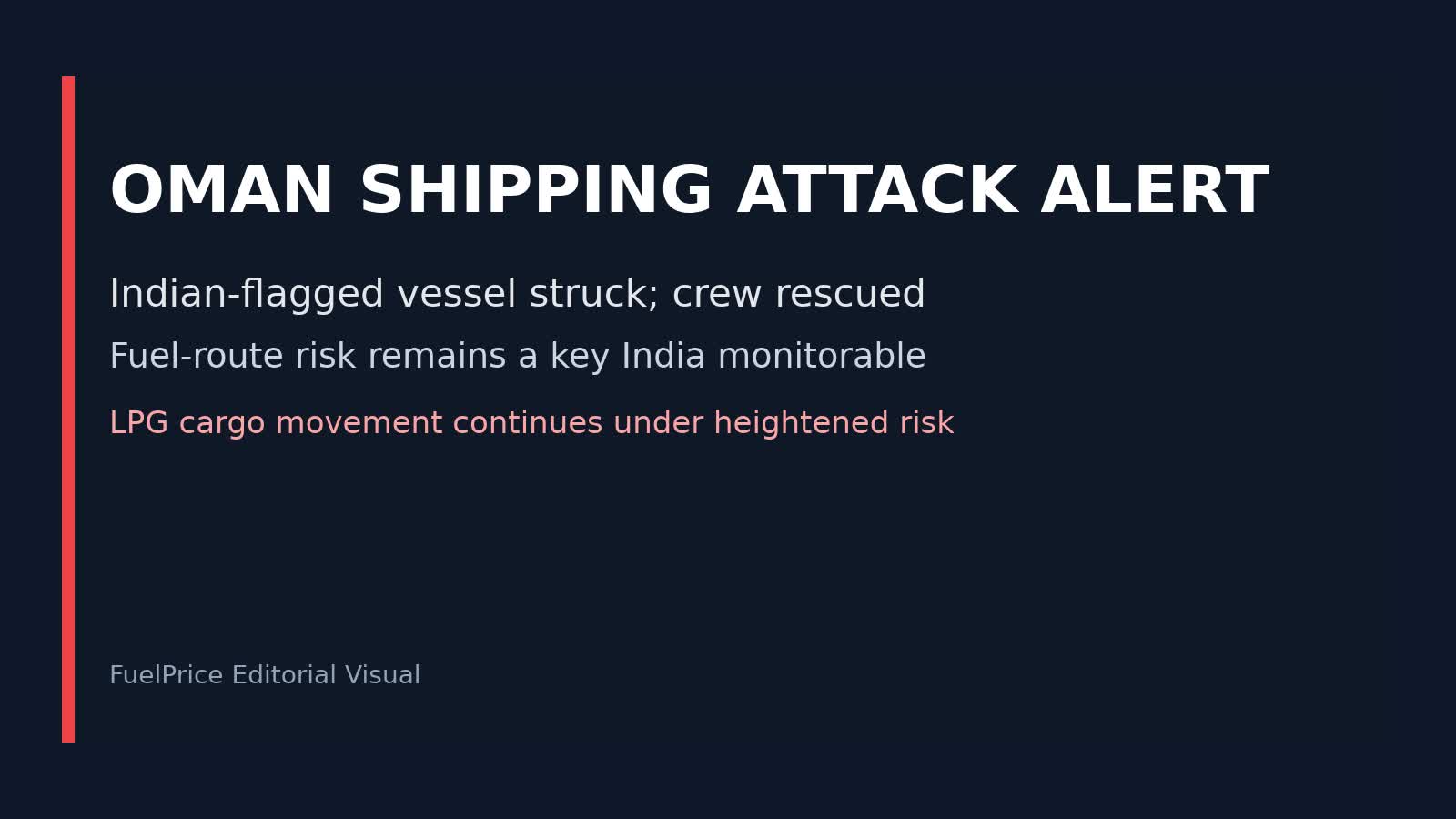
An Indian-flagged cargo vessel was attacked off the coast of Oman on 14 May 2026, with Indian authorities later confirming the crew was rescued and the vessel had sunk after a reported strike. The immediate human-risk event has now become a wider fuel-logistics story for India because critical energy cargo routes remain exposed to disruption risk.
The strongest signal for FuelPrice readers is this duality: security risk has increased, but fuel cargo movement has not stopped. A major LPG cargo vessel still reached Kandla on 17 May after crossing the Strait of Hormuz, showing that trade is continuing, but under a higher risk premium environment.
Sponsored
Key Highlights
- India described the attack on an Indian-flagged vessel off Oman as unacceptable.
- Reported crew count was 14, with rescue support acknowledged by Indian authorities.
- Reuters-linked reporting said the vessel sank after a suspected drone or missile strike.
- Days later, an LPG tanker carrying around 20,000 tonnes reached Kandla after Hormuz transit.
- The risk channel for India is not only supply interruption, but also freight cost, insurance and delivery-timing volatility.
What Happened and Why It Is Important
According to MEA-linked and Reuters-syndicated reports, an Indian-flagged commercial vessel was hit near Oman waters and later sank. India publicly condemned the attack and reiterated the need to protect commercial navigation and civilian mariners.
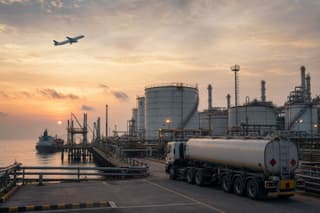
This matters because the Oman-Hormuz corridor remains central to India hydrocarbon movement, including crude and LPG-linked shipping flows. Even when cargoes continue, elevated maritime threat can alter route economics and turnaround planning.
Timeline Snapshot
| Date | Development | Fuel/Auto Relevance |
|---|---|---|
| 14 May 2026 | Indian-flagged vessel attacked off Oman; India condemns incident | Raises shipping security risk around key energy routes |
| 14-15 May 2026 | Follow-up reporting indicates vessel sank after suspected strike | Insurance and freight risk sensitivity can rise |
| 17 May 2026 | LPG tanker Symi reaches Kandla after Hormuz crossing | Confirms supply movement continuity despite risk backdrop |
Impact on Users, Transport and Fuel Outlook
The incident does not automatically mean retail fuel shortage. The bigger risk is cost-side: if maritime risk premia stay elevated, landed fuel economics can tighten, which can influence OMC pricing decisions, transport contracts and downstream inflation pass-through.
- For households: immediate pump shock is not guaranteed, but volatility risk remains elevated.
- For transporters: freight and route assumptions may need more frequent updates.
- For auto demand: prolonged fuel uncertainty can delay discretionary purchase decisions.
- For policy watchers: import-route resilience and shipping security coordination remain critical monitorables.
What to Watch Next
- Any additional maritime incidents in Oman-Hormuz corridor.
- Insurance and freight trend for India-bound energy cargoes.
- OMC commentary on supply continuity and cost pressure.
- Whether cargo transit pace holds steady across LPG and crude lanes.
Final Takeaway
This is a high-importance disruption signal for India fuel watchers. The key message is not panic, but preparedness: flows are continuing, yet the risk layer around those flows has increased. For FuelPrice readers, route stability and freight economics are now as important as crude prices in understanding where pump-price risk may move next.