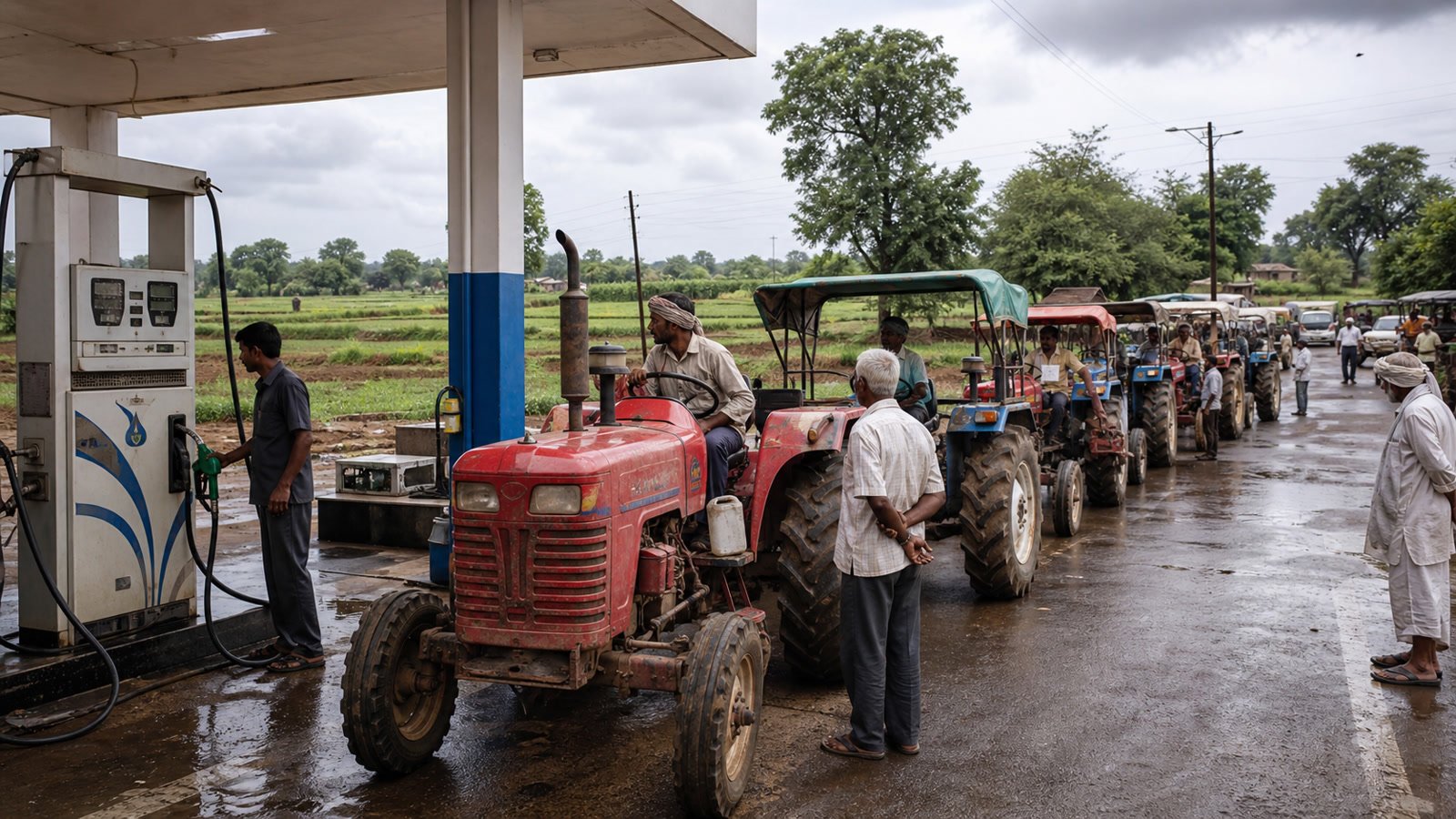
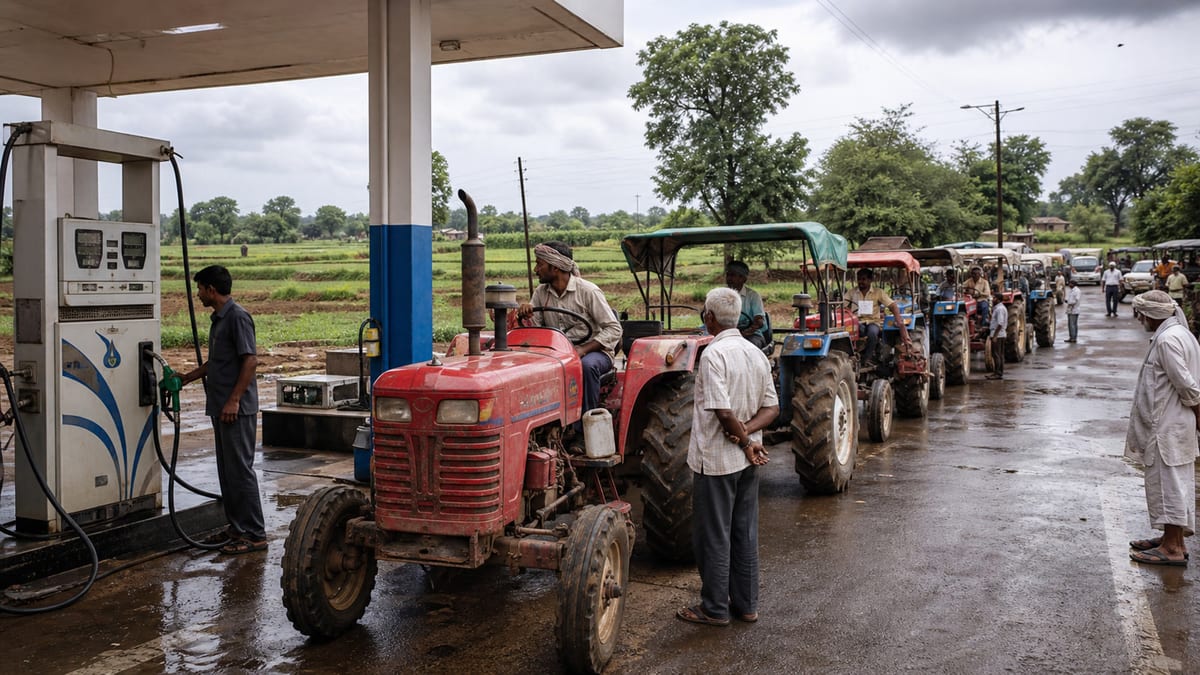
Diesel availability has become a serious pre-sowing worry in Maharashtra's Melghat region. Times of India reported on June 12, 2026 that Dharni taluka is facing an acute diesel shortage just as farmers are preparing fields for the kharif season. The report said all four petrol pumps in the town had run dry, creating kilometre-long queues of tractors and disrupting local movement.
This is a high-impact rural fuel story because diesel is not optional for many farm operations. Tractors, tillers, pumps, transport vehicles and small commercial vehicles all depend on timely supply. When diesel is delayed at the pump, the effect moves quickly from a forecourt queue to a field delay, then to labour scheduling, crop timing, mandi transport and household income.
Sponsored
What happened in Dharni
The current report says tractors are lining up for diesel as pre-kharif tillage work intensifies. Farmers are preparing land through ploughing and harrowing before sowing. If those activities miss the right weather window, farmers risk delayed planting and lower returns. That is why a local fuel shortage at this stage feels more urgent than an ordinary pump-stock problem.
The shortage is being linked to logistics and planning problems in the fuel supply chain. TOI quoted a local Bharat Petroleum pump director in Dharni as saying demand had risen but supply from the main depot had dropped sharply, and that tankers were being stuck at the depot for one to two days despite advance payment. The report also said that when diesel arrives, stocks are exhausted within hours, leaving many farmers and vehicle owners empty-handed.
Why the timing is critical
Kharif preparation is time-sensitive. The first good monsoon spell often decides when farmers can begin sowing crops such as soybean, cotton, pulses or maize depending on local conditions. Before that, land must be prepared, weeds removed, soil loosened and inputs arranged. A tractor that waits in a diesel queue for hours or returns without fuel is not working in the field.
That delay can create a chain reaction. Labour hired for field preparation may be wasted. Tractor operators may raise charges if diesel becomes uncertain. Farmers with smaller landholdings may lose their place in the local service queue. Families that use the same vehicle for farm and household needs may also face mobility stress. In hilly and remote belts such as Melghat, where alternatives are limited, a fuel shortage becomes a rural access issue as well as a farm-input issue.
| Affected group | Immediate problem | What it means for FuelPrice readers |
|---|---|---|
| Farmers | Tractors and equipment cannot run on schedule. | Fuel access can decide whether land is ready when monsoon conditions are suitable. |
| Pump operators | Tankers are reportedly delayed and allotments are inadequate. | Retail supply depends on depot scheduling, not only local demand. |
| Transporters and local businesses | Vehicles wait longer or reduce trips. | Rural logistics costs can rise even without an official fuel-price hike. |
| Administration | Must restore supply and manage queues before protests escalate. | Clear communication matters because rumours can worsen crowding. |
This is part of a wider Maharashtra fuel-pressure pattern
The Melghat situation is not happening in isolation. Earlier in May, TOI reported that diesel shortage had stalled farm work in parts of Marathwada, with long queues at pumps in Jalna, Latur, Beed and Dharashiv. That report said some pumps were rationing diesel and that farmers were struggling to arrange fuel for tractors before monsoon sowing.
Fuel stress also led to public disruption in Buldhana district. TOI reported that farmers blocked the Nagpur-Pune-Mumbai national highway for more than 90 minutes in late May to protest diesel shortage that was affecting pre-sowing work. Around the same period, the central government said there was no fuel rationing nationally and attributed long queues in some areas to bulk consumers moving to retail pumps because of a large price gap.
That distinction is important. A national shortage and a local logistics shortage are not the same thing, but both can hurt users at the pump. A region may have no formal rationing and still face dry outlets if demand spikes, tanker dispatches lag, depot queues stretch, panic buying begins or bulk-purchase behaviour distorts retail supply.
What should change now
The immediate need is supply stabilisation. For Dharni, that means faster tanker release, transparent stock updates to pump operators, and priority planning for agricultural fuel during the kharif preparation window. If four pumps run dry at the same time, simply asking users not to panic will not be enough. Farmers need predictable access so they can plan tractor work by village and field schedule.
Administration and oil marketing companies should also communicate clearly. If tankers are delayed at a depot, users should know when the next load will arrive. If temporary allocation limits are needed, those limits should prioritise genuine agricultural use and ordinary vehicle demand without encouraging hoarding. Pump operators need written instructions so they can manage queues fairly and avoid conflict at the forecourt.
Farmers can reduce risk only partly. They can coordinate tractor use within villages, avoid unnecessary repeat trips to pumps, keep receipts and report actual supply gaps through local farmer groups or officials. But responsibility for restoring supply lies mainly with the distribution chain and administration, because individual farmers cannot fix depot dispatch delays.
What to watch next
The next watch points are whether diesel tankers begin arriving regularly in Dharni, whether all four pumps resume normal sales, and whether farmer groups proceed with protests if supply remains unstable. Also watch whether the problem spreads to nearby rural pockets as sowing activity accelerates with the monsoon.
The reader takeaway is simple: a diesel shortage in a remote farming belt is not a small local inconvenience. In Melghat, it can delay field preparation, raise rural transport costs, create traffic disruption and threaten the season's first agricultural timetable. Fuel policy matters, but so does last-mile fuel logistics. For farmers, diesel availability at the right week can be as important as the price per litre.
Sources: Times of India Melghat current report, Times of India government no-rationing clarification, Times of India Marathwada farm diesel shortage context, Times of India Buldhana protest context, Economic Times bulk diesel market context.