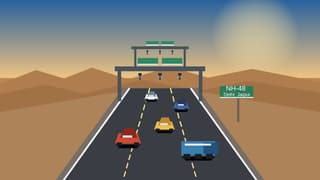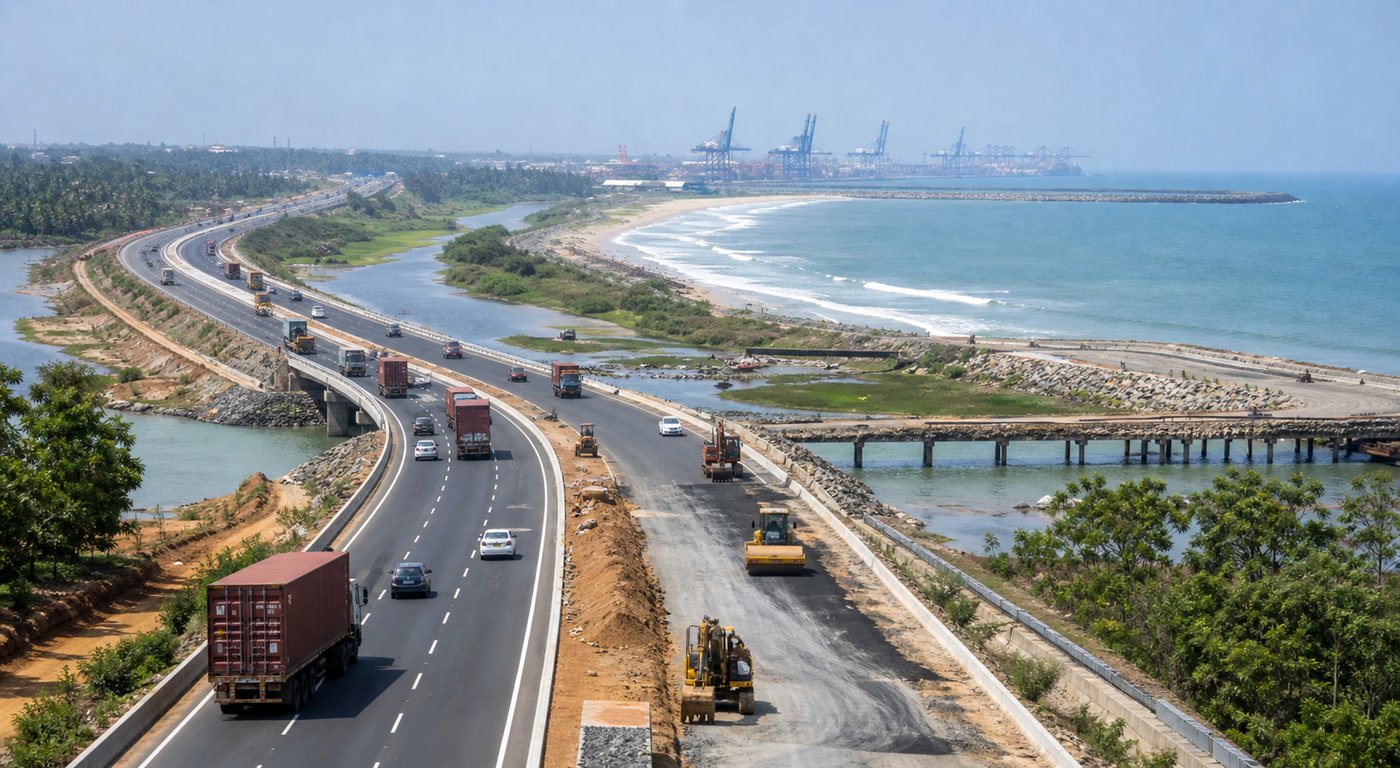
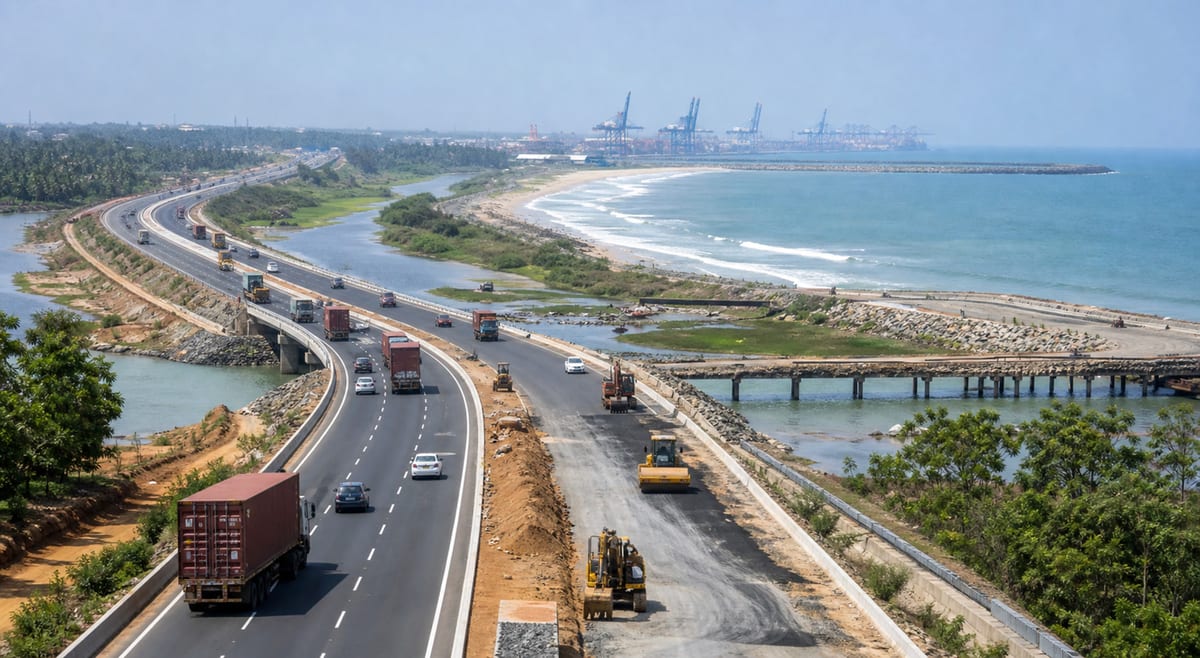
Odisha's coastal road network is set for a major upgrade after the Cabinet Committee on Economic Affairs approved construction of a new coastal highway from Rameshwar to Paradeep. The project has a combined approved capital cost of Rs 8,300.79 crore and a total length of 160.18 km across Khurda, Puri, Kendrapada and Jagatsinghpur districts. For FuelPrice readers, the headline is not only the size of the project. The more practical issue is how the corridor can change fuel use, vehicle operating costs, toll planning, port logistics and tourist movement along one of Odisha's busiest coastal belts.
What has been approved
The approved highway will be developed under the Hybrid Annuity Model, or HAM, in two packages. Package 1 covers the Rameshwar-Konark section as a 79.40 km 4-lane access-controlled highway. Package 2 covers the Konark-Paradeep section as an 80.78 km 2-lane road with paved shoulders. PIB said the design speed will be 100 km/hour and the concession period for both packages is 17.5 years, including 2.5 years of construction and 15 years of operation and maintenance.
Sponsored
The official statement places the project in the context of Odisha's existing road network. NH-16, part of the Golden Quadrilateral, already carries heavy traffic through Khordha, Bhubaneswar and Cuttack. NH-316 connects Bhubaneswar to Puri and further toward Satapada and Konark. But the Puri-Satapada and Puri-Konark stretches have poor geometry, heavy roadside development and high local commuter traffic. That mix makes the existing corridor inefficient for smooth long-distance movement.
Why this matters for fuel users
Highway projects do not change petrol or diesel prices at the pump. Their impact is different: they change how much fuel a vehicle needs to complete a trip. A corridor with narrow sections, local market traffic, poor geometry, frequent braking and slow town stretches increases fuel burn. A better-aligned highway with steadier speeds, bypass-style movement and fewer conflict points can reduce diesel and petrol consumption for the same journey.
PIB specifically says the project is expected to reduce fuel consumption, carbon emissions and vehicle operating costs. That matters for three user groups. First, freight operators moving port-linked and coastal cargo can save time and reduce idle fuel. Second, passenger vehicles and buses serving Puri, Konark and coastal tourism routes can get more predictable travel times. Third, local commercial users such as fishery, food and farm supply chains can move goods with less delay risk once the corridor is complete.
Freight and port logistics angle
The Rameshwar-Paradeep corridor is important because it is not just a tourism road. PIB says the project will connect nine economic nodes and five logistics nodes. The economic nodes include SEZs around Bhubaneswar and Khordha, a mega food park in Bhubaneswar, fishing clusters in Paradeep, Konark, Jagatsinghpur, Puri and Kendrapada, and a pharma cluster in Cuttack. The logistics nodes include Puri Railway Station, Puri Airport, Astarang Port, Paradeep Port and the multi-modal logistics park at Jagatsinghpur.
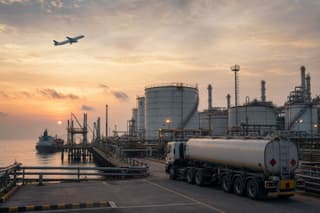
That mix gives the project a direct freight and fuel relevance. Paradeep Port is a major cargo gateway, while coastal fishery, food processing, tourism and industrial clusters rely on predictable road movement. A better corridor can reduce the time trucks spend in congested local sections, improve first-mile and last-mile connectivity, and make rail-port-road integration more practical. For diesel-heavy trucking, that means potential savings not just from distance but from smoother movement and lower waiting time.
What changes for toll and road users
Because the project is under HAM, the financing and user-charge structure will differ from a pure BOT-Toll project. HAM typically combines government support with annuity-style payments to the concessionaire, while tolling and user charges depend on the project agreement and later notifications. For road users, the important point is to track the final toll notification, access-control points, FASTag arrangements, local-user rules and whether any bypass sections change local traffic patterns.
Users should also separate approval from availability. The project has been cleared, but construction will take time. During the 2.5-year construction period, temporary diversions, work zones, bridge works and coastal weather exposure may affect travel. The full fuel and travel-time benefits will come only after completion and stable operations.
Key numbers at a glance
| Package | Configuration | Length | Capital cost |
|---|---|---|---|
| Rameshwar-Konark | 4-lane access-controlled highway | 79.40 km | Rs 5,304.80 crore |
| Konark-Paradeep | 2-lane with paved shoulder | 80.78 km | Rs 2,995.99 crore |
| Total project | HAM, two packages | 160.18 km | Rs 8,300.79 crore |
Before and after impact
Before this project, long-distance traffic on the coastal side had to deal with a corridor that was not designed for current traffic intensity. Local commuter movement, roadside development and geometry constraints made it difficult for freight and passenger vehicles to maintain efficient speeds. That raised the hidden cost of each trip through fuel use, time loss, vehicle wear and unpredictable delivery windows.
After completion, travel time between Rameshwar and Paradeep is expected to fall by about 2 hours and 30 minutes. That is a meaningful reduction for trucks, tourist buses, private cars and local commercial users. It also improves reliability for time-sensitive coastal cargo such as fishery products and food-chain movements, where delays can increase spoilage risk or refrigeration costs.
What to watch next
The next milestones are concession execution, land and pre-construction clearances, package-wise construction schedules, environmental safeguards, coastal structure design, toll/user-charge notification and traffic management during works. Since the corridor runs through coastal districts, resilience to flooding, drainage quality, bridge safety and maintenance discipline will matter as much as initial construction speed.
The final takeaway is direct: the Rameshwar-Paradeep coastal highway is a fuel, logistics and mobility story, not only a highway headline. If delivered as planned, it can cut travel time, lower operating costs, strengthen port access, support tourism and reduce inefficient fuel burn across an important Odisha corridor. The benefit, however, depends on execution quality, safe work-zone management and transparent toll arrangements after the project moves from approval to construction.
Sources: PIB CCEA, Moneycontrol, DD India, The News Insight, Fiinews.