Ferozepur-Fazilka Highway Crash: 9 Killed in Punjab Pickup-Truck Collision, PMNRF Relief Announced
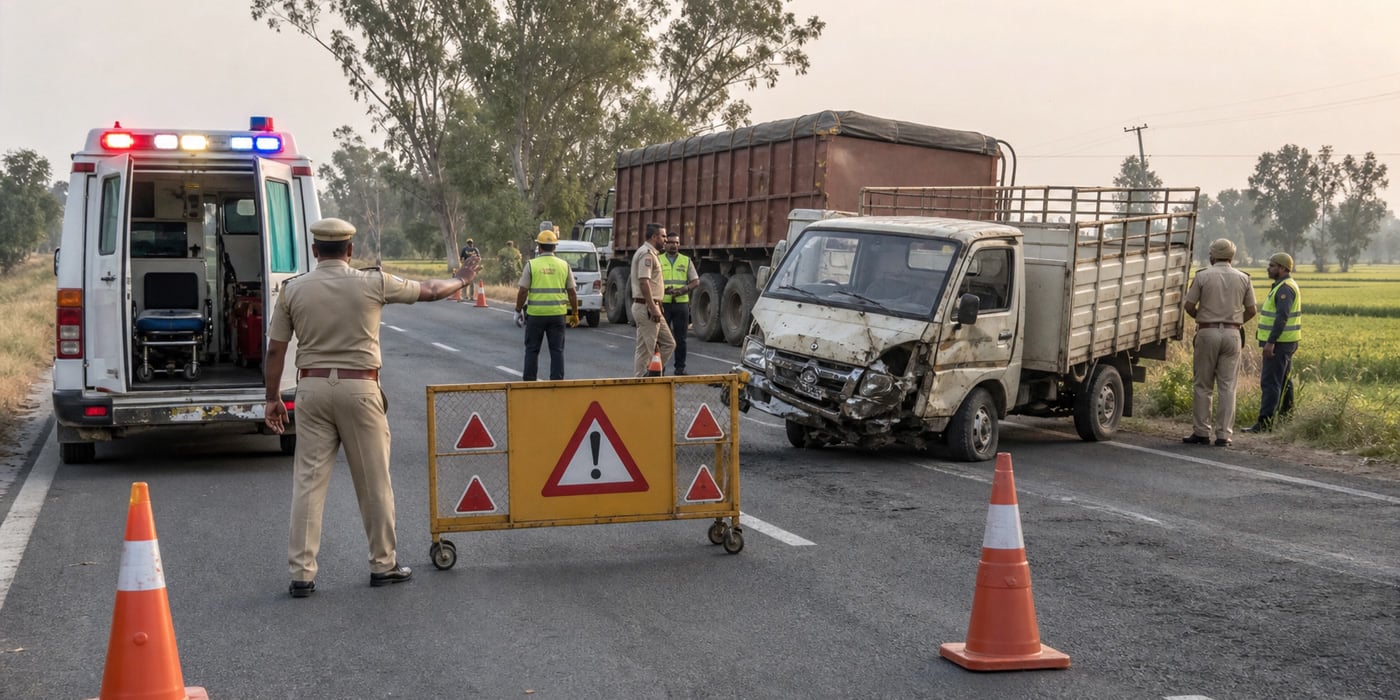
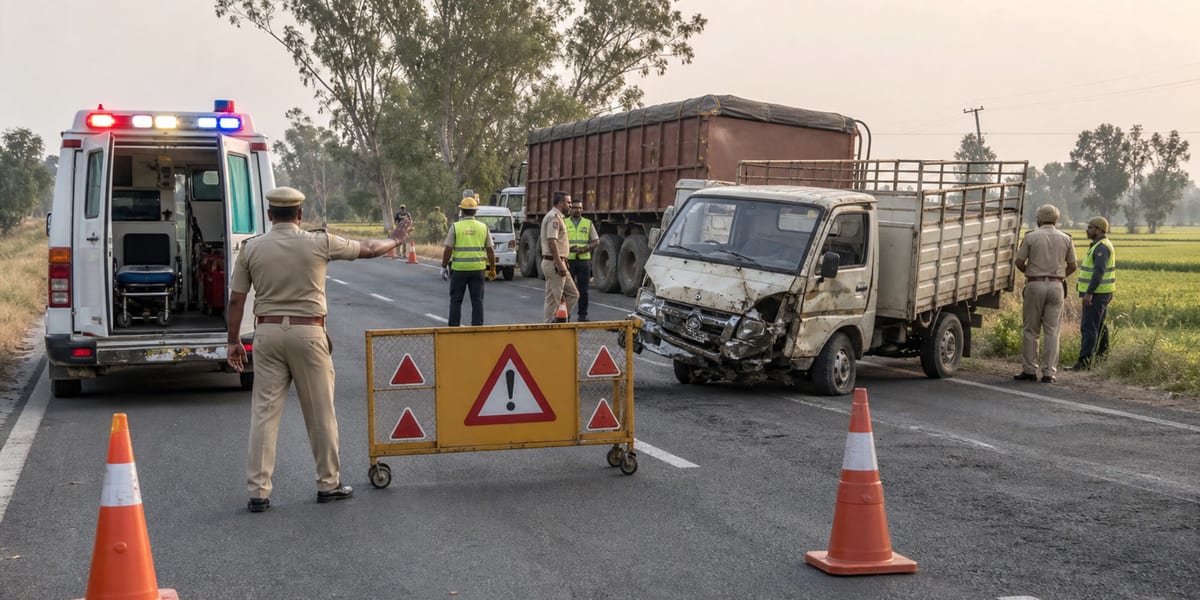
A serious highway crash on the Ferozepur-Fazilka road in Punjab has brought road-safety and rural mobility risks back into sharp focus. Updated reports on June 7 said nine people were killed and several others were injured after a pickup vehicle carrying family members collided with a truck on Saturday morning, June 6, near the Janga Wala area of Ferozepur district.
The victims were travelling from the Jalalabad side for an ash-immersion ritual when the pre-dawn collision took place. Early reports from some outlets placed the death toll at eight, while later reports citing district-level inputs reported nine fatalities. The police investigation is still the final authority on the sequence of events, but the broad facts are clear enough to make this a major mobility story: a passenger-filled goods vehicle, a heavy truck, a rural highway stretch, emergency hospital transfers and renewed concern over accident-prone road geometry.
Sponsored
What Happened
According to reports from Hindustan Times, Times of India, Indian Express and New Indian Express, the crash took place on the Ferozepur-Fazilka road when a pickup vehicle carrying members of a family collided with a truck or trailer-type vehicle coming from the opposite direction. The location has been reported around Janga Wala village or Janga Wala Mour, a stretch that local residents described as risky because of previous crashes and difficult road conditions.
The injured were moved first to Civil Hospital, Ferozepur. Some seriously injured passengers were referred for advanced treatment to Guru Gobind Singh Government Medical College and Hospital in Faridkot. Senior police officials visited the site and a probe has been opened to establish the cause, vehicle movement, speed, load condition and possible fault. The official investigation will also matter because some reports noted that the vehicle was a goods-type pickup being used to carry people, a common but high-risk practice on many rural and semi-urban routes.
Relief Announced
The Prime Minister's Office, through a PIB release on June 6, announced ex-gratia assistance from the Prime Minister's National Relief Fund. The next of kin of each deceased will receive Rs. 2 lakh, while the injured will receive Rs. 50,000. Hindustan Times also reported that local administrations and Red Cross societies in Ferozepur and Fazilka were coordinating assistance, with eligible compensation cases being processed under the Chief Minister's Relief Fund framework.
Relief money cannot reverse the loss, but it is part of the immediate response chain after a fatal road incident: medical care, post-mortem formalities, family support, police documentation, compensation eligibility and eventual accountability. For affected families, the speed and clarity of this process matters as much as the headline announcement.
Why This Matters for FuelPrice Readers
This is not a fuel price update, but it is directly relevant to FuelPrice's mobility audience. Highway safety determines the real cost of movement. A route may look short on a map, but if it has blind turns, weak lane discipline, mixed truck and small-vehicle traffic, poor shoulders or inadequate lighting, the true cost shows up as slower journeys, medical risk, emergency diversions, freight delays and higher operating stress for drivers.
Punjab's rural and inter-district roads carry a complex mix: family travel, farm-linked traffic, small commercial vehicles, buses, tractor-trolleys, two-wheelers and long-haul goods vehicles. When heavy trucks and passenger-filled small vehicles share narrow or poorly protected stretches, the margin for error is very small. Early morning travel can add fatigue, low visibility and speed variation to that risk.
For transporters and fleet users, such incidents also expose operational risks that are often ignored until a crash happens. Route selection, driver rest, reflective markings, speed control near bends, safe loading practices and emergency-response access are cost issues as well as safety issues. Every road closure, diversion or congestion pocket burns additional diesel, affects delivery windows and increases insurance and compliance pressure on small operators.
Key Numbers and Verified Details
- The crash occurred on Saturday morning, June 6, 2026, on the Ferozepur-Fazilka road in Punjab.
- Later reports from Hindustan Times and Times of India reported nine deaths; earlier Indian Express and New Indian Express reports placed the toll at eight.
- Multiple reports said the passengers were travelling for an ash-immersion ritual from the Jalalabad side.
- The injured were taken to Civil Hospital, Ferozepur, with serious cases referred to Faridkot for advanced treatment.
- PIB confirmed PMNRF ex-gratia of Rs. 2 lakh for the next of kin of each deceased and Rs. 50,000 for the injured.
What Changes Now
The first priority is medical treatment and family support. The second is the police investigation: whether the crash involved speed, wrong-side movement, road geometry, vehicle condition, loading pattern, visibility or driver error. The third is engineering follow-up. Local concerns around an accident-prone turn should not remain only a quote in a news report. If a stretch repeatedly produces severe crashes, authorities need to examine signage, lane markings, speed-calming, lighting, shoulder quality, enforcement points and whether widening or redesign is required.
For regular users of the corridor, the practical takeaway is route awareness. Avoid overloading small commercial vehicles with passengers, particularly for long or early-morning journeys. Families hiring vehicles for group travel should choose a passenger-rated vehicle with proper seating. Fleet owners should brief drivers on high-risk bends and early-morning fatigue. Local transport authorities should treat such incidents as a signal to audit mixed-traffic stretches where passenger and freight movement overlap.
What to Watch Next
Watch for the official police findings, the final confirmed casualty and injury count, compensation processing, any action against involved drivers or vehicle owners, and whether the Punjab administration or road agencies announce safety work on the Ferozepur-Fazilka stretch. A credible response should not stop at relief payments; it should reduce the chance of the same pattern repeating.
Reader Takeaway
The Ferozepur-Fazilka crash is a reminder that mobility cost is not only petrol, diesel, toll or vehicle EMI. Safety infrastructure, proper vehicle use and emergency readiness are part of the same transport economy. For road users, the lesson is to avoid unsafe passenger movement in goods vehicles. For authorities, the next test is whether this tragedy leads to a practical safety audit of the corridor and visible corrective action.