Renault Duster 1.0 Turbo Petrol Mileage Revealed: 19.41 km/l ARAI Claim Resets SUV Running-Cost Math
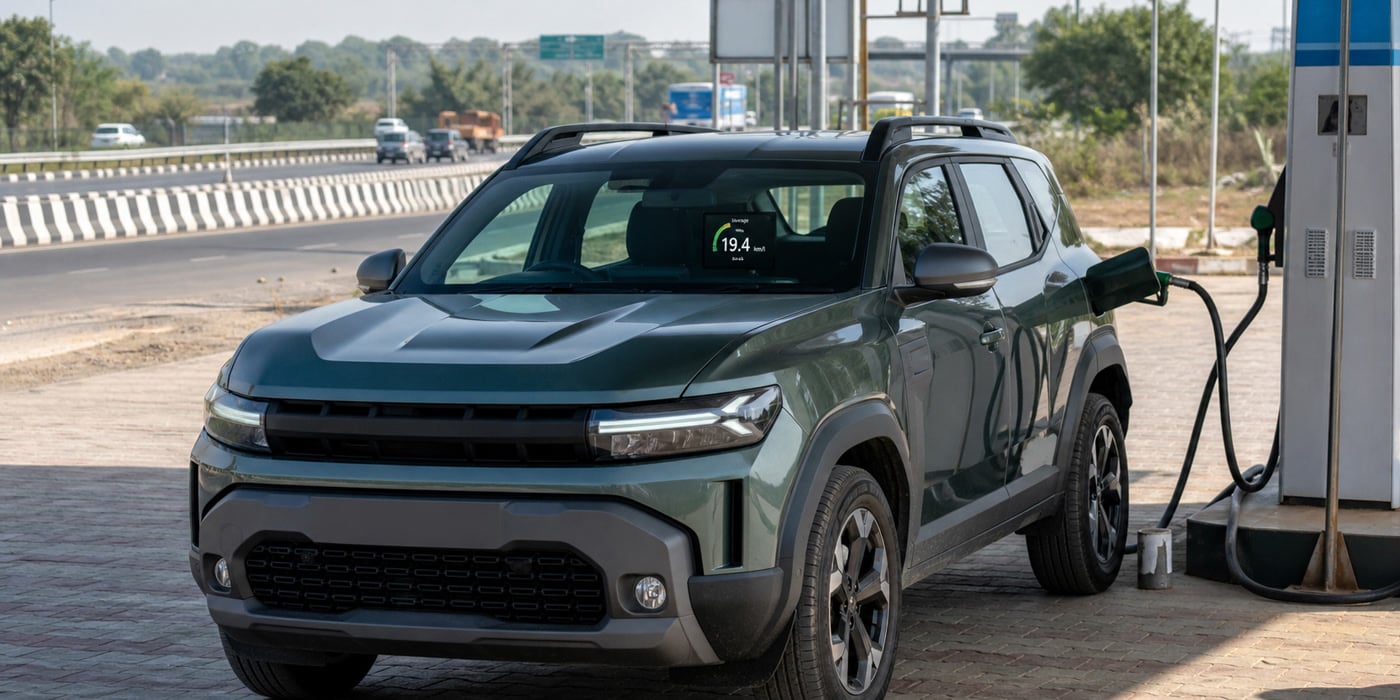
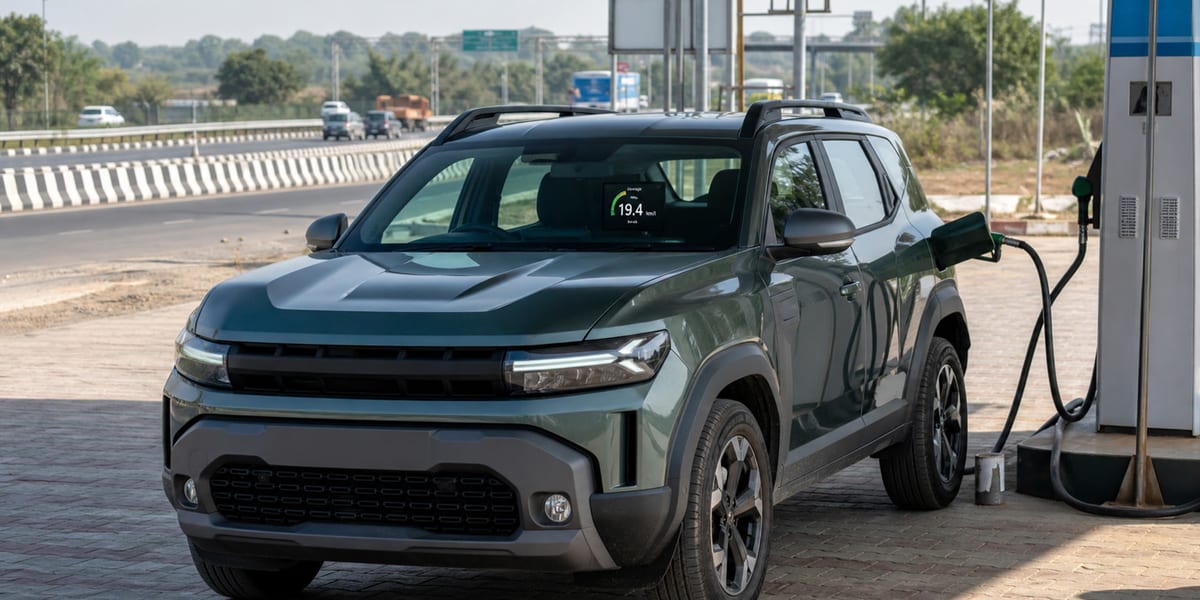
Renault Duster buyers now have the missing fuel-efficiency number for the entry turbo-petrol manual range. Renault has revealed the ARAI-certified mileage for the Duster Turbo TCe 100, with the 1.0-litre turbo-petrol manual returning a claimed 19.41 km/l. The figure matters because the 1.0-litre engine is the most accessible petrol powertrain in the new Duster line-up, available in Authentic, Evolution and Techno trims.
For FuelPrice readers, this is not just another specification update. Compact SUV buyers in India often compare ex-showroom price, EMI, fuel economy, highway range, maintenance reach and resale confidence together. With petrol and CNG running costs staying central to purchase decisions, a 19.41 km/l ARAI claim gives Renault a sharper cost-of-use story against other midsize SUVs and even against its own more powerful 1.3-litre turbo-petrol variants.
Sponsored
What Renault Has Confirmed
The latest update concerns the Duster Turbo TCe 100. Multiple auto publications, including DriveSpark, India Today and Autocar India, reported that Renault has announced a 19.41 km/l ARAI-certified figure for the 1.0-litre turbo-petrol manual. The engine is paired only with a 6-speed manual gearbox and sits below the higher-output 1.3-litre turbo-petrol range.
Renault's official Duster launch document from March 2026 gives the broader product context. The company launched the new Duster in India with turbo-petrol prices starting at Rs. 10.49 lakh, built on the Renault Group Modular Platform, and confirmed that the SUV is manufactured at Oragadam, Chennai. The same document lists the Turbo TCe 100 as a 999 cc, three-cylinder petrol engine producing 100 PS and 166 Nm, paired with a 6-speed manual transmission and compatible with E20 petrol.
Why 19.41 km/l Matters
The Duster has returned to a segment where buyers no longer look only for road presence. A customer comparing the Duster with the Hyundai Creta, Kia Seltos, Honda Elevate, Maruti Grand Vitara, Toyota Hyryder, Volkswagen Taigun and Skoda Kushaq will ask a practical question: how much will this SUV cost to run in daily mixed use?
An ARAI number is not the same as real-world mileage. City traffic, AC use, tyre pressure, load, driving style and road gradients can lower actual fuel economy. But certified mileage still matters because it gives a common benchmark for showroom comparison. It also affects how buyers estimate monthly petrol spend before a test drive or loan decision.
The 1.0-litre Duster figure is important because it now sits above the Duster 1.3-litre turbo-petrol manual and dual-clutch automatic claims. That gives Renault a clear two-track proposition: choose the 1.0 manual for lower entry price and better certified economy, or choose the 1.3 turbo if performance and automatic convenience matter more.
Powertrain and Mileage Comparison
| Duster Powertrain | Transmission | ARAI Claim | Buyer Relevance |
|---|---|---|---|
| 1.0 Turbo TCe 100 petrol | 6-speed manual | 19.41 km/l | Best certified economy in the current Duster petrol range |
| 1.3 turbo-petrol | 6-speed manual | 17.75 km/l | Higher power, lower claimed economy than the 1.0 |
| 1.3 turbo-petrol | DCT automatic | 18.45 km/l | Automatic convenience with a higher running-cost estimate than the 1.0 manual |
Who Is Affected
The first affected group is value-focused SUV buyers looking at the base and mid-spec trims. The Turbo TCe 100 is offered in the Authentic, Evolution and Techno grades, with auto media reporting prices from Rs. 10.49 lakh to Rs. 13.49 lakh. These buyers may not want the highest power output or the top-end automatic, but they still want a modern SUV with acceptable fuel bills.
The second group is highway users. A 50-litre tank, listed in Renault's official technical specification, means the certified figure looks attractive on paper for long-distance driving. Real-world range will be lower than the ARAI math, but a frugal turbo-petrol manual can still appeal to families that frequently travel between cities and do not want diesel ownership restrictions or hybrid pricing.
The third group is Renault dealers and fleet-adjacent buyers. The Duster name has strong recall in India, but the new model is entering a crowded market. A strong mileage number gives sales teams a concrete answer when customers ask why they should consider the 1.0-litre manual over more established rivals.
The Fuel-Cost Caveat
Buyers should read the 19.41 km/l claim as a comparison tool, not a promise. Turbo-petrol engines can be efficient when driven smoothly, but fuel use can rise quickly under aggressive acceleration, high-speed cruising or heavy load. The 1.0-litre motor will likely reward light-footed drivers more than those expecting the effortless pull of a larger engine.
There is also a transmission trade-off. The 1.0-litre is manual-only, so buyers who want an automatic must move to the 1.3-litre DCT, where the certified mileage is lower than the 1.0 but still competitive. That makes the decision less about one best variant and more about the buyer's usage pattern: city convenience, highway performance, purchase budget, and monthly petrol spend.
What to Watch Next
The next useful data point will be real-world mileage from owner reports and independent road tests in heavy city traffic, highway cruising and hill use. Buyers should also track Renault's service network expansion, delivery timelines, variant availability, and whether the planned Duster Strong Hybrid around the festive period changes the fuel-economy benchmark again.
Reader Takeaway
The Duster 1.0 turbo-petrol manual now has a clear fuel-economy headline: 19.41 km/l ARAI. That makes it the efficiency-focused petrol Duster for buyers who want SUV stance, manual control and lower running-cost estimates without stretching to the more powerful 1.3 turbo or waiting for the hybrid. The smart move is to compare the certified claim with real-world test results before booking, especially if most driving will be in traffic.