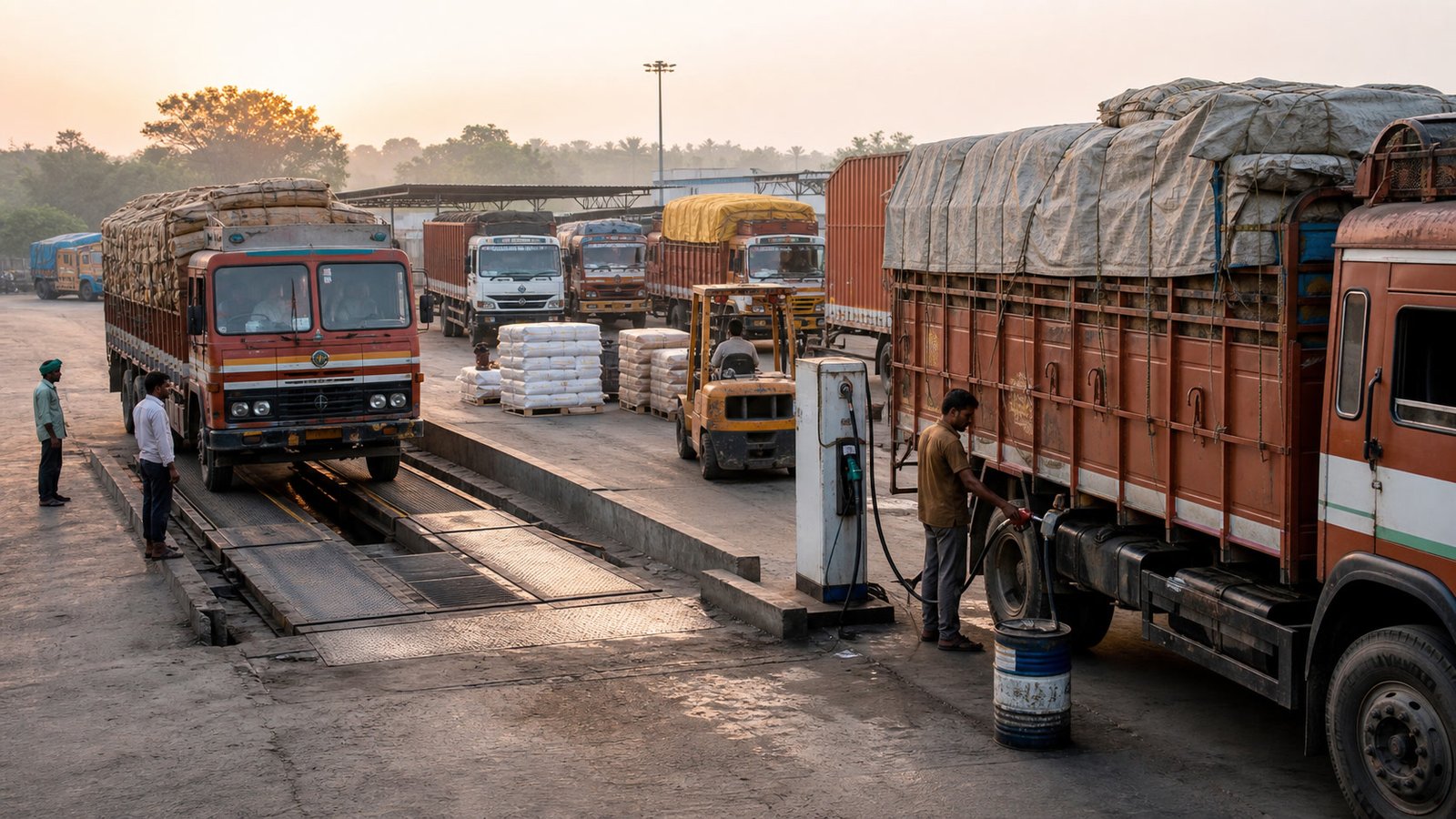
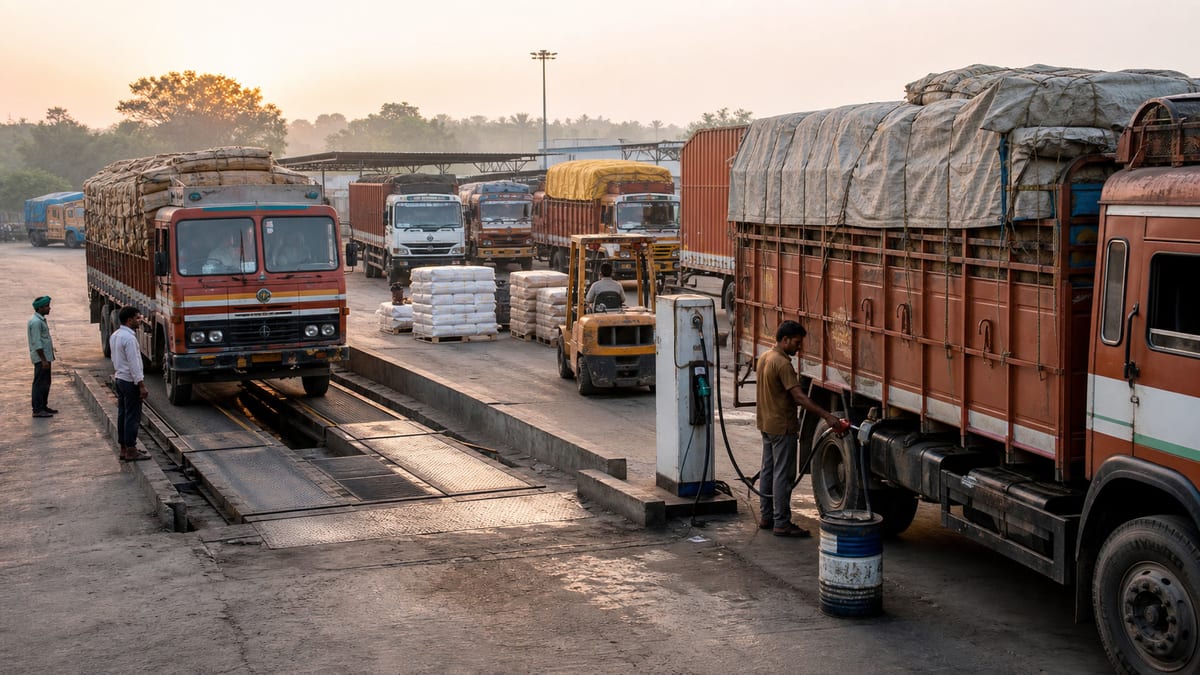
Tamil Nadu's road-freight market has delivered a clear signal about how quickly diesel inflation can move beyond the fuel pump. On June 10, 2026, Times of India reported that the Tamil Nadu Lorry Owners' Association resolved to increase freight rates by 25% with effect from June 15, 2026, citing higher diesel prices. The decision was announced by association president C. Dhanraj after an executive committee meeting in Namakkal.
For FuelPrice readers, this is not a narrow trucking story. It is a logistics-cost story with a direct line to industrial dispatch budgets, wholesale supply chains and eventually retail inflation. When freight rates move this sharply, the effect is rarely limited to truck operators. It reaches factories moving finished goods, traders shipping raw materials, retailers replenishing stock and consumers absorbing higher delivery-linked costs if the increase holds.
Sponsored
What happened, and why June 15 matters
The immediate fact pattern is straightforward. The Tamil Nadu Lorry Owners' Association said freight rates would rise by 25% from June 15, 2026. The trigger, according to the TOI report, was rising diesel prices. That timing matters because the decision is not a distant warning. It is a near-immediate reset in transport pricing for businesses that rely on hired trucks or route-based freight contracts tied to prevailing market conditions.
This is also the kind of move that can spread through the logistics chain faster than a consumer expects. A pump-price increase is visible, but freight is where that increase becomes operational. The moment transporters revise quotes, consignors have to decide whether to absorb the hit, renegotiate terms, delay dispatches, consolidate loads or pass the cost forward.
It is important to keep one nuance in view: an association-announced rate hike does not mean every route, every load type or every contract will move in the same way overnight. Actual realised pricing can still vary by lane, distance, commodity, return-load availability and the strength of shipper-transporter relationships. But a 25% announced increase is still a strong market signal that margins are under pressure and diesel has become too large to ignore.
Why diesel hits trucking economics so quickly
Heavy trucking is extremely sensitive to diesel because fuel is one of the largest variable costs on every trip. When diesel prices rise repeatedly within a short period, the cost impact is immediate and cash-flow driven. Transporters do not only face fuel bills. They are also dealing with tolls, tyre wear, maintenance, finance costs, insurance, permit burdens and driver-related operating expenses. But diesel is the line item that can wipe out route economics the fastest because it changes daily and affects every loaded kilometre.
The broader backdrop supports that pressure. On June 2, 2026, Times of India reported that a Crisil note warned petrol and diesel price increases could rekindle inflation by raising transportation, logistics and manufacturing costs. That is the macro version of what the Tamil Nadu freight revision is showing at ground level. A few days earlier, on May 25, TOI reported that petrol and diesel prices had been raised again, with diesel up by Rs 2.71 per litre in that revision alone, marking the fourth increase in less than two weeks. Another TOI report the same day said fuel prices had risen by roughly Rs 7.5 per litre over two weeks.
For long-haul and regional lorry operations, that is not a minor change. Even when a transporter has decent fleet utilisation, a multi-rupee rise in diesel can alter per-trip profitability, working-capital needs and credit terms almost immediately.
| Current trigger | Immediate logistics effect | Who feels it first |
|---|---|---|
| 25% freight-rate hike announced by TN lorry owners, effective June 15 | Higher transport quotes and route-cost recalculations | Manufacturers, traders, wholesalers and hired-fleet users |
| Recent diesel hikes, including Rs 2.71 per litre on May 25 | Higher per-trip fuel spend and tighter fleet margins | Transporters, owner-drivers and contract fleet operators |
| Crisil warning on fuel-led transport and manufacturing inflation | Pass-through risk for goods, delivery and industrial costs | Retailers, households and price-sensitive supply chains |
Who is most exposed to the rate increase
The first layer of impact sits with businesses that depend on road movement from or through Tamil Nadu. That includes manufacturers, distributors, commodity traders, construction-material suppliers and retailers replenishing inventory from regional hubs. Tamil Nadu is a major industrial and consumption state, and Namakkal is one of its best-known trucking centres. So when lorry owners there signal sharp pricing pressure, it matters beyond one local route market.
- Factories and industrial suppliers: Dispatch costs rise immediately on truck-based outbound and inbound movement.
- Food and agri-linked traders: Perishable and margin-sensitive goods can feel faster pass-through if transport accounts for a meaningful share of delivered cost.
- Building-material and engineering supply chains: Cement, steel, parts and equipment movements are highly freight sensitive.
- Small and mid-sized shippers: They are often more exposed than large corporates because they have less bargaining power and fewer long-term transport arrangements.
- Consumers: The impact is indirect at first, but it can show up later in delivery charges or higher end prices if diesel pressure persists.
Not every product will become more expensive immediately. Some companies will try to absorb the hit temporarily. Some contracts will have fixed pricing for a period. Some routes will see negotiated adjustments rather than the full headline increase. But the direction is still important: freight has become a live inflation channel again.
Why this matters for inflation, not just transporters
The Crisil warning is useful because it explains the next step in the chain. Fuel inflation does not stay at the pump when diesel-heavy freight markets start repricing. It moves into transportation, then logistics invoices, then manufacturing and distribution costs, and finally into goods categories where businesses cannot absorb the burden for long. That is why freight-rate stories deserve as much attention as daily petrol and diesel price updates.
For households, the more relevant question is not whether they hire trucks directly. It is whether higher trucking costs start changing the delivered price of essentials, consumer goods or services. For businesses, the key question is whether the increase remains temporary or becomes a new baseline that forces a broader revision in procurement and pricing.
What changes now for fleets and shippers
For transporters, the rate increase is less a windfall than a margin-recovery measure. Higher freight does not automatically mean easy profits if diesel, tyre, labour and financing pressure remain elevated. For shippers, however, the immediate task is harder: recalculate landed cost, review pending dispatches, recheck margins by route, and decide which expenses can be absorbed and which must be passed on.
Businesses that operate on thin margins should watch two things especially closely. First, whether the full 25% increase holds in actual bookings over the next few days and weeks. Second, whether diesel prices stabilise enough to prevent similar moves elsewhere. If both fail, the Tamil Nadu announcement may become an early warning for a wider freight repricing cycle.
What to watch next
There are five practical signals to track now. One, whether freight quotes in Tamil Nadu fully reflect the announced 25% increase after June 15. Two, whether diesel prices continue to rise or finally stabilise. Three, whether other state transport associations begin taking similar decisions. Four, whether companies introduce explicit fuel surcharges instead of quietly adjusting product prices. Five, whether the cost pressure starts appearing in fast-moving, price-sensitive categories.
The reader takeaway is clear. Tamil Nadu's 25% freight-rate hike is a sharp example of fuel inflation moving into real logistics costs. It matters because it shows that diesel pressure is no longer only a budgeting issue for motorists or a margin issue for transporters. It is becoming a supply-chain issue for manufacturers, traders and consumers. If the increase sustains in the market, it will be one of the clearest June 2026 signs that freight is again turning into an inflation transmission channel.
Sources: Times of India June 10, 2026 freight-rate report, Times of India June 2, 2026 Crisil inflation report, Times of India May 25, 2026 fuel-hike report, Times of India May 25, 2026 two-week fuel-rise context.