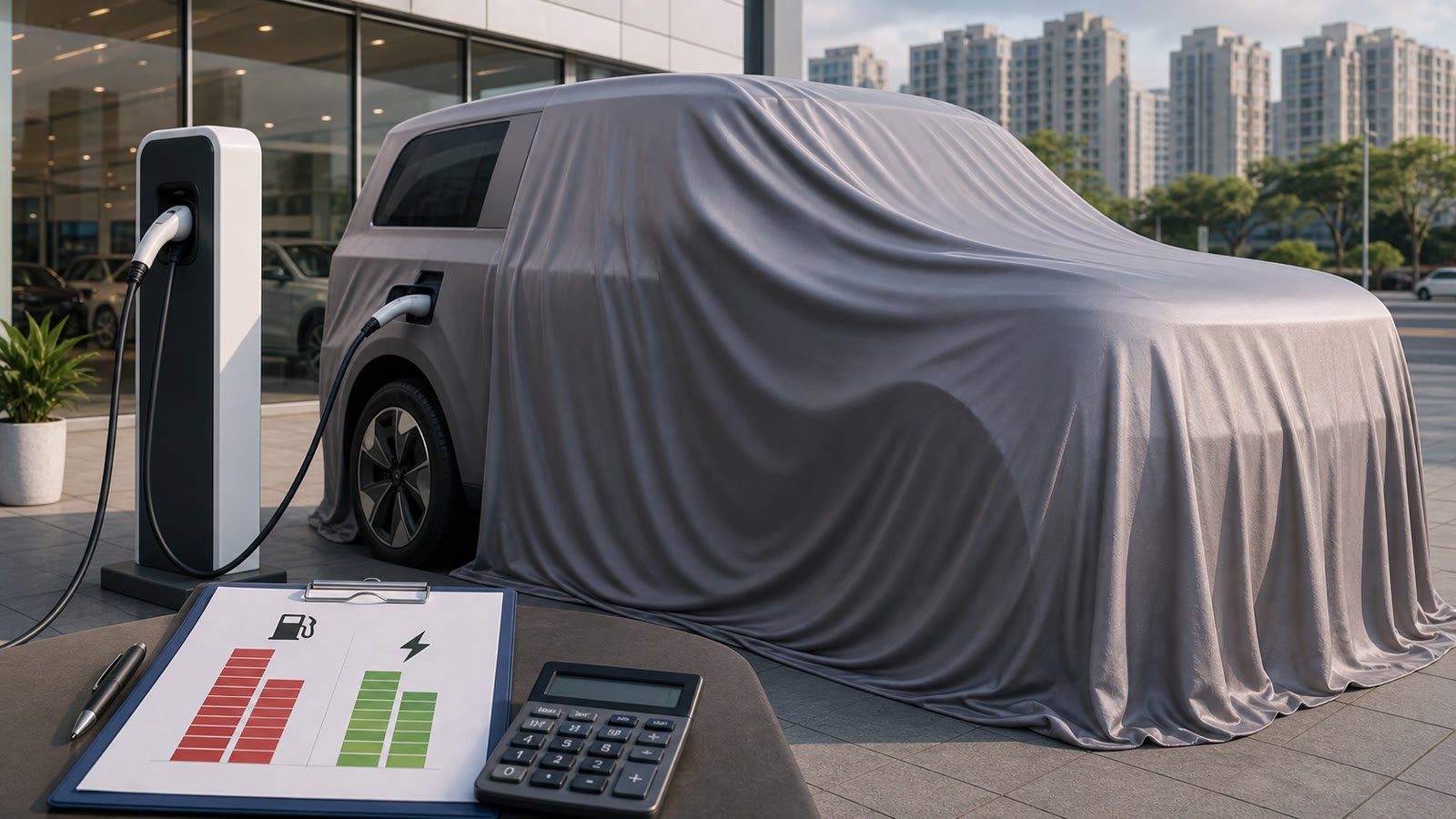
Tata Motors is expected to bring the Sierra EV to India soon, putting one of the country's most familiar SUV names into the midsize electric SUV fight. Times of India reported on June 11, 2026 that the Sierra EV is expected to arrive later this month, while Navbharat Times reported that the electric SUV could be shown around June 30. Tata has not yet published final prices, battery specifications or certified range for the production model, so buyers should treat the current information as a launch-watch stage rather than a final booking sheet.
That distinction matters. The Sierra badge carries nostalgia, but the EV market now demands hard numbers: usable range, fast-charging speed, home-charging time, battery warranty, service cost, insurance, financing, and whether a Battery-as-a-Service plan is offered. For FuelPrice readers, the central question is practical: can the Sierra EV lower monthly running cost enough to justify the expected purchase premium over petrol, diesel, CNG, hybrid or competing EV options?
Sponsored
What is currently expected
Current reports say the Sierra EV will enter the midsize electric SUV segment, where it is expected to compete with models such as the Hyundai Creta Electric, Maruti Suzuki e Vitara and Mahindra BE 6. TOI says the EV version is expected to get design changes over the petrol and diesel Sierra, including a closed-off front fascia, EV-specific bumpers, aerodynamic alloy wheels and styling aligned with Tata's latest EV design language. Navbharat Times separately reported expected features such as connected LED lighting, flush door handles and a modern cabin layout.
Inside, the Sierra EV is expected to be positioned as a premium offering. Reported equipment includes large digital screens, possibly a triple-screen setup on higher trims, panoramic sunroof, ventilated front seats, dual-zone climate control, wireless smartphone charging, 360-degree camera, connected-car tech, Level 2 ADAS and V2L or V2V charging capability. These items are not yet confirmed by Tata for the production car, but they show where buyer expectations are being set.
The powertrain picture is also still in the expected zone. TOI reported that the Sierra EV could sit between the Curvv EV and Harrier EV in Tata's electric range, with possible battery options including 55 kWh and 65 kWh units, and perhaps a 75 kWh pack on higher trims. Navbharat Times mentioned a possible range of around 500 km and fast-charging support. Until Tata releases official variant details, the safe approach is to wait for certified range, battery chemistry, real-world test data and charging specifications.
| Buyer question | Why it matters | What to verify at launch |
|---|---|---|
| Usable range | A headline range figure is not the same as city, highway, summer or loaded-family range. | Certified range, real-world reviews, battery size and efficiency. |
| Charging speed | Fast charging decides whether the EV can replace long petrol-SUV trips. | DC peak rate, 10-80 percent time, AC charger size and home charger cost. |
| Battery ownership | BaaS can lower upfront cost but adds a recurring charge. | Full battery warranty, subscription rate, kilometre terms and resale rules. |
| Running cost | EV savings depend on electricity tariff, charging mix and monthly distance. | Home charging cost per km versus petrol, diesel, CNG or hybrid options. |
Why this matters for fuel users
A midsize EV SUV becomes financially interesting when it replaces a vehicle that runs often. A low-mileage owner using the car mainly on weekends may enjoy the quiet drive and lower maintenance, but the payback against a cheaper petrol or hybrid SUV can take longer. A family covering long daily commutes, school runs and city errands can recover more through lower per-kilometre energy cost, especially if most charging happens at home.
The calculation changes again for highway users. A petrol SUV can refuel in minutes almost anywhere. An EV needs route planning, charger availability and charging speed. If the Sierra EV launches with a large battery and fast enough DC charging, it can become a more credible intercity option. If charging speed or network access is weak in a buyer's travel zone, the EV may still work best as an urban and semi-urban family SUV rather than a full diesel-SUV replacement.
Battery-as-a-Service, if offered, deserves special attention. TOI reported that Tata may offer a BaaS option, where buyers purchase the car without the battery and pay separately for battery use. The benefit is a lower upfront price. The risk is that the recurring subscription, kilometre terms and resale rules may change the long-term cost picture. Buyers should not compare only ex-showroom prices; they should compare five-year cost of ownership under both full-battery and subscription models.
The Sierra EV arrives into a busier EV market
Tata already has a broad electric portfolio. The official Tata.ev website lists models including Tiago.ev, Tigor.ev, Punch.ev, Nexon.ev, Curvv.ev and Harrier.ev, along with charging support and a savings calculator. That matters because Sierra EV will not be Tata's first electric experiment. It is more likely to be judged against an existing EV ecosystem: service network, software updates, battery confidence, charger tie-ups and lessons from current customers.
Demand is also rising. Navbharat Times reported that Tata crossed 10,326 EV registrations in May 2026, more than doubling year on year, with Maharashtra, Rajasthan, Telangana, Kerala and Tamil Nadu among the stronger contributing states. That demand base gives Tata a launch window, but it also raises expectations. A buyer considering Sierra EV will compare it not only with Tata's Curvv.ev or Harrier.ev, but also with rivals that are now pushing range, features and financing hard.
Hyundai's official Creta Electric page shows how competitive the segment has become. Electric SUV buyers now expect familiar SUV space, digital cabins, ADAS, connected features and charging convenience rather than simply accepting an EV because it is cheaper to run. That is the benchmark the Sierra EV must meet if it wants to convert petrol-SUV and diesel-SUV users, not just existing EV fans.
Who should watch the launch closely
- High-mileage city users: They stand to gain most from lower running cost if home charging is available.
- Families replacing petrol SUVs: They should compare boot space, rear-seat comfort, range and charger access before booking.
- Diesel-SUV upgraders: They need to check highway charging more carefully because their current refuelling pattern is very convenient.
- Fleet or business users: They should calculate GST, depreciation, charger installation, downtime and electricity tariff before assuming savings.
- Early adopters: They should wait for battery warranty, software support and delivery timelines, not only the first-look feature list.
What changes now
Nothing changes for buyers until Tata announces official prices and specifications. The practical change is that serious EV buyers should prepare their comparison sheet now. Note current fuel spend, monthly kilometres, home parking and charging possibility, expected highway routes, insurance budget, loan tenure and resale expectations. Once the launch happens, those numbers will make the decision clearer than social-media excitement or nostalgia for the Sierra name.
The reader takeaway is simple: the Sierra EV could become one of Tata's most watched electric launches of 2026, but the right buying decision will depend on confirmed range, charging speed, battery ownership terms and real-world cost per kilometre. Treat the launch as a fuel-cost decision first and a design-nostalgia decision second.
Sources: Times of India Sierra EV launch-watch report, Navbharat Times Sierra EV report, Tata.ev official EV portfolio, Navbharat Times Tata EV registration context, Hyundai India Creta Electric official page.