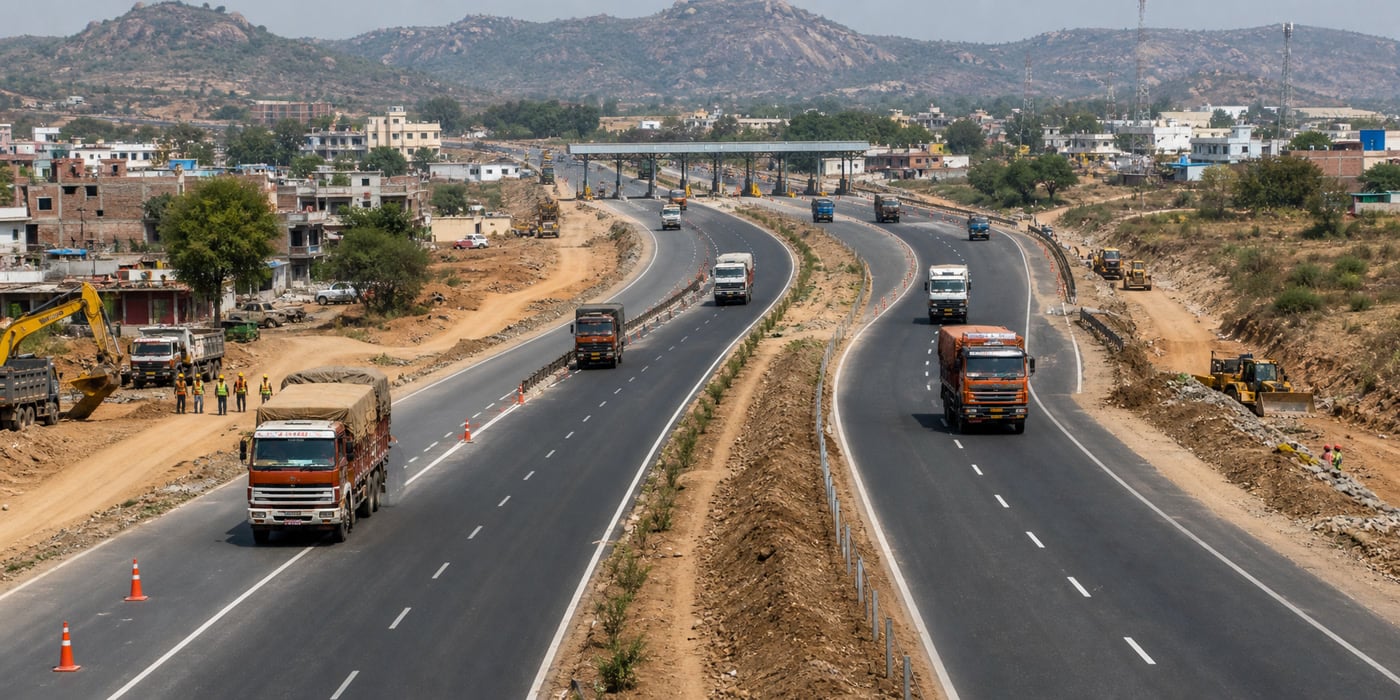
Telangana is set for a major highway upgrade after the Cabinet Committee on Economic Affairs approved the widening of two important national highway sections: Armoor-Jagtial-Mancherial on NH-63 and Jagtial-Karimnagar on NH-563. The combined project length is 190.76 km and the approved capital cost is Rs 7,597.16 crore. For everyday road users, this is not just another infrastructure announcement. It directly affects congestion, fuel burn, truck turnaround, toll planning, local travel time and access to economic and logistics nodes in northern Telangana.
What has been approved
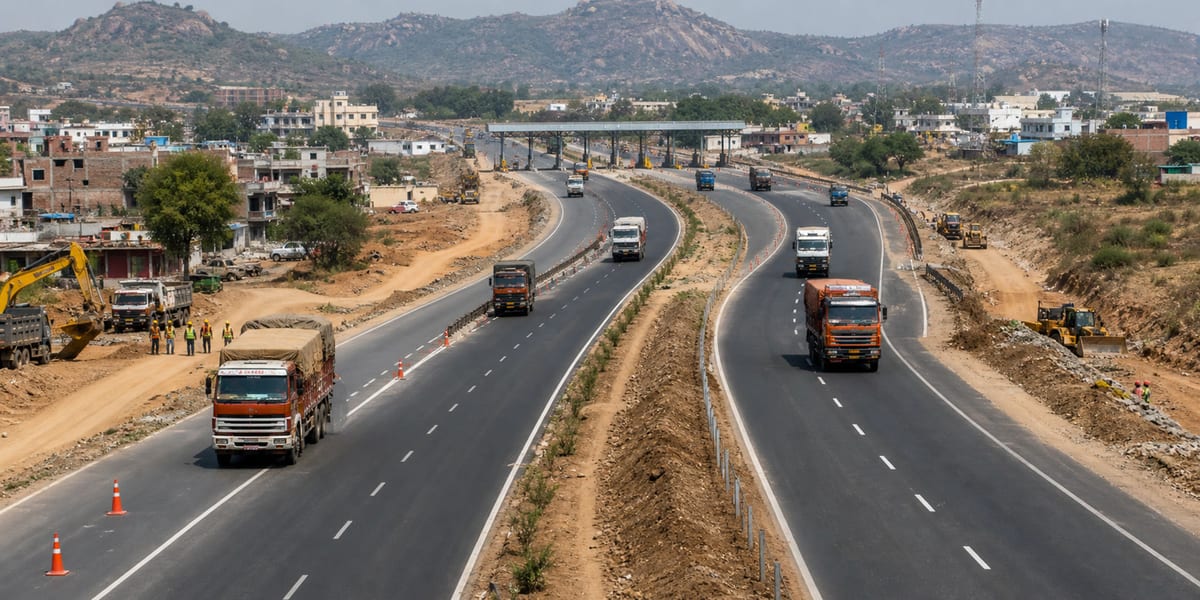
The approval covers three work packages. The Armoor-Jagtial section of NH-63 is 63.600 km, the Jagtial-Mancherial section of NH-63 is 68.295 km, and the Jagtial-Karimnagar section of NH-563 is 58.866 km. The NH-63 packages will be developed on the Hybrid Annuity Model, while the Jagtial-Karimnagar package will be developed on Build-Operate-Transfer (Toll), or BOT-Toll, according to the official PIB release.
Sponsored
The government has identified severe congestion across several built-up locations on the corridor. On NH-63, the pressure points include Anksapoor, Korutla, Jagtial, Dharmapuri, Lakshettipet and Mancherial. On NH-563, the crowded locations include Jagtial, Potharam, Gangadhara and Karimnagar. The approved design includes 4-lane carriageways, bypasses around built-up areas, open tolling and a design speed of up to 100 km/hour.
Why this matters for fuel users
The fuel impact comes from time, speed consistency and fewer stop-start sections. A truck or passenger vehicle idling through town stretches, taking diversions around bottlenecks, braking at dense market edges and crawling through mixed local traffic burns more fuel than a vehicle moving steadily on a controlled 4-lane section. The government has explicitly said the project is expected to reduce fuel consumption, carbon emissions and vehicle operating costs.
That does not mean every driver will immediately see a pump-price saving. Fuel prices are determined by crude, taxes, exchange rates and marketing company economics. The highway impact is different: it can reduce the amount of diesel or petrol consumed for the same movement. For fleet owners, that matters because fuel is one of the largest running-cost heads. For households, it can mean shorter drives between towns and lower wear-and-tear on vehicles once construction is complete.
Freight and logistics impact
The corridor is important because it links more than towns. PIB says the project aligns with PM GatiShakti principles and will connect five economic nodes, seven social nodes and ten logistics nodes. The named economic links include SEZs in Siddipet and Warangal Urban, Mega Food Parks in Nizamabad and Siddipet, and a fishing and seafood cluster in Rajanna Sircilla. The logistics links include railway stations such as Nizamabad, Jagtial, Korutla, Peddapalli, Mancherial, Poddur, Gangadhara and Karimnagar.
That makes the project relevant for freight users moving farm inputs, food products, industrial cargo, construction materials and regional consumer goods. Better approach roads to railway stations and industrial clusters can reduce waiting time for trucks, improve first-mile and last-mile reliability, and make multimodal transport easier. If implemented well, the project can also reduce the penalty that local congestion imposes on supply chains even when the main highway distance is not very long.
What changes for toll users
The Jagtial-Karimnagar section of NH-563 is approved under BOT-Toll, while the NH-63 sections are under HAM. This matters because the user experience and revenue model will differ by package. BOT-Toll normally means private concessionaires recover investment through toll collection during the concession period, subject to the agreement and applicable toll rules. HAM spreads risk differently, with government support and annuity payments playing a larger role.
For drivers, the immediate takeaway is that tolling will be part of the corridor design. The PIB release mentions open tolling, which generally means toll collection at selected points rather than a closed entry-exit system across every interchange. Users should watch for the final toll notification, plaza locations, FASTag arrangements and whether local traffic receives any exemptions or monthly pass provisions under applicable norms.
Travel-time cuts and construction periods
The expected time savings are material. Once completed, travel time between Armoor and Mancherial is expected to fall by about 1 hour and 30 minutes. Jagtial to Karimnagar is expected to become about 45 minutes quicker. The New Indian Express reported that the Armoor-Jagtial and Jagtial-Mancherial stretches have a 17.5-year concession period, including 2.5 years for construction, while Jagtial-Karimnagar has a 20-year concession period, also including 2.5 years for construction.
That construction window is important for road users. During the build phase, there can be diversions, work-zone speed limits, lane restrictions and uneven travel time. The benefit comes after commissioning, but transporters and local users should plan for interim disruption while widening, greenfield stretches, bypasses, median work and toll infrastructure are built.
Key numbers at a glance
| Section | Length | Model | Capital cost |
|---|---|---|---|
| Armoor-Jagtial, NH-63 | 63.600 km | HAM | Rs 2,471.76 crore |
| Jagtial-Mancherial, NH-63 | 68.295 km | HAM | Rs 2,730.72 crore |
| Jagtial-Karimnagar, NH-563 | 58.866 km | BOT-Toll | Rs 2,394.68 crore |
What to watch next
The next practical milestones are package-wise bidding, concession signing, land and pre-construction readiness, traffic management plans and the final toll structure. Users should also watch how bypass alignments are executed around dense towns. A highway project can reduce fuel burn and vehicle operating costs only if local access, safety design, work-zone management and toll operations are handled properly.
The final reader takeaway is clear: this is a significant Telangana mobility and logistics project, not just a road-widening line item. It has direct implications for truckers, commuters, toll users, farm and food supply chains, railway-linked logistics nodes and fuel consumption on a busy regional corridor. The benefits will not arrive overnight, but the approval moves the project from planning to implementation and gives road users a defined corridor to track.
Sources: PIB CCEA, The New Indian Express, DD India, ETInfra, Business Standard.