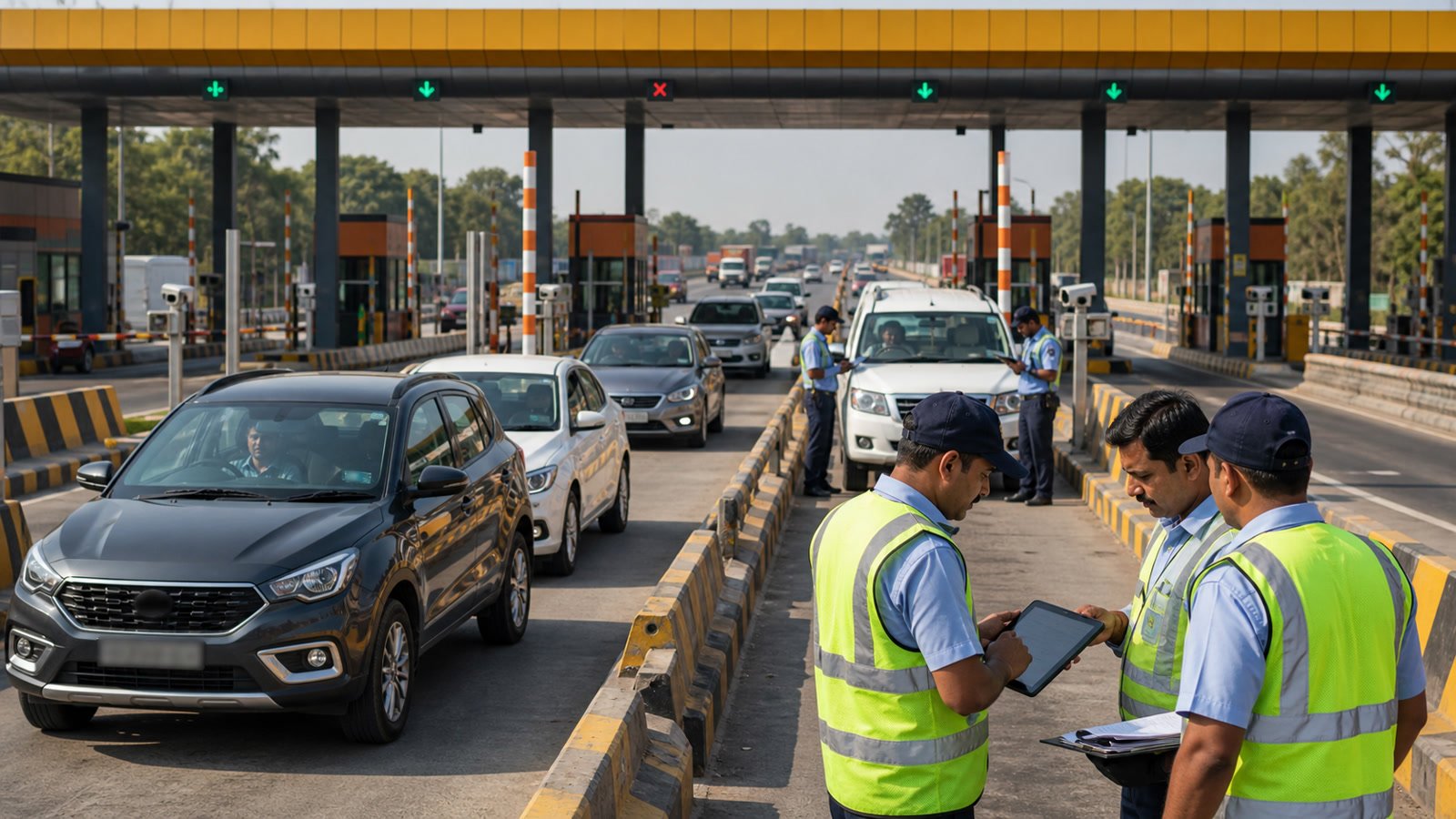
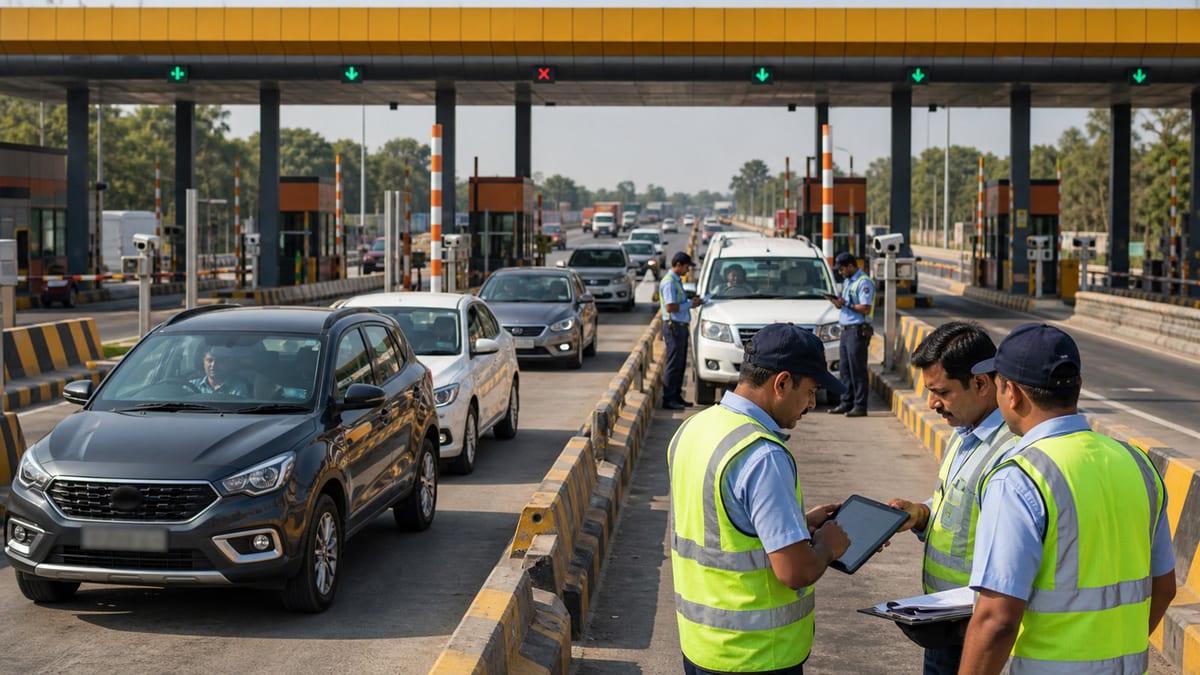
India's national highway toll system may be heading for a sharper fairness test. The central government is considering a reduction in the number of vehicles that can cross National Highway toll plazas without paying user fee, with vehicles linked to senior Central and state government officials expected to be reviewed first. Economic Times reported on June 1, 2026 that the move follows recommendations from a high-level committee examining the existing exemption system, and that discussions with stakeholders are still underway.
For FuelPrice readers, the story matters because toll policy affects the real cost of mobility almost as directly as petrol, diesel or CNG prices. A private car owner pays through FASTag, a transporter prices toll into freight, a cab operator factors highway fee into long-distance trips, and a frequent commuter may now compare pay-per-use FASTag deductions with the annual pass option. If official-vehicle exemptions are reduced, the change would not simply be about government protocol. It would signal a broader shift toward recorded, trackable and more uniform highway usage.
Sponsored
What is being reviewed
The current discussion is about narrowing the categories that receive toll-free movement on national highways. The ET report says the proposal is likely to be phased rather than imposed as a single abrupt change. Vehicles attached to senior government officers are expected to be the first category under review. The broader exemption list is wider: it covers vehicles transporting or accompanying holders of specified public offices and also includes certain official-use vehicles such as defence, armed forces, emergency and highway-operation categories.
That distinction is important. The review does not mean every emergency, security, defence or highway-service vehicle will suddenly be treated like a normal private vehicle. The available reporting points to a targeted policy cleanup, not a blanket removal of all exemptions. The government is also said to be encouraging departments and state governments to use the FASTag Annual Pass route for eligible use cases instead of relying on individual toll exemptions.
Why ordinary FASTag users should care
Ordinary highway users usually judge toll policy by queues, charges and whether the plaza experience feels fair. If one class of vehicles routinely passes without payment while others pay for every crossing, the system can appear uneven. A shorter exemption list would not lower toll rates by itself, but it can improve discipline in collection, reduce the perception of VIP treatment and make highway usage easier to audit.
There is also a practical operations angle. Even exempt vehicles still need valid Exempted FASTags, according to the ET report. That means toll plazas are already moving toward digital identification rather than informal manual clearance. If more official vehicles shift from exemption to reimbursed annual-pass or regular FASTag payment, the data trail becomes cleaner: vehicle movement is recorded, toll use is visible and departments can budget highway travel more transparently.
| Stakeholder | What changes if exemptions narrow | FuelPrice impact |
|---|---|---|
| Private FASTag users | More consistent toll-payment discipline across categories. | Better perception of fairness, but no automatic cut in toll rates. |
| Government departments | Official travel may move from exemption to reimbursed pass or normal FASTag use. | More visible travel budgeting and fewer informal claims around toll movement. |
| Frequent highway commuters | Annual pass becomes a clearer benchmark for repeated travel on eligible roads. | The Rs 3,075 pass can help eligible private vehicles estimate per-crossing cost. |
| Toll operators and NHAI systems | Fewer special-category movements may simplify verification at plazas. | Cleaner digital records can support better traffic and revenue planning. |
Where the FASTag Annual Pass fits in
The annual pass is central to this debate because it gives policymakers a ready alternative to open-ended exemptions. For FY 2026-27, the pass costs Rs 3,075. ET and TOI reports say it is available for eligible private, non-commercial cars, jeeps and vans with a valid FASTag. It offers one year of validity or up to 200 toll crossings, whichever comes first, at covered National Highway and National Expressway fee plazas. TOI also reported that NHAI had cited more than 56 lakh users and around 1,150 eligible fee plazas while discussing the 2026-27 price revision.
This does not mean the annual pass is available for every vehicle or every toll road. It is not meant for commercial vehicles, it is linked to a specific vehicle and FASTag, and it does not replace charges at state-managed expressways, state highways, local-body toll points or parking locations. But it is useful as a policy reference point: instead of allowing a large number of official vehicles to cross without user-fee payment, departments can reimburse a fixed pass or regular tolls where appropriate.
What has not changed yet
The most important caution is that this is still a proposal under discussion. There is no final public order in the available reports that removes a specific category from the exemption list immediately. Toll users should therefore not assume that plazas will begin charging all official vehicles overnight. Any practical change would likely require rule amendments, department-level instructions, implementation dates, FASTag-system updates and clarity for states, central departments and toll operators.
Private vehicle owners also do not need to change their FASTag just because this review is underway. Regular FASTag remains valid for pay-per-use tolling. The annual pass remains optional for eligible users who find the 200-trip or one-year structure useful. For people who drive only occasionally on national highways, a normal FASTag balance may still be cheaper than buying a pass.
What to watch next
The next signals will be whether the Ministry of Road Transport and Highways issues a rule amendment, whether the first phase specifically targets vehicles attached to senior officials, and whether government departments are formally told to reimburse annual-pass purchases. Toll operators will also need clear instructions, because confusion at the lane level can create delays for everyone: private users, official drivers, emergency vehicles and highway staff.
The reader takeaway is straightforward. A shorter toll-exemption list would not be a fuel-price cut, but it can make highway charging more transparent and easier to defend. If the government moves ahead, ordinary FASTag users should watch for two things: whether the change improves fairness at toll plazas, and whether the annual pass becomes the standard tool for official and frequent non-commercial highway travel. Until a final notification arrives, treat this as an important policy review rather than a completed rule change.
Sources: Economic Times toll-exemption review report, Economic Times FASTag Annual Pass FY 2026-27 fee report, Times of India FASTag Annual Pass FAQ, Times of India annual pass price-hike context.