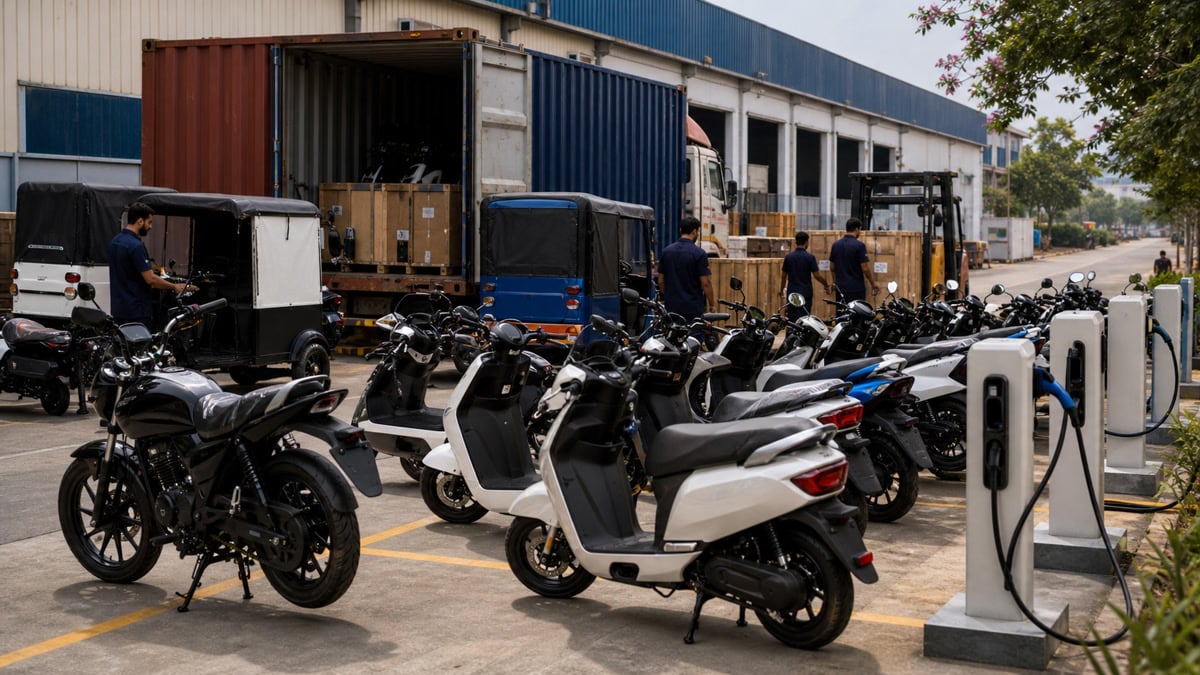
TVS Motor May 2026 Sales Hit 5.66 Lakh Units as EV and Export Demand Set Fresh Highs
TVS Motor Company has posted one of the strongest two-wheeler demand signals of May 2026. The company recorded monthly sales of 566,585 units, a 31% year-on-year increase over 431,275 units in May 2025. The headline number is important, but the deeper story is even more useful for FuelPrice readers: electric vehicle sales jumped 56% to 43,632 units, three-wheeler sales rose 55%, and international business climbed 49% to 175,991 units.
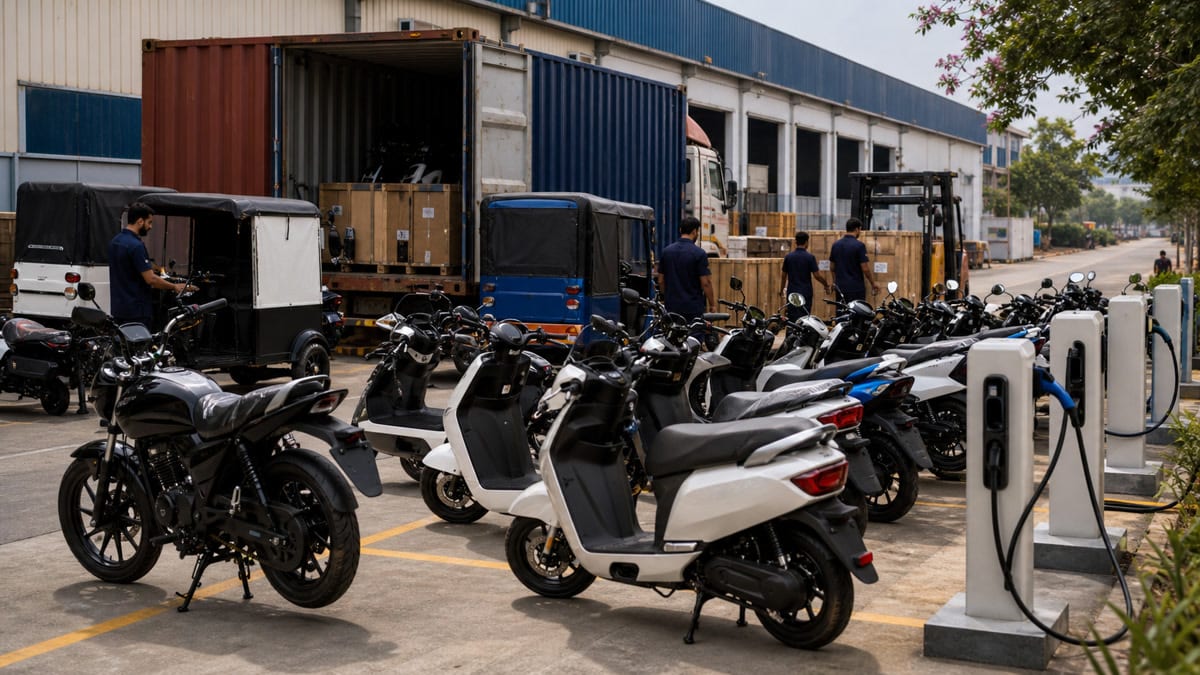
What happened
On 1 June 2026, multiple market and auto-industry reports said TVS Motor Company sold 566,585 units in May 2026, compared with 431,275 units in the same month last year. That makes May a record-style month for the manufacturer and places TVS among the stronger volume performers in India's two-wheeler market at the start of FY27.
Sponsored
The performance was broad-based. Total two-wheeler sales rose 31% to 543,111 units. Domestic two-wheeler sales rose 24% to 384,565 units. Motorcycle sales increased 30% to 273,802 units, while scooter sales grew 32% to 220,740 units. The electric vehicle line was the most important fuel-transition signal, growing 56% from 27,976 units to 43,632 units. Three-wheelers also moved sharply higher, rising 55% to 23,474 units.
Key May 2026 numbers
| Category | May 2026 | May 2025 | YoY growth | Why it matters |
|---|---|---|---|---|
| Total sales | 566,585 units | 431,275 units | 31% | Shows broad demand momentum at the start of FY27. |
| Total two-wheelers | 543,111 units | 416,166 units | 31% | Core commuter and personal mobility demand remained strong. |
| Domestic two-wheelers | 384,565 units | 309,287 units | 24% | A direct signal for Indian dealer and buyer activity. |
| Motorcycles | 273,802 units | 211,505 units | 30% | Useful for rural, semi-urban and commuter-fuel demand reading. |
| Scooters | 220,740 units | 166,749 units | 32% | Indicates strong urban and family mobility demand. |
| Electric vehicles | 43,632 units | 27,976 units | 56% | Strong fuel-substitution and charging-infrastructure signal. |
| International business | 175,991 units | 118,437 units | 49% | Highlights export-led scale and supply-chain utilisation. |
Why this matters for FuelPrice readers
Two-wheeler sales are closely linked to household transport budgets, petrol consumption patterns, urban commuting and rural mobility. A 31% rise in total two-wheelers tells us buyers are still willing to spend on personal mobility even after a period of fuel-price pressure and higher ownership costs. That does not automatically mean petrol consumption rises in the same proportion, because vehicle usage, replacement demand, mileage and EV adoption all matter. But it does show that mobility demand is healthy.
The EV number is the sharper long-term signal. At 43,632 units, TVS Motor's electric vehicle sales were up 56% year-on-year. For fuel users, this shows the practical shift happening in the two-wheeler market: buyers are not only comparing petrol prices and mileage, but also charging access, battery cost, city usage patterns and running-cost savings. In the scooter category especially, EV adoption can change daily fuel-spend behaviour because many users ride fixed urban routes where overnight or workplace charging is easier to manage.
The export and three-wheeler angle
International business rising 49% to 175,991 units is not only a sales milestone; it also matters for production planning, component sourcing, port logistics and currency-linked business performance. Strong export movement can help factories maintain higher utilisation and improve operating leverage, but it also depends on shipping schedules, overseas demand, regulatory approvals and supply-chain stability.
The three-wheeler growth of 55% to 23,474 units is another mobility indicator. Three-wheelers are used for passenger movement, local goods distribution and fleet operations in many Indian and export markets. Higher volumes can reflect improved fleet confidence, replacement demand and urban transport recovery. For fuel and EV watchers, three-wheelers are also important because they are one of the segments where electrification and operating-cost calculations can move quickly.
Who is affected
- Petrol two-wheeler buyers: Strong motorcycle and scooter sales suggest fresh product demand despite fuel-cost sensitivity.
- EV buyers: The 56% EV jump reinforces that electric scooters are moving from niche demand to mainstream urban consideration.
- Dealers and service networks: Higher dispatches can support showroom footfall, service throughput and accessory sales.
- Component suppliers: Broad segment growth supports demand for batteries, tyres, electronics, engines, plastics and export packaging.
- Logistics operators: Export and domestic dispatch growth increases movement across plants, ports, warehouses and dealer networks.
What changes now
The May numbers strengthen the case that two-wheeler demand is not being driven by one category alone. Motorcycles, scooters, EVs, three-wheelers and international business all moved higher. That makes the update more meaningful than a single-product surge. It also increases pressure on rivals to protect dealer inventory, pricing discipline, export market share and EV availability.
For consumers, the practical change is that competition in scooters and EVs is likely to remain intense. Stronger sales can encourage more finance offers, wider product availability, expanded service support and faster charging ecosystem conversations. For fuel users, the question is whether EV adoption continues to grow at a rate that gradually reduces petrol dependence in daily short-distance commuting.
What to watch next
The next watch points are June retail demand, EV waiting periods, battery-supply stability, export order momentum, monsoon impact on rural two-wheeler purchases and whether petrol prices influence buyer preference between ICE scooters, motorcycles and electric scooters. If EV growth remains above overall two-wheeler growth, it will be a strong sign that running-cost economics are becoming a bigger part of the buying decision.
Final takeaway: TVS Motor's May 2026 update is important because it combines scale, EV momentum and export strength in one month. The 566,585-unit total shows broad demand; the 43,632 EV figure shows the fuel-transition story; and the 175,991 international-business figure shows that India's two-wheeler manufacturing base is still gaining from global mobility demand.